
Farmers Assemble in Delhi for 'Mahapanchayat' Over Concerns Regarding Proposed India-US Trade Deal

Thousands of agricultural workers and union leaders from across northern and western India have converged on the national capital to stage a major protest against the proposed bilateral trade negotiations between India and the United States.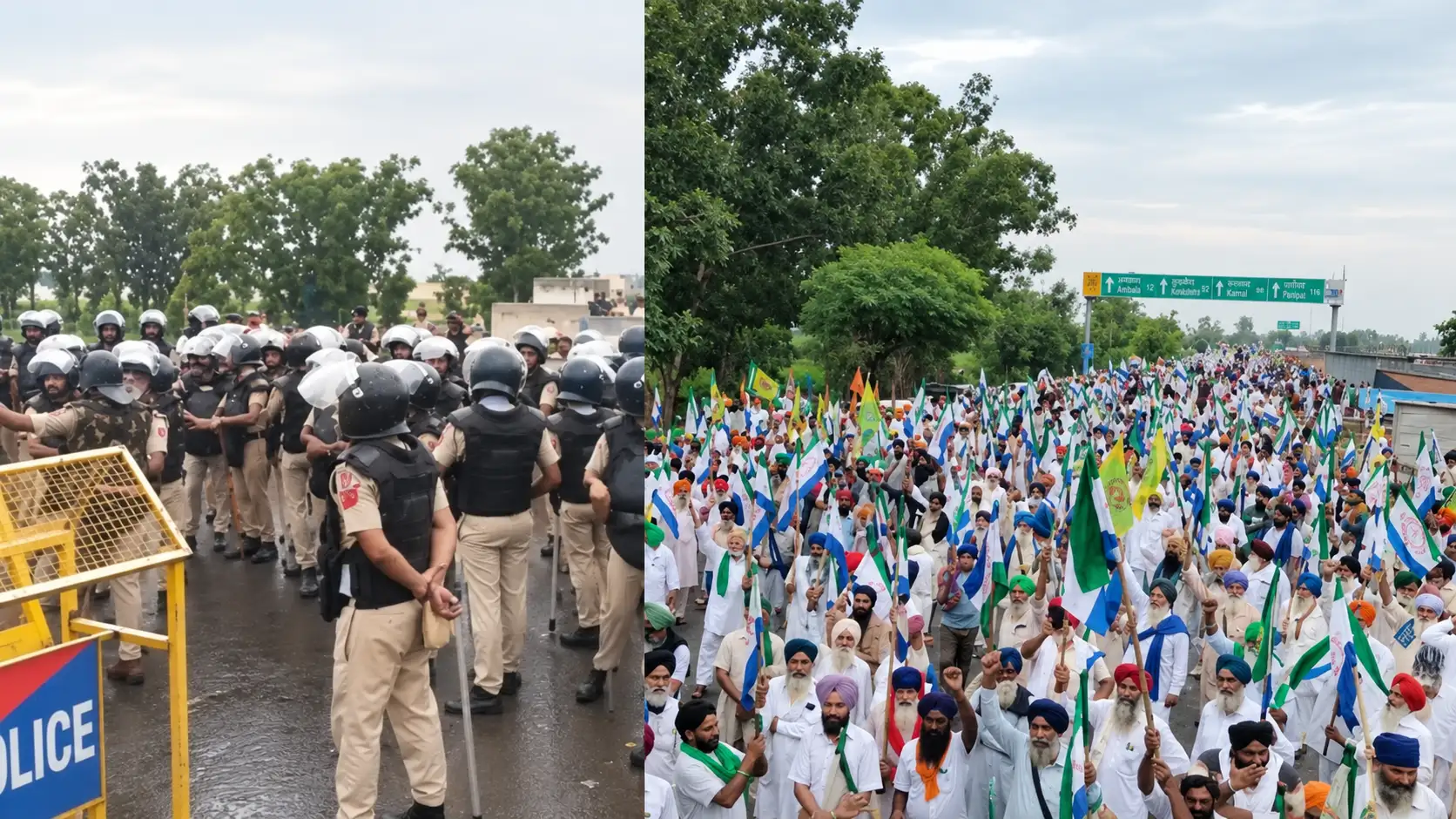
Organised under the umbrella banner of the ' Desh Bachao Morcha ' (Save the Nation Front), the one-day ' Mahapanchayat ' at Kisan Ghat in New Delhi features heavy participation from agrarian leaders and union members originating from Punjab, Haryana, Rajasthan, Himachal Pradesh, Uttar Pradesh, and Maharashtra. Convoys consisting of buses, private vehicles, and tractors traveled along major national highways, crossing key border checkpoints under strict security surveillance before arriving in the capital.
"The central government has engaged in high-level discussions without consulting key domestic stakeholders, including farmers, dairy workers, and small-scale manufacturers," Pandher stated. He urged Prime Minister Narendra Modi to make public all documents regarding the proposed Bilateral Trade Agreement (BTA) and clarify its potential long-term ramifications for local agrarian communities.
Protesters have highlighted that official joint statements released by trade representatives earlier indicated the deal would not be restricted to a handful of industrial commodities. Instead, farm leaders fear the pact could eventually encompass broad sectors, including agriculture, livestock rearing, digital trade, intellectual property rights, e-commerce, and public procurement.
Unions argue that lowering import duties or reducing non-tariff barriers on American commodities such as soybeans, corn, apples, almonds, cotton, and dairy products could result in a surge of cheaper imports entering the Indian domestic market. Domestic producers worry this could depress local market prices, making it nearly impossible for smallholders to remain economically viable.
Special concern has been raised regarding India’s extensive dairy industry, which provides a vital source of daily income for an estimated 80 million rural households. Representatives warned that opening up dairy markets to foreign competition could inflict severe damage on rural livelihoods and destabilise food security across the country.
Despite these assurances, security measures remain on high alert across key transit routes and around central Delhi. Law enforcement agencies in neighbouring states, including Haryana, implemented heightened vigilance at major border crossings, such as Shambhu and Khanauri, to monitor incoming traffic and manage potential movement disruptions.
Organisers of the Desh Bachao Morcha have emphasised that the Delhi gathering marks the initial phase of a broader nationwide movement. They warned that if their calls for comprehensive consultation and sector protections are not addressed, agrarian groups across the country will intensify their protest demonstrations in the coming months.
Organised under the umbrella banner of the ' Desh Bachao Morcha ' (Save the Nation Front), the one-day ' Mahapanchayat ' at Kisan Ghat in New Delhi features heavy participation from agrarian leaders and union members originating from Punjab, Haryana, Rajasthan, Himachal Pradesh, Uttar Pradesh, and Maharashtra. Convoys consisting of buses, private vehicles, and tractors traveled along major national highways, crossing key border checkpoints under strict security surveillance before arriving in the capital.
Transparency and Lack of Consultation Cited
Addressing assembled crowds and media personnel prior to the rally, prominent Kisan Mazdoor Sangharsh Committee (KMSC) leader and Morcha coordinator Sarwan Singh Pandher voiced deep anxiety over what he described as a complete lack of transparency from official channels."The central government has engaged in high-level discussions without consulting key domestic stakeholders, including farmers, dairy workers, and small-scale manufacturers," Pandher stated. He urged Prime Minister Narendra Modi to make public all documents regarding the proposed Bilateral Trade Agreement (BTA) and clarify its potential long-term ramifications for local agrarian communities.
Protesters have highlighted that official joint statements released by trade representatives earlier indicated the deal would not be restricted to a handful of industrial commodities. Instead, farm leaders fear the pact could eventually encompass broad sectors, including agriculture, livestock rearing, digital trade, intellectual property rights, e-commerce, and public procurement.
You may also like
- Safdarjung Resident Doctors' Association urge President's action on Wangchuk case
- Azmi has health scare at Delhi protest over education reforms
- 'Maybe education minister doesn't know how to write letter of resignation': Mahua Moitra takes dig at Dharmendra Pradhan amid student protests
- Swara Bhasker says husband Fahad Ahmad detained at NEET protest
- Delhi protesters denounce alleged NEET mishandling, demand Dharmendra Pradhan's resignation
Economic Concerns Over Import Dumping
The central point of contention for domestic unions lies in the massive disparity between agricultural practices in the United States and India. According to farm leaders, American agricultural operations typically stretch across thousands of acres and benefit from substantial federal subsidies and advanced industrial mechanisation. Conversely, the vast majority of Indian farmers operate small or marginal landholdings often averaging around two to three acres and receive significantly less financial backing.Unions argue that lowering import duties or reducing non-tariff barriers on American commodities such as soybeans, corn, apples, almonds, cotton, and dairy products could result in a surge of cheaper imports entering the Indian domestic market. Domestic producers worry this could depress local market prices, making it nearly impossible for smallholders to remain economically viable.
Special concern has been raised regarding India’s extensive dairy industry, which provides a vital source of daily income for an estimated 80 million rural households. Representatives warned that opening up dairy markets to foreign competition could inflict severe damage on rural livelihoods and destabilise food security across the country.
Government Position and Heightened Security
In response to the growing unrest, government officials have repeatedly reassured the public that India's agricultural interests remain fully protected. Union Commerce Minister Piyush Goyal and central ministry representatives have previously stated that sensitive agricultural and dairy products are carefully shielded during high-level trade negotiations, maintaining that no agreement will be signed that compromises the economic well-being of the nation's primary sector.Despite these assurances, security measures remain on high alert across key transit routes and around central Delhi. Law enforcement agencies in neighbouring states, including Haryana, implemented heightened vigilance at major border crossings, such as Shambhu and Khanauri, to monitor incoming traffic and manage potential movement disruptions.
Organisers of the Desh Bachao Morcha have emphasised that the Delhi gathering marks the initial phase of a broader nationwide movement. They warned that if their calls for comprehensive consultation and sector protections are not addressed, agrarian groups across the country will intensify their protest demonstrations in the coming months.






Loving Newspoint? Download the app now
