
Why Are Madhya Pradesh Farmers Protesting? Moong MSP and E-Token Issues Explained

Hundreds of farmers from across Madhya Pradesh have set up temporary encampments on the main highway leading into Bhopal. The action follows a three-day march across the state to demand guaranteed government purchase of their entire moong (green gram) harvest at fixed official rates.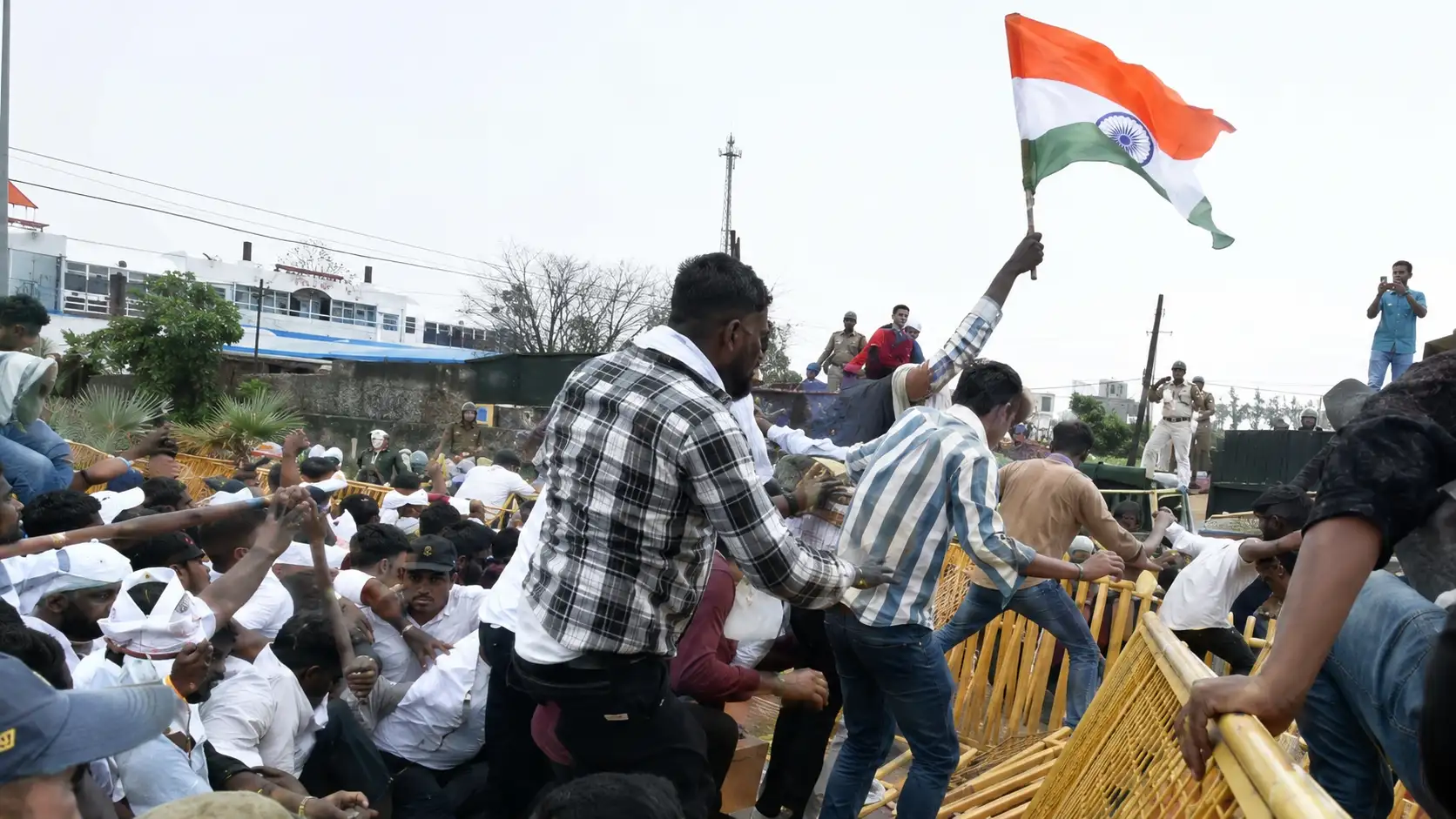
Carrying Indian national flags, sacks of grain, bedding, and cooking utensils, protesters blocked sections of the Bhopal-Narmadapuram road. They declared their intention to remain until the state administration addresses their grievances. The demonstration is organised under the banner of the Samyukta Kisan Morcha (SKM), an umbrella coalition representing nearly 20 agricultural organisations. It marks one of the most notable rural protests in the region in recent months.
Growers argue that this cap leaves three-quarters of their harvest exposed to private traders, where market prices fall significantly below the official Minimum Support Price ( MSP ). For the 2026–27 season, the government set the MSP for moong at £87.68 (₹8,768) per quintal. However, local growers report that private buyers offer far less, causing severe financial strain despite bumper harvests.
In addition to full crop procurement, the farmers are calling for the immediate cancellation or complete overhaul of the digital "e-token" registration system used for fertiliser distribution. Protesters state that technical errors, long queues, and administrative delays in the e-token system have disrupted seasonal planting schedules. They are demanding a return to direct distribution based on verified physical land records.
Despite attempts by local officials to negotiate and halt the procession, groups of marchers pushed past the security barriers. Security forces ultimately held back to prevent escalation, allowing the procession to move into the capital's outer zones near CSIR-AMPRI and Barkatullah University.
"We have been raising these issues through formal petitions for weeks without a response," said Santosh Patwari, a local farmer leader participating in the march. "When market rates do not even cover our basic input expenses, we have no alternative but to take our message directly to the state capital."
Protesting farmer Sandeep Gaur added that the group was prepared for a long stay. "We have brought enough food and supplies to last for days. We are not here to cause public harm or destroy property. We simply want our produce bought at the promised price and an end to the hurdles in obtaining fertiliser."
The movement adds fresh pressure to the state administration led by Chief Minister Mohan Yadav. Rural dissatisfaction has grown across the region due to rising diesel and seed costs, technical glitches in government agricultural portals, and recurring distribution delays. High-level talks between senior district officials and farmer representatives remain ongoing on the highway, though no resolution has been reached yet.
Carrying Indian national flags, sacks of grain, bedding, and cooking utensils, protesters blocked sections of the Bhopal-Narmadapuram road. They declared their intention to remain until the state administration addresses their grievances. The demonstration is organised under the banner of the Samyukta Kisan Morcha (SKM), an umbrella coalition representing nearly 20 agricultural organisations. It marks one of the most notable rural protests in the region in recent months.
Core Demands and Open Market Losses
The immediate trigger for the march is the government's current procurement strategy for summer moong. While the central government recently committed to 100% procurement for pulses such as tur, urad, and masur, moong remains regulated under the standard Price Support Scheme (PSS). Under this framework, official state buying is typically capped at 25% of a state’s total estimated yield.Growers argue that this cap leaves three-quarters of their harvest exposed to private traders, where market prices fall significantly below the official Minimum Support Price ( MSP ). For the 2026–27 season, the government set the MSP for moong at £87.68 (₹8,768) per quintal. However, local growers report that private buyers offer far less, causing severe financial strain despite bumper harvests.
In addition to full crop procurement, the farmers are calling for the immediate cancellation or complete overhaul of the digital "e-token" registration system used for fertiliser distribution. Protesters state that technical errors, long queues, and administrative delays in the e-token system have disrupted seasonal planting schedules. They are demanding a return to direct distribution based on verified physical land records.
You may also like
- Cops have to act: Nadda defends police action on NEET protesters
- Heavy rain closes Doda and most Kishtwar schools, classes online
- PM extends greetings on Tiger Day, says proud that India home to 70% of its global population
- Last active Maoist leader Misir Besra, carrying ₹1cr bounty, arrested
- Delhi Police serves notice to X over 'derogatory' posts targeting constitutional heads
Breakthrough at the City Boundaries
The protest began early in the week at Sethani Ghat in Narmadapuram, where participants gathered before embarking on the 70-kilometre march towards the Chief Minister’s residence in Bhopal. Along the route, police forces set up multiple layers of heavy steel barricades at administrative borders, toll plazas, and highway intersections including Obaidullaganj and Mandideep.Despite attempts by local officials to negotiate and halt the procession, groups of marchers pushed past the security barriers. Security forces ultimately held back to prevent escalation, allowing the procession to move into the capital's outer zones near CSIR-AMPRI and Barkatullah University.
"We have been raising these issues through formal petitions for weeks without a response," said Santosh Patwari, a local farmer leader participating in the march. "When market rates do not even cover our basic input expenses, we have no alternative but to take our message directly to the state capital."
Protesting farmer Sandeep Gaur added that the group was prepared for a long stay. "We have brought enough food and supplies to last for days. We are not here to cause public harm or destroy property. We simply want our produce bought at the promised price and an end to the hurdles in obtaining fertiliser."
City Impact and Broader Context
The roadblock on the southern artery of Bhopal caused significant traffic disruptions on Wednesday morning. Local police diverted heavy freight and passenger vehicles through alternative bypass routes, while several local schools along the highway declared a precautionary holiday.The movement adds fresh pressure to the state administration led by Chief Minister Mohan Yadav. Rural dissatisfaction has grown across the region due to rising diesel and seed costs, technical glitches in government agricultural portals, and recurring distribution delays. High-level talks between senior district officials and farmer representatives remain ongoing on the highway, though no resolution has been reached yet.






Loving Newspoint? Download the app now
