
End of a 26-Day Fast: How Midnight Assurances Convinced Sonam Wangchuk to Call Off His Hunger Strike

Renowned education reformist and social activist Sonam Wangchuk has officially concluded his 26-day indefinite hunger strike . The decision came late Thursday night following a high-stakes midnight meeting at Medanta Hospital in Gurugram, where senior Union Ministers presented a written list of key commitments on behalf of the Central Government.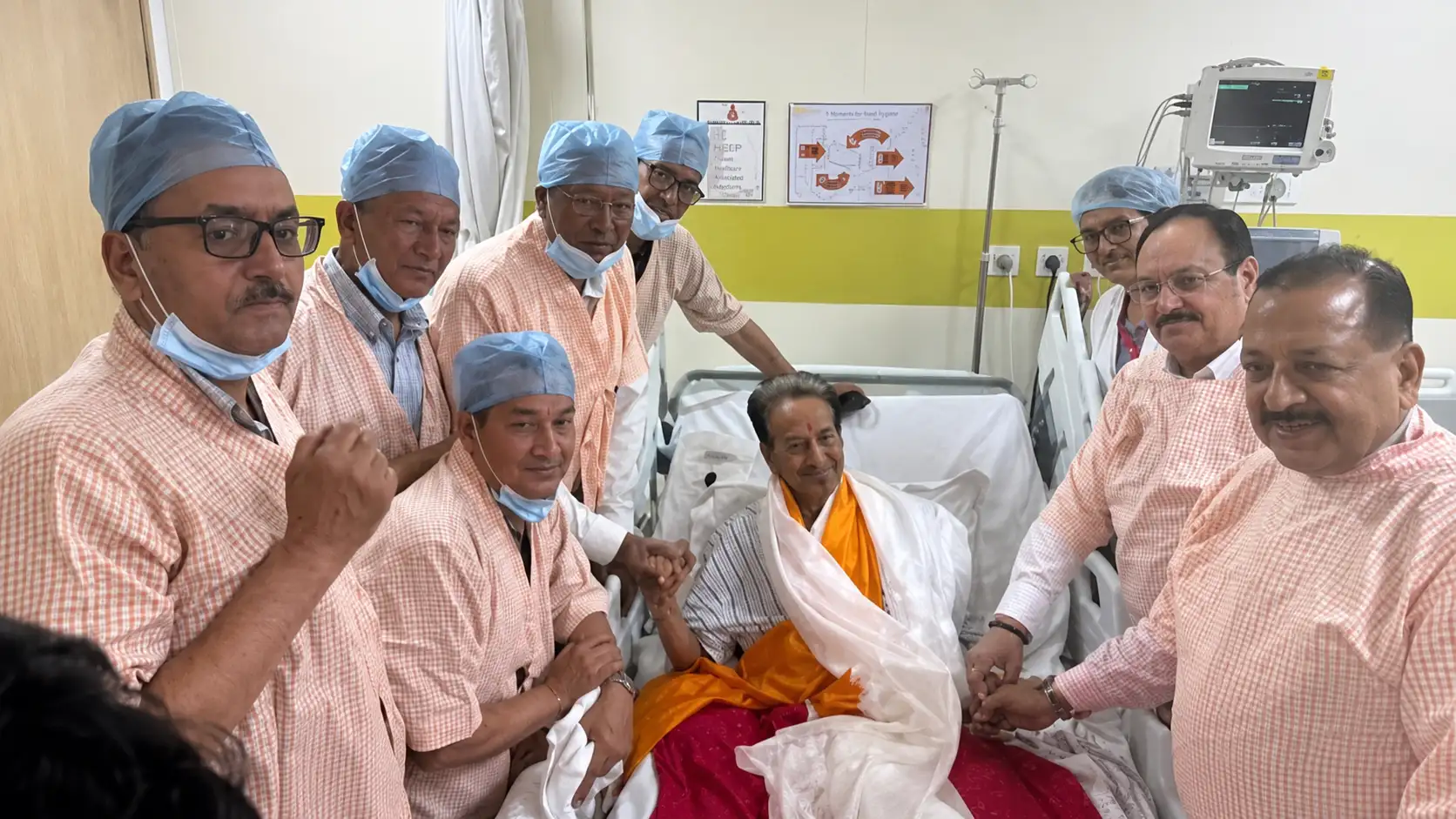
Wangchuk, who was protesting against reported irregularities and paper leaks in national competitive examinations like NEET, broke his fast in the presence of Union Health Minister J.P. Nadda, Union Minister of State Dr. Jitendra Singh, and representatives from the Apex Body of Leh Ladakh.
Key Commitments That Ended the Stand-Off
The high-profile hunger strike came to an end after days of intense negotiations between government officials and protest leaders. Union Minister J.P. Nadda personally read out the government’s formal response in the presence of Wangchuk’s family and supporters.
The key assurances provided by the government include:
Taking to social media platform X, Wangchuk posted a message titled "END OF HUNGER... BEGINNING OF ACCOUNTABILITY...!". He explained that a formal written commitment from the authorities was crucial before he could consider ending his hunger strike.
Cross-Party Support and Growing Health Concerns
Wangchuk’s health had deteriorated significantly over the course of his 26-day fast. Having lost nearly 11 kilograms and experiencing severe physical weakness, he had been transferred from Safdarjung Hospital to Medanta Hospital in Gurugram under close medical supervision.
During his fast, the reform activist garnered widespread political and public backing. As many as 65 Members of Parliament cutting across party lines either personally visited him at the medical facility or signed joint letters urging him to call off his strike due to grave health risks.
In a public message, Wangchuk cautioned against any potential unrest, appealing directly to the youth and student groups to maintain strict non-violence:
"PEACE & ONLY PEACE IS MY WAY... While at Jantar Mantar the protests remain peaceful, I'm pained to learn that elsewhere some antisocial elements are taking advantage of the peaceful protests to provoke violence... No matter what the other side does, our response must only be flowers. Please keep this tradition at all costs."
Shortly after the announcement, Prime Minister Narendra Modi expressed relief over the activist's decision to break his fast. In a message shared on X, the Prime Minister prayed for Wangchuk’s health and urged him to strictly follow medical advice to regain his strength as quickly as possible.
Reactions and the Way Forward
While Wangchuk’s decision to end his fast marks a major milestone, student organisations leading the protest at Delhi's Jantar Mantar have expressed mixed feelings. Representatives from the Cockroach Janta Party (CJP), who helped coordinate the initial sit-in demonstration alongside Wangchuk, welcomed the activist's decision to safeguard his health. However, they clarified that their peaceful sit-in would persist until senior officials take political responsibility for the administrative lapses.
The resolution of this hunger strike is viewed as an important victory for peaceful public advocacy in India. By opening the door to institutional debate and concrete legislative oversight on competitive examinations, the compromise offers millions of anxious students across the country a renewed sense of hope and fairness.
Wangchuk, who was protesting against reported irregularities and paper leaks in national competitive examinations like NEET, broke his fast in the presence of Union Health Minister J.P. Nadda, Union Minister of State Dr. Jitendra Singh, and representatives from the Apex Body of Leh Ladakh.
Key Commitments That Ended the Stand-Off
The high-profile hunger strike came to an end after days of intense negotiations between government officials and protest leaders. Union Minister J.P. Nadda personally read out the government’s formal response in the presence of Wangchuk’s family and supporters.
The key assurances provided by the government include:
- Parliamentary Debate: The government has committed to holding a structured debate on the floor of Parliament to discuss systemic failures, paper leaks, and accountability within India’s competitive examination system.
- Compensation for Affected Families: The administration agreed to positively consider financial relief and compensation for the families of young students who tragically took their own lives following recent paper leak controversies.
- Protection for Peaceful Demonstrators: The Union Minister assured that no police cases or criminal charges would be filed against students and young citizens who took part in peaceful rallies at Jantar Mantar or during the march towards Parliament.
Taking to social media platform X, Wangchuk posted a message titled "END OF HUNGER... BEGINNING OF ACCOUNTABILITY...!". He explained that a formal written commitment from the authorities was crucial before he could consider ending his hunger strike.
Cross-Party Support and Growing Health Concerns
Wangchuk’s health had deteriorated significantly over the course of his 26-day fast. Having lost nearly 11 kilograms and experiencing severe physical weakness, he had been transferred from Safdarjung Hospital to Medanta Hospital in Gurugram under close medical supervision.
During his fast, the reform activist garnered widespread political and public backing. As many as 65 Members of Parliament cutting across party lines either personally visited him at the medical facility or signed joint letters urging him to call off his strike due to grave health risks.
You may also like
- Leeds rolls out free bus passes for pregnant women
- US citizen, Khalistani arrested trying to enter from Nepal illegally
- Rupee rises 22 paise to 96.51 against US dollar in early trade
- Crackdown on paper leak: Govt planning to tweak anti-cheating law by increasing jail term
- Honour killing case: Woman murdered by parents in UP's Shamli
In a public message, Wangchuk cautioned against any potential unrest, appealing directly to the youth and student groups to maintain strict non-violence:
"PEACE & ONLY PEACE IS MY WAY... While at Jantar Mantar the protests remain peaceful, I'm pained to learn that elsewhere some antisocial elements are taking advantage of the peaceful protests to provoke violence... No matter what the other side does, our response must only be flowers. Please keep this tradition at all costs."
Shortly after the announcement, Prime Minister Narendra Modi expressed relief over the activist's decision to break his fast. In a message shared on X, the Prime Minister prayed for Wangchuk’s health and urged him to strictly follow medical advice to regain his strength as quickly as possible.
Reactions and the Way Forward
While Wangchuk’s decision to end his fast marks a major milestone, student organisations leading the protest at Delhi's Jantar Mantar have expressed mixed feelings. Representatives from the Cockroach Janta Party (CJP), who helped coordinate the initial sit-in demonstration alongside Wangchuk, welcomed the activist's decision to safeguard his health. However, they clarified that their peaceful sit-in would persist until senior officials take political responsibility for the administrative lapses.
The resolution of this hunger strike is viewed as an important victory for peaceful public advocacy in India. By opening the door to institutional debate and concrete legislative oversight on competitive examinations, the compromise offers millions of anxious students across the country a renewed sense of hope and fairness.






Loving Newspoint? Download the app now
