
Bhojshala Row: Supreme Court Directs Alternative Prayer Space for Muslims as Legal Battle Intensifies

In a significant interim ruling on one of India’s most sensitive religious property disputes , the Supreme Court has directed the state government of Madhya Pradesh to provide an alternative, open space adjacent to the contested Bhojshala-Kamal Maula Mosque complex in Dhar district so that the Muslim community can continue to perform Friday prayers (namaz).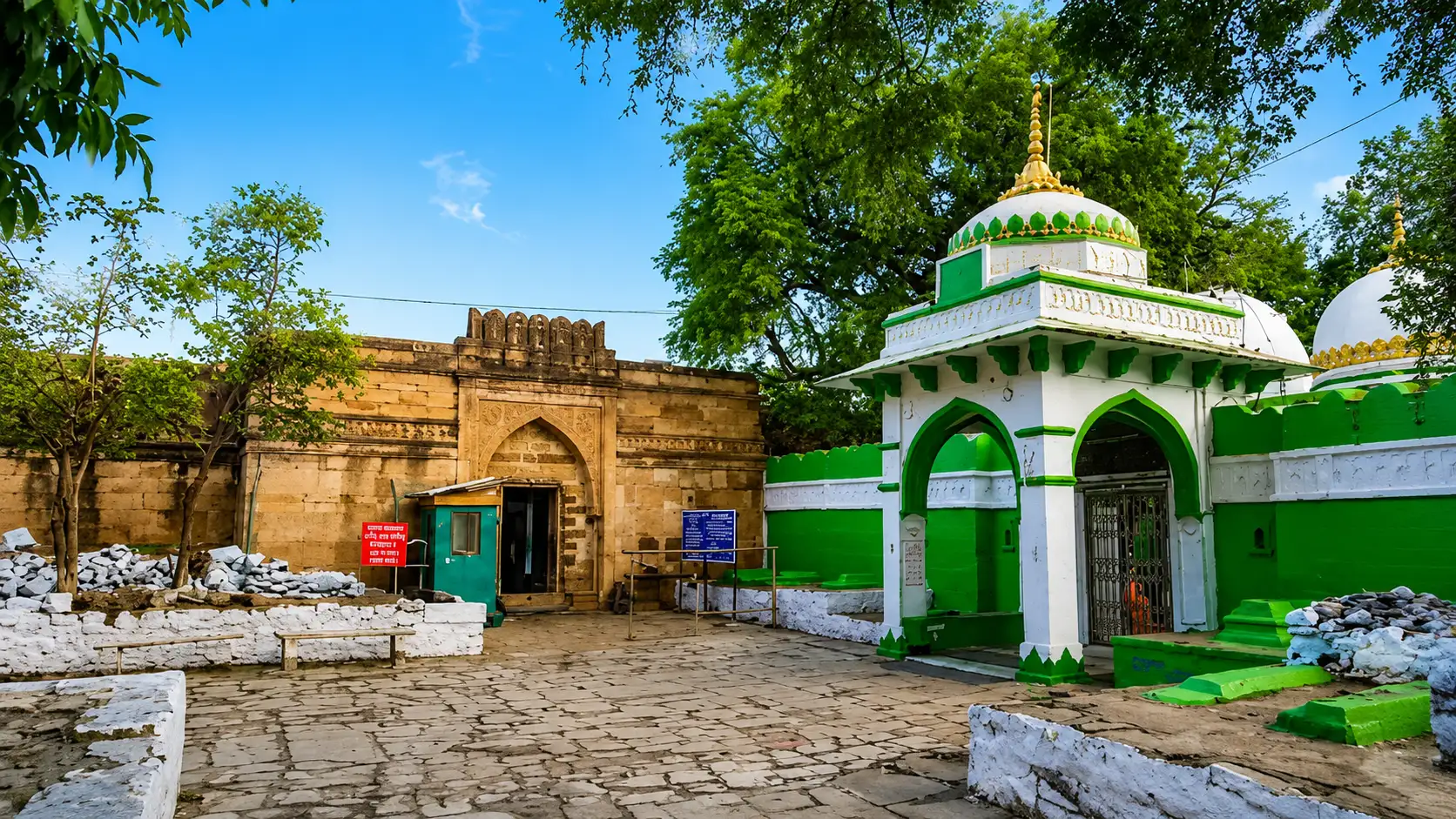
The three-judge Bench, presided over by Chief Justice of India Surya Kant alongside Justices Joymalya Bagchi and V Mohana, instituted the measure as a temporary, ad-hoc arrangement while the apex court thoroughly reviews a batch of appeals challenging a controversial High Court judgment. Crucially, the bench clarified that this interim measure is passed completely "without prejudice" to the final legal rights of both communities.
During the Supreme Court proceedings, senior advocates representing the Muslim petitioners strongly pressed for the restoration of the status quo ante (the state of affairs before the High Court’s ruling), under which Friday prayers had proceeded peacefully within the complex for more than twenty years. They argued that historical records and surveys demonstrated uninterrupted religious practice at the site's pulpit spanning centuries.
However, the Solicitor General of India, representing the state, opposed the immediate restoration of the old arrangement, warning that sudden alterations to the current situation could create severe administrative challenges and potential public friction.
The three-judge Bench, presided over by Chief Justice of India Surya Kant alongside Justices Joymalya Bagchi and V Mohana, instituted the measure as a temporary, ad-hoc arrangement while the apex court thoroughly reviews a batch of appeals challenging a controversial High Court judgment. Crucially, the bench clarified that this interim measure is passed completely "without prejudice" to the final legal rights of both communities.
Balancing Peace and Legal Appeals
The legal confrontation reached the highest court after Muslim parties appealed against the Madhya Pradesh High Court’s verdict delivered on 15 May 2026. In that ruling, the High Court declared that the 11th-century monument was fundamentally a Hindu temple dedicated to Goddess Vagdevi (Saraswati). In doing so, the High Court quashed a decades-old administrative framework established by the Archaeological Survey of India (ASI) in 2003, which had allowed both communities to share the protected monument on designated days.During the Supreme Court proceedings, senior advocates representing the Muslim petitioners strongly pressed for the restoration of the status quo ante (the state of affairs before the High Court’s ruling), under which Friday prayers had proceeded peacefully within the complex for more than twenty years. They argued that historical records and surveys demonstrated uninterrupted religious practice at the site's pulpit spanning centuries.
However, the Solicitor General of India, representing the state, opposed the immediate restoration of the old arrangement, warning that sudden alterations to the current situation could create severe administrative challenges and potential public friction.
Next Story