
From Street Vendors to Screens: How Popcorn Became India's Favourite Snack

Popcorn has been part of Indian street life for longer than most people realise. Before it became synonymous with a darkened cinema hall, it was a roadside thing, a vendor's thing, made in a shallow iron pan, often with a handful of sand doing the work of even heat. The corn puffed, the sand was sieved out, a pinch of salt and sometimes chaat masala went in, and it was handed over in a rolled newspaper cone. That version of popcorn asked for nothing except a few coins and a slow walk.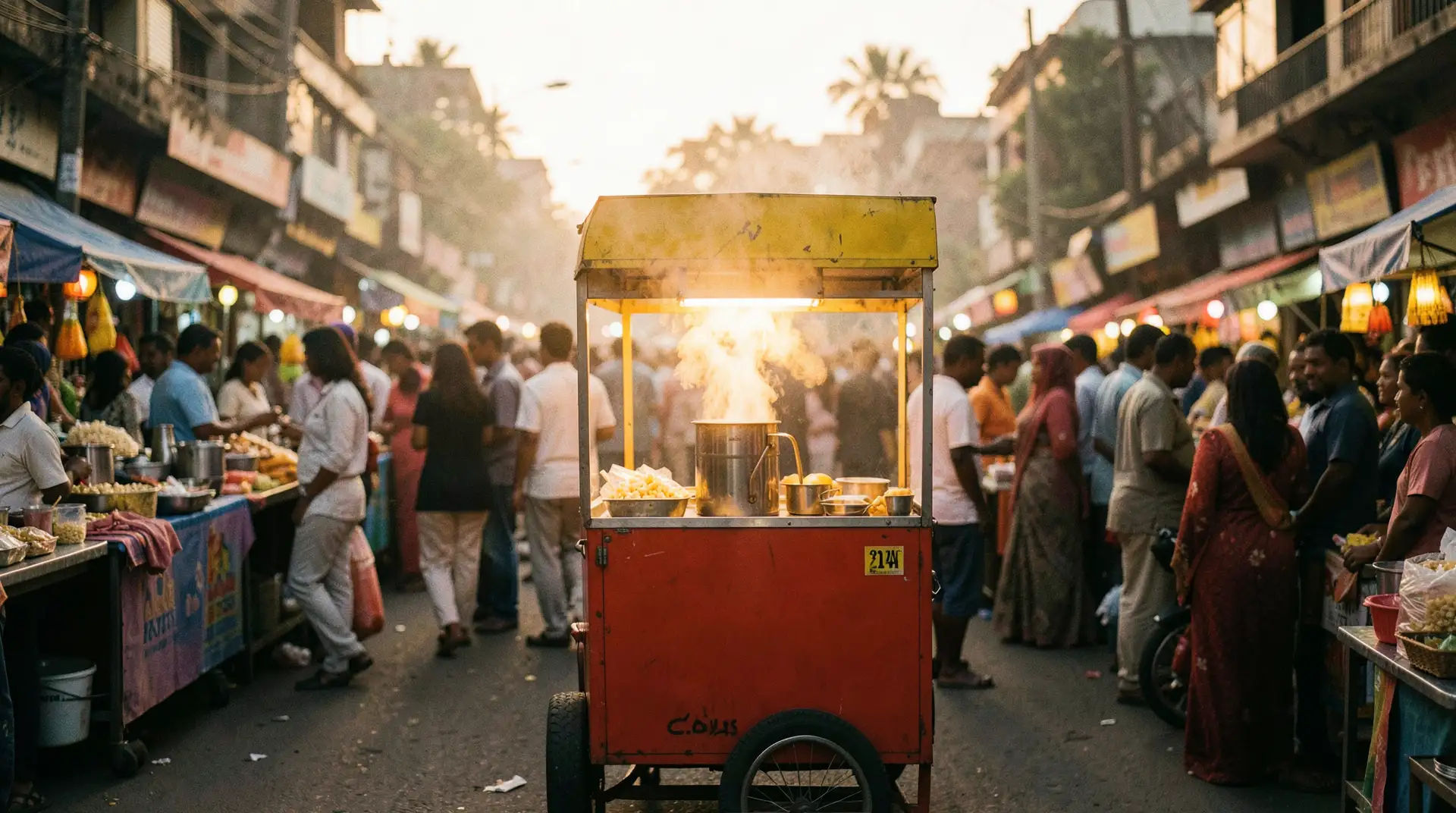
The result was lighter and drier than oil-popped corn, which is exactly what made it practical for a street setting, no oil meant no grease, no mess, and a snack that stayed crisp even after a few minutes in a paper bag. This method was common across railway platforms, temple fairs, and busy bazaars in northern and western India well into the latter half of the twentieth century. It required no electricity, no machinery, and almost no capital beyond the pan, the sand, and the corn.
Early single-screen theatres in the 1950s and 1960s typically sold their own snacks, samosas, peanuts, and nimbu pani, at intermission counters. Popcorn was still largely a street item. The shift came gradually as American cultural influence grew through the 1980s and accelerated sharply when multiplex cinema arrived in Indian cities in the late 1990s.
The multiplex model, borrowed heavily from Western chains, brought the concession counter to the centre of the cinema experience. Popcorn, already associated with film-going in the global imagination, moved with it. By the early 2000s, the large tub of salted or caramel corn had become as expected as the ticket itself.
Street vendors adapted too, adding flavours that had no Western equivalent: black salt, chaat masala, lime. In some cities, particularly in Gujarat and Rajasthan, a sweetened version close to the older tradition of roasted grain with jaggery held on. The corn was the same; the seasoning was the negotiation between a global snack and a local tongue.
The price gap between a street cone and a cinema tub remains enormous, which is itself a kind of social record. The same kernel, the same heat, the same burst, one version costs a few rupees, the other many times that, and both sell steadily. That gap is a map of how India eats: not in one way, but in several ways at once, across every price point, every setting, every appetite.
The Sand-Roasting Tradition
Sand-roasting is older than the electric popper by several generations in India. The technique works because dry sand holds and distributes heat evenly without burning the kernel's thin shell. A vendor would keep the sand moving constantly, coating each kernel in warmth until the internal moisture turned to steam and burst the hull outward.The result was lighter and drier than oil-popped corn, which is exactly what made it practical for a street setting, no oil meant no grease, no mess, and a snack that stayed crisp even after a few minutes in a paper bag. This method was common across railway platforms, temple fairs, and busy bazaars in northern and western India well into the latter half of the twentieth century. It required no electricity, no machinery, and almost no capital beyond the pan, the sand, and the corn.
How the Cinema Hall Changed Everything
The relationship between popcorn and cinema is not uniquely Indian. In the United States, popcorn found its way into movie theatres during the Great Depression because it was cheap enough for audiences who could barely afford a ticket. In India, the pairing arrived differently and later.Early single-screen theatres in the 1950s and 1960s typically sold their own snacks, samosas, peanuts, and nimbu pani, at intermission counters. Popcorn was still largely a street item. The shift came gradually as American cultural influence grew through the 1980s and accelerated sharply when multiplex cinema arrived in Indian cities in the late 1990s.
You may also like
- 'Rahul Gandhi fostering chaos': BJP questions Congress over SIR row
- Toddler raped, strangled to death by neighbour in UP's Hamirpur
- 'Rahul camp insecure of Priyanka': BJP alleges rift between siblings, accuses leader of opposition of 'sidelining' sister
- Three departures in 48 hours spell trouble for AAP in Punjab
- When to Worship Goddess Lakshmi and Lord Ganesha This Diwali: Timing and Rituals Explained
The multiplex model, borrowed heavily from Western chains, brought the concession counter to the centre of the cinema experience. Popcorn, already associated with film-going in the global imagination, moved with it. By the early 2000s, the large tub of salted or caramel corn had become as expected as the ticket itself.
The Indian Flavour Turn
What India did not do was simply import the American model unchanged. The plain salted and butter-topped versions remained, but the Indian palate pushed back in its own way. Masala popcorn, turmeric, red chilli, cumin, sometimes dried mango powder, became a standard multiplex offering alongside the imported flavours.Street vendors adapted too, adding flavours that had no Western equivalent: black salt, chaat masala, lime. In some cities, particularly in Gujarat and Rajasthan, a sweetened version close to the older tradition of roasted grain with jaggery held on. The corn was the same; the seasoning was the negotiation between a global snack and a local tongue.
The Street Cart That Never Left
For all the multiplex's dominance, the street vendor did not disappear. Walk past any large park, any crowded railway station, or any evening market in a city like Lucknow, Ahmedabad, or Pune and the electric popper on a cart is still there, often the same bright red and yellow machine that became common in the 1980s and 1990s. It replaced the sand pan but kept the same logic: a low-cost, high-volume snack that requires almost nothing to enjoy.The price gap between a street cone and a cinema tub remains enormous, which is itself a kind of social record. The same kernel, the same heat, the same burst, one version costs a few rupees, the other many times that, and both sell steadily. That gap is a map of how India eats: not in one way, but in several ways at once, across every price point, every setting, every appetite.






Loving Newspoint? Download the app now
