
West Bengal to Give ₹5 Lakh Grant to Rath Yatra Committees, Boost Facilities for Kanwariyas

In a significant policy shift aimed at celebrating and sustaining regional heritage, the West Bengal government has announced a comprehensive package of fiscal support and infrastructure measures for the upcoming religious calendar. Under the newly elected administration, the state will provide a direct financial grant of ₹5 lakh (approximately £3,200) to dozens of traditional Rath Yatra organising committees. Furthermore, extensive welfare arrangements, including helicopter flower-drop greetings, are being formalised for the thousands of holy pilgrims embarking on the Sravan Mela foot-pilgrimages.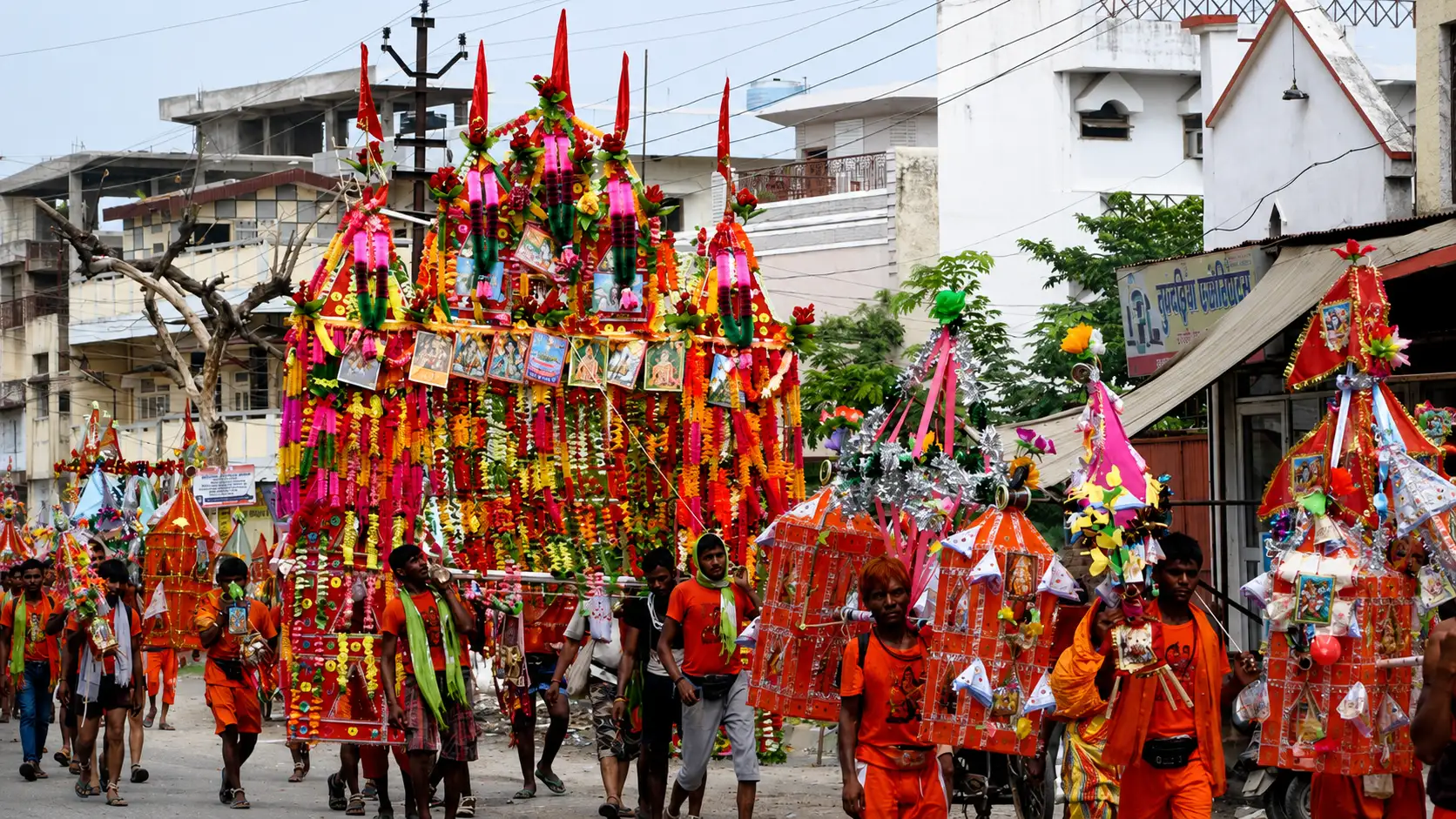
The sweeping administrative directives were formalised during a high-level virtual coordination meeting convened on Monday, 13 July 2026, at Nabanna, the state secretariat. Addressing district magistrates, senior police officials, and religious organisers, Chief Minister Suvendu Adhikari emphasized that the move reflects a foundational commitment to institutional support for historical traditions that have long shaped the cultural fabric of the region.
The primary administrative objective behind the cash injection is the direct physical maintenance and preservation of heritage assets. Organisers have been explicitly directed to utilize the resources for structural reinforcements, specifically focusing on the upkeep, refurbishment, and safety profiling of ancient wooden chariots (raths), many of which are hundreds of years old. Notable beneficiaries anchoring the inaugural cohort include historically vital celebrations such as Hooghly’s iconic 16th-century Mahesh Rath Yatra-the oldest outside Puri alongside the global ISKCON procession in Kolkata and legacy celebrations in Mahishadal and Nabadwip.
Beyond direct liquidity to organizers, the state has directed that over 75 standard seva kendras (service facilitation centres) be constructed at major congregational fairs and grounds accompanying the chariot festival. Furthermore, district authorities possess the legal leverage to recommend additional legacy committees for financial aid based on distinct historical gravity and localized public participation metrics.
An extensive network of specialized medical and rest camps will populate critical transit corridors. Specifically, along the heavily traversed route linking Sheoraphuli to the revered Tarakeshwar Dham, state-funded facilitation camps will be pitched precisely every five kilometres. Backed by a targeted regional developmental injection of ₹15 crore allocated specifically for upgrading infrastructure around Tarakeshwar Dham, these transit stations will feature fully equipped medical bays, rehydration packs, temporary rest tents, and designated spaces catered toward elderly and disabled devotees.
In a distinct gesture of state hospitality, the Chief Minister confirmed that district administrations will orchestrate aerial welcomes, showering rose petals down on walking pilgrims along major routes every Monday throughout the holy month.
"Our state holds an esteemed place globally as a profound hub of religious traditions and cultural history," Chief Minister Adhikari stated. "We are committed to actively participating in and preserving these centuries-old heritages rather than acting as passive spectators. This institutional patronage ensures our legacy is handed down safely to future generations."
With inter-departmental coordination meetings concluded across fire services, health networks, and civic transport bodies, administrative departments are racing to clear structural preparations ahead of the annual chariot processions scheduled to commence on 16 July 2026.
The sweeping administrative directives were formalised during a high-level virtual coordination meeting convened on Monday, 13 July 2026, at Nabanna, the state secretariat. Addressing district magistrates, senior police officials, and religious organisers, Chief Minister Suvendu Adhikari emphasized that the move reflects a foundational commitment to institutional support for historical traditions that have long shaped the cultural fabric of the region.
Transforming Festival Management
The structural funding marks a departure from historical practices. Historically, state involvement during major car festivals was largely confined to managing traffic flows, barricading, and maintaining public safety through standard police deployments. Under the newly greenlit scheme, the information and cultural affairs department has cleared an initial financial grant for 60 recognized Rath Yatra committees across West Bengal.The primary administrative objective behind the cash injection is the direct physical maintenance and preservation of heritage assets. Organisers have been explicitly directed to utilize the resources for structural reinforcements, specifically focusing on the upkeep, refurbishment, and safety profiling of ancient wooden chariots (raths), many of which are hundreds of years old. Notable beneficiaries anchoring the inaugural cohort include historically vital celebrations such as Hooghly’s iconic 16th-century Mahesh Rath Yatra-the oldest outside Puri alongside the global ISKCON procession in Kolkata and legacy celebrations in Mahishadal and Nabadwip.
Beyond direct liquidity to organizers, the state has directed that over 75 standard seva kendras (service facilitation centres) be constructed at major congregational fairs and grounds accompanying the chariot festival. Furthermore, district authorities possess the legal leverage to recommend additional legacy committees for financial aid based on distinct historical gravity and localized public participation metrics.
You may also like
- 2020 Delhi riots: Court convicts ex-AAP councillor Tahir Hussain, 4 others in IB officer Ankit Sharma murder case
- Army seeks to add organic pulses to troops' diet
- Six of seven cyber threats flagged last year now operational: BFSI report
- SC upholds royalty calculation rules for iron ore mining, rejects plea challenging rules
- How can State prevent elopement of boy and girl in relationship, says SC; flags POCSO misuse
Comprehensive Welfare for Kanwariyas
As the holy month of Sravan approaches, the state machinery is simultaneously redirecting significant resources toward civilian facilitation for jal yatris (commonly known as kanwariyas) devotees who travel on foot while balancing vessels of holy water on their shoulders.An extensive network of specialized medical and rest camps will populate critical transit corridors. Specifically, along the heavily traversed route linking Sheoraphuli to the revered Tarakeshwar Dham, state-funded facilitation camps will be pitched precisely every five kilometres. Backed by a targeted regional developmental injection of ₹15 crore allocated specifically for upgrading infrastructure around Tarakeshwar Dham, these transit stations will feature fully equipped medical bays, rehydration packs, temporary rest tents, and designated spaces catered toward elderly and disabled devotees.
In a distinct gesture of state hospitality, the Chief Minister confirmed that district administrations will orchestrate aerial welcomes, showering rose petals down on walking pilgrims along major routes every Monday throughout the holy month.
"Our state holds an esteemed place globally as a profound hub of religious traditions and cultural history," Chief Minister Adhikari stated. "We are committed to actively participating in and preserving these centuries-old heritages rather than acting as passive spectators. This institutional patronage ensures our legacy is handed down safely to future generations."
With inter-departmental coordination meetings concluded across fire services, health networks, and civic transport bodies, administrative departments are racing to clear structural preparations ahead of the annual chariot processions scheduled to commence on 16 July 2026.






Loving Newspoint? Download the app now
