
Sanae Takaichi's Post-Pacifist Japan: Why India Matters Most in the Fight for Trusted Global Supply Chains

The evolving geopolitical map of the Indo-Pacific has brought the relationship between New Delhi and Tokyo into sharp structural alignment. Arriving in India for a high-profile, three-day official tour, Japanese Prime Minister Sanae Takaichi ’s visit marks the commencement of the 16th India-Japan Annual Summit. Met at the airport by Union Minister of State Dr. Jitendra Singh, the diplomatic trip marks the first dedicated bilateral engagement between Takaichi and Prime Minister Narendra Modi since she assumed office, building on preliminary framework discussions held on the margins of the G7 Summit in France.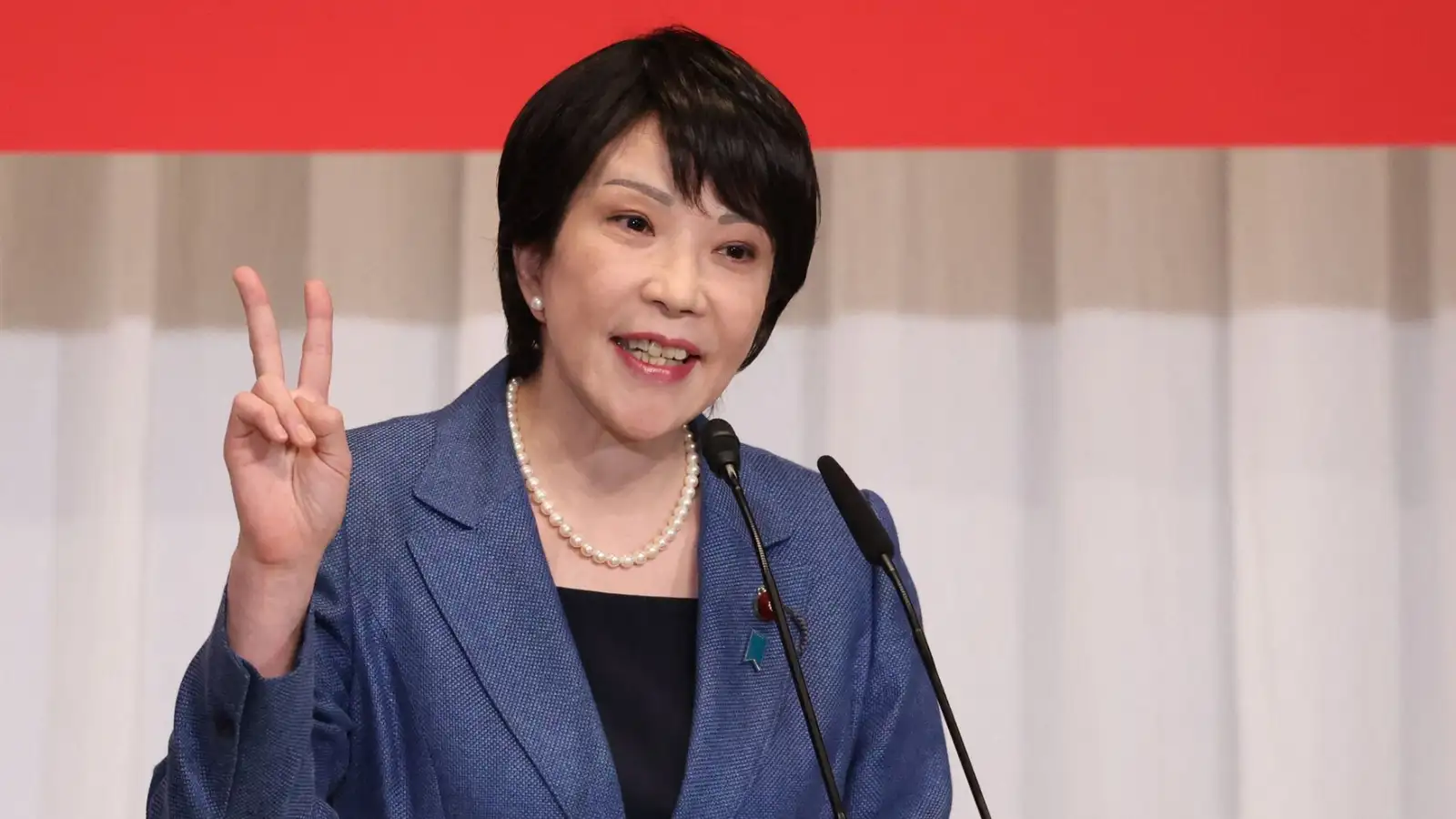
The timing of this summit carries deep strategic significance. Facing severe security realignments across its immediate maritime boundaries, Japan is actively re-evaluating its post-WWII, exclusively defensive pacifist posture. Under Takaichi's administration, Tokyo is transforming into an assertive security actor, making an operational "Special Strategic and Global Partnership" with India a fundamental pillar of its updated international vision.
Under Prime Minister Sanae Takaichi, Japan is aggressively accelerating its historic shift away from its post-WWII, strictly isolationist pacifist posture. For decades, Article 9 of the Japanese Constitution restricted the nation to a minimalist, strictly self-defense framework. However, a deteriorating security environment in the Western Pacific has forced a structural transformation.
Takaichi, an unapologetically hawkish, conservative leader is actively reshaping Tokyo’s military, intelligence, and defense architectures. Key elements of this strategy include:
For both leadership teams, the ultimate parameters of this summit stretch far beyond basic trade metrics. By embedding defensive deterrence directly into commercial and industrial partnerships such as the creation of integrated industrial value chains the two democracies are aiming to shield their critical economic sectors from sudden external pressure.
As formal discussions advance through Hyderabad House alongside major business forums, the structural message coming out of the summit remains absolute. The partnership has effectively shifted from a traditional diplomatic alliance into an active axis of regional stability, proving that close alignment with India is an indispensable anchor for the decade ahead.
The timing of this summit carries deep strategic significance. Facing severe security realignments across its immediate maritime boundaries, Japan is actively re-evaluating its post-WWII, exclusively defensive pacifist posture. Under Takaichi's administration, Tokyo is transforming into an assertive security actor, making an operational "Special Strategic and Global Partnership" with India a fundamental pillar of its updated international vision.
What is Sanae Takaichi's Post-Pacifist Japan ?
Under Prime Minister Sanae Takaichi, Japan is aggressively accelerating its historic shift away from its post-WWII, strictly isolationist pacifist posture. For decades, Article 9 of the Japanese Constitution restricted the nation to a minimalist, strictly self-defense framework. However, a deteriorating security environment in the Western Pacific has forced a structural transformation. Takaichi, an unapologetically hawkish, conservative leader is actively reshaping Tokyo’s military, intelligence, and defense architectures. Key elements of this strategy include:
You may also like
- Board exams may get 50 pc weightage in admissions based on NEET, JEE
- Finding out 'wife' was male while shaving, man kills partner
- 'Outrage when J&K leaders urge talks, not when RSS does': Omar Abdullah backs call for India-Pakistan dialogue
- How Bengal is taking a 'Right' turn: What Suvendu Adhikari changed in post-Mamata era
- Isro headquarters evacuated after bomb threat email, nothing suspicious found
- Constitutional and Institutional Reform: Driving pushes to revise Article 9 to formalize an active military presence and establishing a centralized "National Intelligence Council" with mandates to track foreign intelligence operations.
- Massive Defense Spending: Pushing military budgets to match NATO thresholds (2% of GDP) to build powerful indigenous deterrents.
- Offensive Capabilities: Actively acquiring and building long-range strike missiles, hypersonic weapons, and electromagnetic railguns, while lifting self-imposed bans on exporting lethal military hardware.
- Proactive Deterrence: Moving away from a purely reactive stance to focus on "collective self-defense" and proactive alliances, working under the philosophy that deterrence only works if adversaries know Japan has both the physical capacity and the absolute will to counter aggression.
Why Does India Matter ?
As Japan steps out of its pacifist shell, India serves as Tokyo's most critical strategic, economic, and security anchor in Asia. The connection remains foundational to the updated Free and Open Indo-Pacific (FOIP) strategy for several reasons:- A Counterweight to Regional Assertiveness: With rising maritime tensions across the Western Pacific and South China Sea, Japan requires a massive, nuclear-capable partner in the Indian Ocean. India’s strategic location makes it an indispensable maritime ally. By deepening naval coordination, intelligence sharing, and joint defense exercises, New Delhi and Tokyo are creating a dual-ocean chokehold to guarantee freedom of navigation and resist unilateral attempts to alter the regional status quo.
- Weaponizing Economic Security : A core pillar of this new doctrine is economic safety cooperation, the belief that true national security cannot exist if critical industries depend on hostile neighbors. Facing aggressive export controls and supply-chain pressures, Japan views India as the ultimate destination to diversify its manufacturing ecosystem. Through the creation of "Trusted Ecosystems," Japan is infusing capital and technical expertise into India to build highly resilient, alternative supply lines for semiconductor fabrication, AI safety frameworks, and critical minerals sourcing.
- Overcoming Demographic Realities: Japan's militarization and economic ambitions are heavily bottlenecked by a rapidly aging domestic population and a shrinking workforce. Through platforms like the Human Resource Mobility Forum, India serves as a vital talent pipeline. By regularizing immigration pathways, Japan is tapping into India’s vast repository of engineering, digital, and technical professionals to build up its infrastructure and high-tech defense labs.
- Securing the Wider Bay of Bengal & Beyond: While previous Japanese policies focused primarily on localized connectivity (like linking India’s Northeast to the Bay of Bengal), the updated strategy stretches to a global level. By building an integrated "Industrial Value Chain," the two democracies are positioning themselves to protect vital energy corridors passing through the Persian Gulf and Malacca Strait, locking down security rules for the next generation.
An Indispensable Axis of Stability
For both leadership teams, the ultimate parameters of this summit stretch far beyond basic trade metrics. By embedding defensive deterrence directly into commercial and industrial partnerships such as the creation of integrated industrial value chains the two democracies are aiming to shield their critical economic sectors from sudden external pressure.
As formal discussions advance through Hyderabad House alongside major business forums, the structural message coming out of the summit remains absolute. The partnership has effectively shifted from a traditional diplomatic alliance into an active axis of regional stability, proving that close alignment with India is an indispensable anchor for the decade ahead.






More from our partners


Loving Newspoint? Download the app now
