
10 Cities Around the World Where History Comes Alive

Some cities preserve history inside museums, while others place it directly in front of you. Their streets follow medieval routes, ancient walls still surround neighbourhoods and centuries-old buildings remain part of everyday life. Walking through these places can feel like moving through different periods of human history within a single afternoon. From ancient Mediterranean settlements to imperial capitals and old trading centres, historic cities also show how cultures changed through migration, commerce, conflict and invention. For travellers who want more than photographs, these destinations offer the chance to see how the past continues to influence modern life.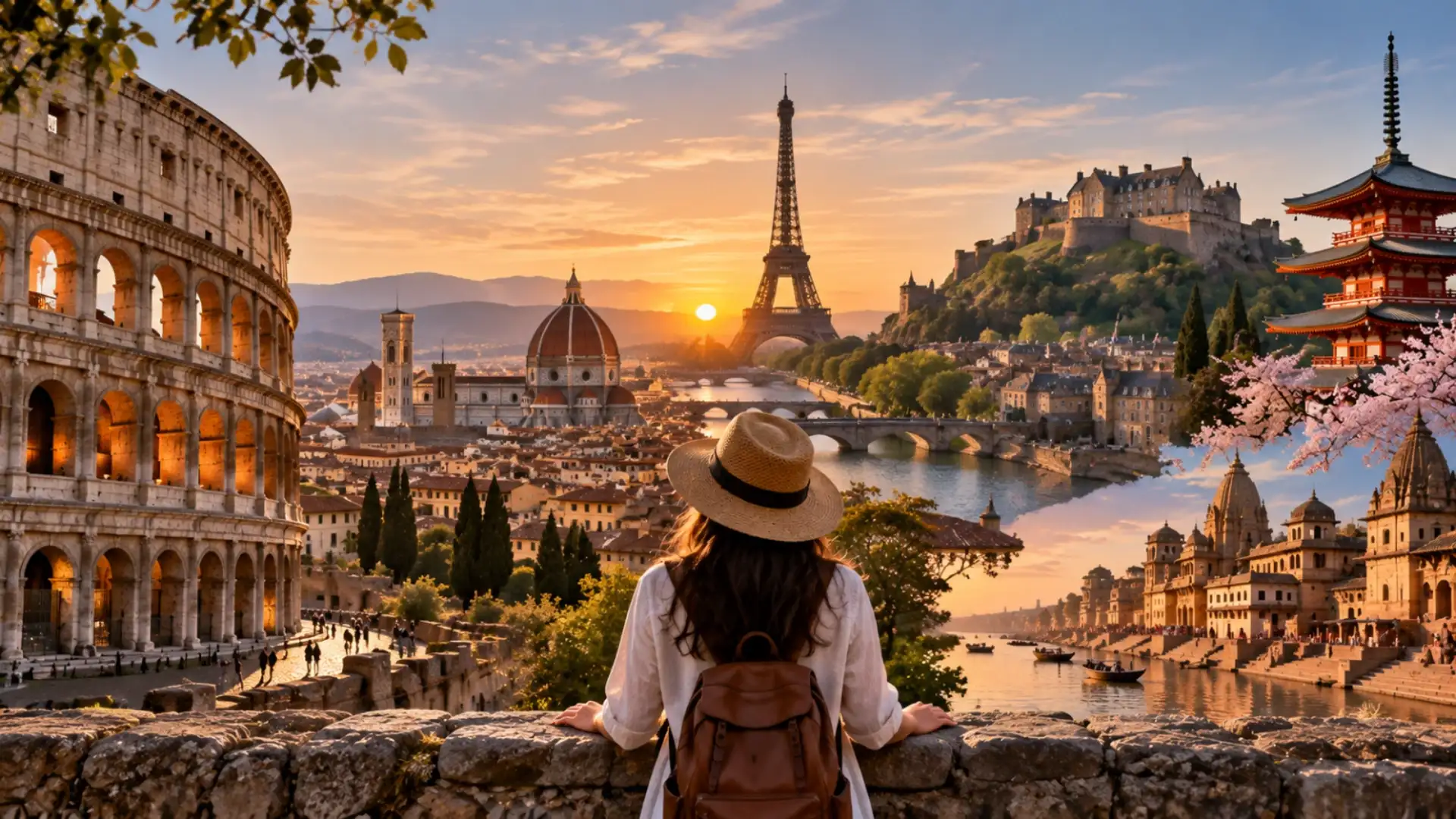
The Colosseum and Roman Forum provide glimpses of imperial Rome, while later architecture demonstrates how the city repeatedly reinvented itself.
Its historic character is particularly striking because modern life continues alongside preserved cultural practices.
The city's position along the Bosphorus also reflects its long importance as a centre of trade.
Its ghats along the Ganges, narrow lanes and centuries-old temples create an environment where history is not separated from daily life.
The most fascinating part is often the coexistence of old and new. Historic cities remind us that history is not simply something that happened long ago. It continues to shape the places where people live, work and travel today.
Rome, Italy
Rome is almost impossible to separate from its history. Ancient ruins , Renaissance buildings, Baroque fountains and modern neighbourhoods exist within the same urban landscape.The Colosseum and Roman Forum provide glimpses of imperial Rome, while later architecture demonstrates how the city repeatedly reinvented itself.
Kyoto, Japan
Kyoto was Japan's imperial capital for centuries. Traditional wooden houses, temples, gardens and tea traditions remain important parts of the city.Its historic character is particularly striking because modern life continues alongside preserved cultural practices.
Istanbul, Türkiye
Istanbul sits between Europe and Asia and has served as a major centre under several empires. Byzantine and Ottoman influences remain visible in its architecture and neighbourhoods.The city's position along the Bosphorus also reflects its long importance as a centre of trade.
Varanasi, India
Varanasi is among India's oldest continuously inhabited cities and has a profound cultural and religious history.Its ghats along the Ganges, narrow lanes and centuries-old temples create an environment where history is not separated from daily life.
You may also like
- Post Office SCSS: Invest in this scheme just once and receive ₹20,500 every month..
- EPFO: Complete this important PF-related task by December 28; your retirement fund could be affected..
- Government Launches Rashtriya Poshan Maah 2026: Pregnant Women and Children Can Get Key Benefits, Check Details
- Zero waste, zero electricity bill: How a 75-year-old Padma Shri awardee built a home that powers itself and 50 others too
- Preparing The Heart For Krishn
Cairo, Egypt
Cairo provides access to an extraordinary range of Egyptian history. Islamic architecture, medieval markets and nearby ancient monuments reveal different chapters of the country's past.Fez, Morocco
The old medina of Fez is famous for its narrow lanes, traditional crafts and historic buildings. Walking through it provides an unusually immersive experience of an old urban environment.Athens, Greece
Athens combines ancient landmarks with a lively modern city. The Acropolis remains its most recognisable historic feature, but archaeological sites appear throughout the urban landscape.Cusco, Peru
Cusco reveals the meeting of Inca and Spanish histories. In parts of the city, Spanish colonial structures were built over earlier Inca foundations.Prague, Czech Republic
Prague's historic centre contains medieval, Gothic, Renaissance and Baroque architecture. Its bridges, squares and churches make the city particularly rewarding to explore on foot.Jerusalem
Jerusalem contains sites sacred to Judaism, Christianity and Islam. Its Old City reflects centuries of religious, political and cultural change.Why Historic Cities Still Matter
Historic cities are valuable because they make the past tangible. A textbook can explain how people lived centuries ago, but walking through an old street can make that history feel immediate.The most fascinating part is often the coexistence of old and new. Historic cities remind us that history is not simply something that happened long ago. It continues to shape the places where people live, work and travel today.






Loving Newspoint? Download the app now
