
10 Flightless Birds That Defy Nature’s Rules and Redefine Evolution

When people think of birds, they often picture creatures soaring across the sky. But flightless birds break that expectation completely. These unique species have evolved over millions of years to survive without flying. Instead, they developed powerful legs, strong swimming skills, and highly specialised survival instincts. From the deserts of Africa to the icy waters of Antarctica, flightless birds prove that nature does not rely only on wings for success—sometimes strength, speed, and adaptation matter more than flight.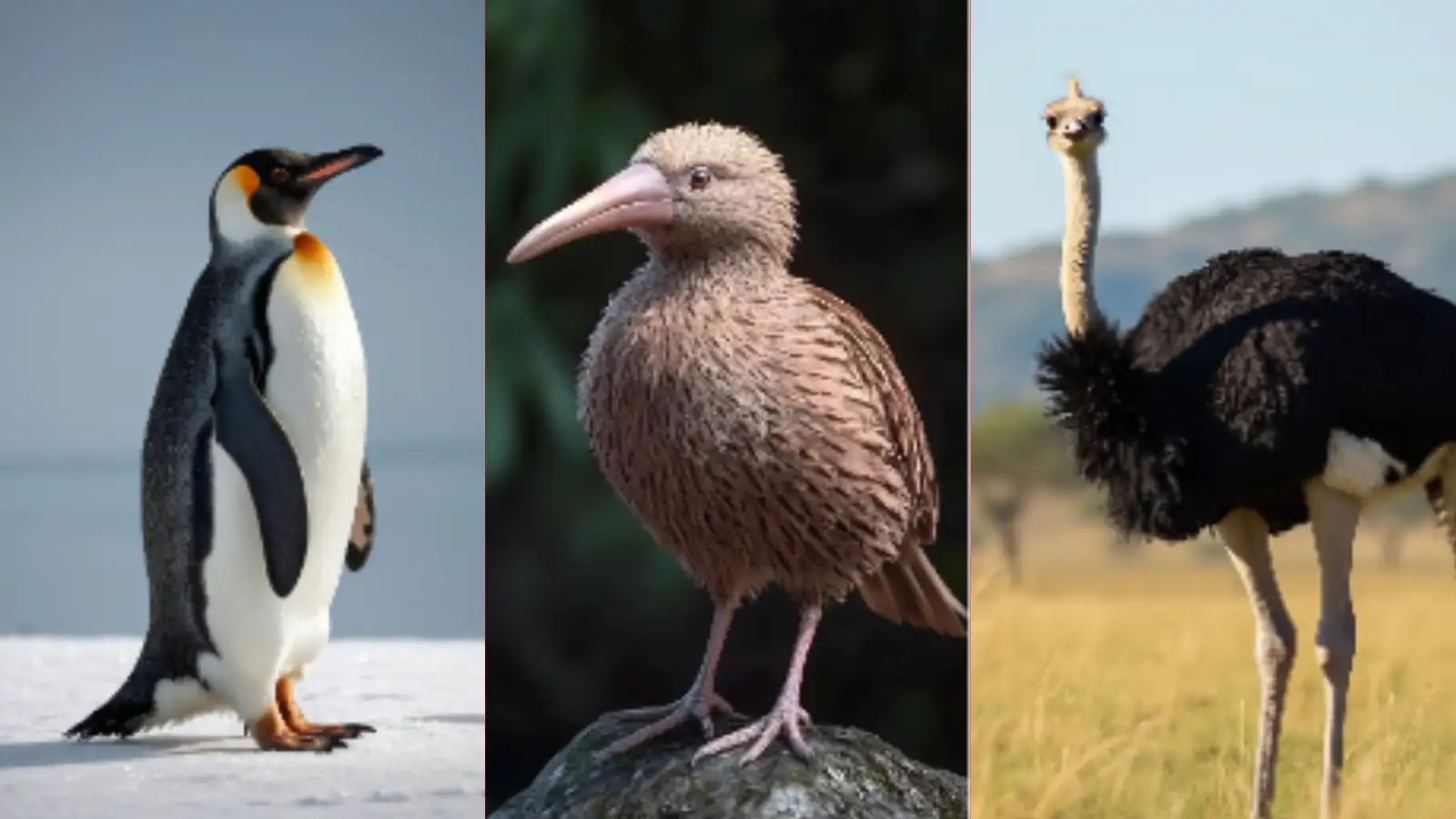
1. Ostrich – The Speed Champion of Land
Ostrich is the largest bird on Earth and one of the fastest runners in the animal kingdom.
Instead of flying, ostriches mastered life on the ground, becoming survival experts in open African landscapes.
2. Penguin – Master of the Ocean
Penguin turned its wings into flippers, making it one of the most efficient swimmers among birds.
Penguins show how evolution can completely reshape a bird’s ability for survival in extreme cold environments.
3. Kiwi – The Night Explorer
Kiwi is small, shy, and active at night.
The kiwi remains a national symbol and one of the most unusual birds in the world.
4. Kakapo – The Rare Nocturnal Parrot
Kakapo is one of the rarest birds on Earth.
Its survival story is a powerful reminder of how human activity can impact wildlife.
5. Cassowary – The Rainforest Warrior
Cassowary is known for its strength and striking appearance.
Though shy, cassowaries are among the most powerful ground birds.
6. Emu – Australia’s Giant Runner
Emu is the second-largest bird in the world.
Emus are key survivors of Australia’s harsh environments.
7. Rhea – South America’s Speed Bird
Rhea resembles a smaller ostrich.
It thrives in wide, open habitats where speed is essential.
8. Takahe – The Hidden Treasure of New Zealand
Takahe was once thought extinct.
It is now one of New Zealand’s most carefully protected species.
9. Weka – The Curious Forest Bird
Weka is known for its bold personality.
Wekas are highly adaptable despite being flightless.
10. Flightless Cormorant – The Island Specialist
Flightless Cormorant is the only cormorant species that cannot fly.
It perfectly demonstrates island-based evolution.
Evolution Beyond Flight
Flightless birds prove that survival is not always about flying higher. Across different continents and environments, these birds adapted in unique ways—some became fast runners, others expert swimmers, and some developed specialised feeding habits. Their evolution highlights nature’s creativity and the many paths life can take to survive and thrive.
1. Ostrich – The Speed Champion of Land
Ostrich is the largest bird on Earth and one of the fastest runners in the animal kingdom.
- Can sprint up to 70 km/h
- Uses long, powerful legs for defence and speed
- Has excellent eyesight to spot predators early
Instead of flying, ostriches mastered life on the ground, becoming survival experts in open African landscapes.
2. Penguin – Master of the Ocean
Penguin turned its wings into flippers, making it one of the most efficient swimmers among birds.
- Excellent underwater hunters
- Can dive hundreds of metres deep
- Protected by thick feathers and fat layers
Penguins show how evolution can completely reshape a bird’s ability for survival in extreme cold environments.
3. Kiwi – The Night Explorer
Kiwi is small, shy, and active at night.
- Uses a strong sense of smell to find food underground
- Long beak helps it hunt insects and worms
- Became flightless due to lack of predators in New Zealand
The kiwi remains a national symbol and one of the most unusual birds in the world.
4. Kakapo – The Rare Nocturnal Parrot
Kakapo is one of the rarest birds on Earth.
- Cannot fly and is active at night
- Once had no natural predators
- Now critically protected by conservation teams
Its survival story is a powerful reminder of how human activity can impact wildlife.
5. Cassowary – The Rainforest Warrior
Cassowary is known for its strength and striking appearance.
- Powerful legs capable of strong defensive kicks
- Helmet-like casque on its head
- Plays an important role in spreading forest seeds
Though shy, cassowaries are among the most powerful ground birds.
6. Emu – Australia’s Giant Runner
Emu is the second-largest bird in the world.
- Fast runner adapted to open landscapes
- Long legs built for endurance
- Can travel long distances in search of food
Emus are key survivors of Australia’s harsh environments.
7. Rhea – South America’s Speed Bird
Rhea resembles a smaller ostrich.
- Native to grasslands of South America
- Excellent runner with strong legs
- Lives in groups for protection
It thrives in wide, open habitats where speed is essential.
8. Takahe – The Hidden Treasure of New Zealand
Takahe was once thought extinct.
- Rediscovered in remote mountains
- Strong beak adapted for grass feeding
- Very limited population
It is now one of New Zealand’s most carefully protected species.
9. Weka – The Curious Forest Bird
Weka is known for its bold personality.
- Often approaches humans out of curiosity
- Strong legs for walking through dense forests
- Opportunistic feeder
Wekas are highly adaptable despite being flightless.
10. Flightless Cormorant – The Island Specialist
Flightless Cormorant is the only cormorant species that cannot fly.
- Found only in the Galápagos Islands
- Excellent swimmer and diver
- Small wings evolved due to lack of predators
It perfectly demonstrates island-based evolution.
Evolution Beyond Flight
Flightless birds prove that survival is not always about flying higher. Across different continents and environments, these birds adapted in unique ways—some became fast runners, others expert swimmers, and some developed specialised feeding habits. Their evolution highlights nature’s creativity and the many paths life can take to survive and thrive.
Next Story