
10 National Birds With Hidden Meanings That Symbolise Nations’ Spirit

Every country has its own identity, but national birds with hidden meanings reveal something deeper than flags or anthems ever could. These birds are not chosen just for beauty or strength - they represent courage, freedom, culture, survival, and the soul of a nation. From soaring eagles to graceful cranes, each national bird carries a powerful story that connects nature with human history. Interestingly, many of these symbolic birds are now facing threats in the wild, making their meaning even more significant today.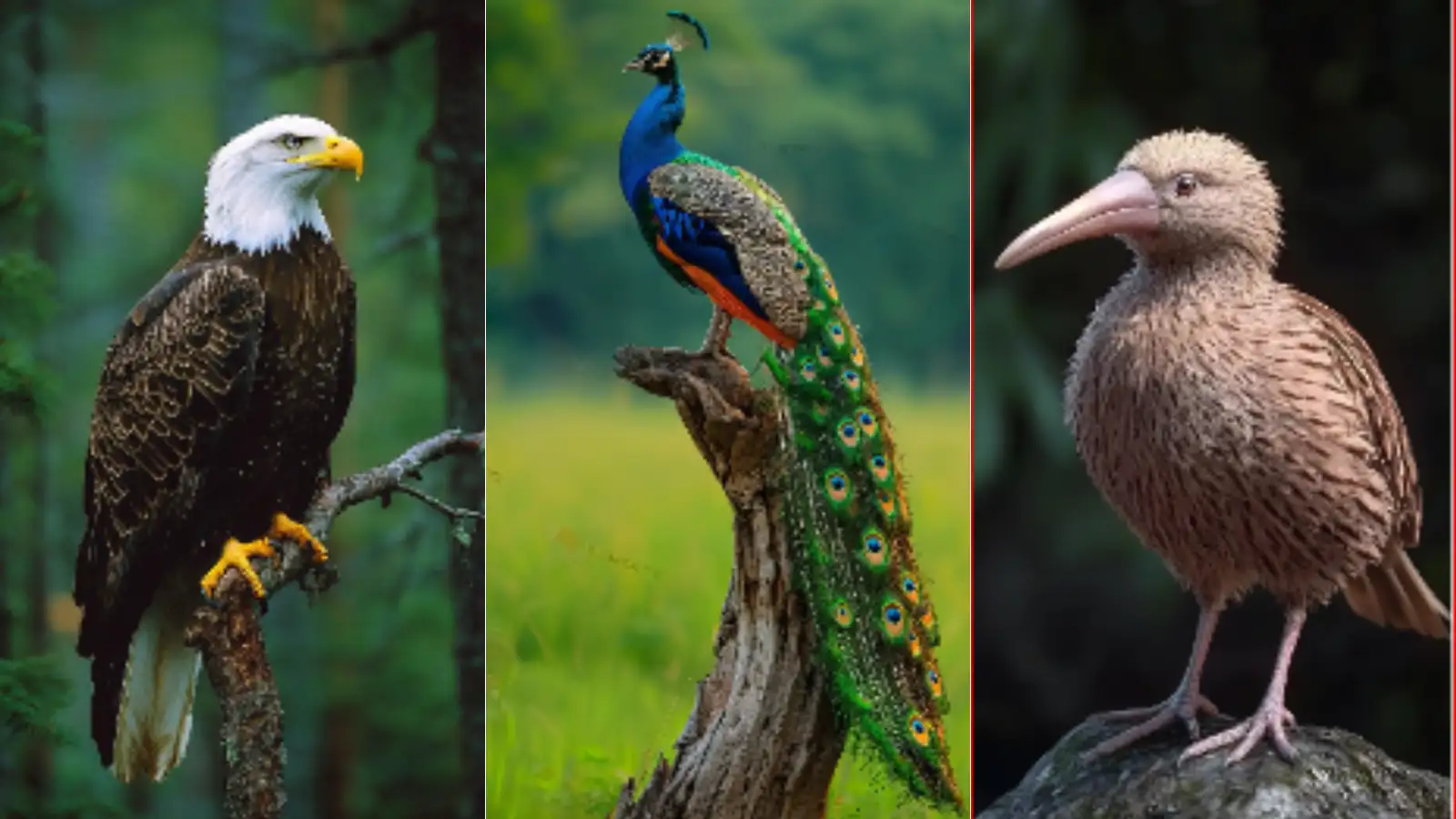
1. Bald Eagle – United States: Freedom and Strength
The bald eagle stands as a powerful symbol of the United States, representing independence, courage, and vision. Known for its sharp eyesight and commanding flight, it reflects leadership and freedom. Once close to extinction, its recovery also symbolises resilience and national pride.
2. Indian Peacock – India: Beauty and Cultural Grace
India’s national bird, the peacock, is a celebration of colour, elegance, and tradition. Its vibrant feathers and monsoon dance are deeply rooted in Indian mythology and art. The peacock represents spirituality, royalty, and the richness of Indian heritage.
3. Kiwi – New Zealand: Uniqueness and Identity
The kiwi is a small, flightless bird that represents New Zealand’s unique natural identity. Despite its size, it carries huge symbolic weight. It reflects individuality, survival, and the idea that strength does not always depend on physical power.
4. Andean Condor – Bolivia: Freedom Above the Mountains
The Andean condor is one of the world’s largest flying birds, soaring across the Andes with unmatched grace. In Bolivia and other South American regions, it symbolises power, spirituality, and connection to the skies and ancient traditions.
5. Philippine Eagle – Philippines: Bravery and Survival
The Philippine eagle is one of the rarest and most powerful eagles in the world. It symbolises courage and independence but is also critically endangered due to deforestation. Its existence highlights the importance of wildlife conservation and national responsibility.
6. Grey Crowned Crane – Uganda: Peace and Harmony
Uganda’s national bird is known for its golden crown-like feathers and graceful dance. The grey crowned crane represents peace, beauty, and balance. It is also featured on Uganda’s flag, making it a strong national symbol of unity and elegance.
7. Canada Jay – Canada: Endurance and Resilience
The Canada jay is a hardy bird that survives extreme cold conditions. It symbolises endurance, adaptability, and survival in harsh environments. Its calm presence in frozen landscapes reflects Canada’s strength and resilience as a nation.
8. Emu – Australia: Progress and Moving Forward
Australia’s emu is a large, flightless bird known for always moving forward and rarely stepping backwards. This behaviour symbolises national progress and determination. It represents Australia’s forward-thinking spirit and resilience in challenging environments.
9. Golden Eagle – Mexico: Power and Ancient Heritage
The golden eagle holds deep cultural importance in Mexico, famously featured on the national flag. It symbolises strength, bravery, and ancient Aztec heritage. The bird is a reminder of Mexico’s rich historical roots and warrior spirit.
10. Green Pheasant – Japan: Harmony and Nature
Japan’s national bird, the green pheasant, represents harmony, peace, and connection with nature. Found in Japanese landscapes, it reflects simplicity and balance. Its calm presence aligns with Japan’s cultural appreciation for natural beauty and mindfulness.
The Deep Meaning Behind National Birds
These national birds with hidden meanings are more than just symbols - they are living reflections of each country’s identity, values, and history. From survival stories to cultural pride, they remind us how closely nature and humanity are connected. Protecting these birds also means preserving the heritage and spirit they represent.
1. Bald Eagle – United States: Freedom and Strength
The bald eagle stands as a powerful symbol of the United States, representing independence, courage, and vision. Known for its sharp eyesight and commanding flight, it reflects leadership and freedom. Once close to extinction, its recovery also symbolises resilience and national pride.
2. Indian Peacock – India: Beauty and Cultural Grace
India’s national bird, the peacock, is a celebration of colour, elegance, and tradition. Its vibrant feathers and monsoon dance are deeply rooted in Indian mythology and art. The peacock represents spirituality, royalty, and the richness of Indian heritage.
3. Kiwi – New Zealand: Uniqueness and Identity
The kiwi is a small, flightless bird that represents New Zealand’s unique natural identity. Despite its size, it carries huge symbolic weight. It reflects individuality, survival, and the idea that strength does not always depend on physical power.
4. Andean Condor – Bolivia: Freedom Above the Mountains
The Andean condor is one of the world’s largest flying birds, soaring across the Andes with unmatched grace. In Bolivia and other South American regions, it symbolises power, spirituality, and connection to the skies and ancient traditions.
You may also like
- Annapurna Scheme: Find Out Who Is Eligible, How to Apply Online, and What Now Awaits the Beneficiaries of 'Lakshmi Bhandar'?
- EPFO: Has Your PF Account Suddenly Become Inactive? Don't Worry—Here's How to Fix It from Home Using Your Mobile Phone..
- Big News for Traders: SEBI's New Rule Will Change the Way Options Trading Is Conducted..
- Have you also received a message in the name of the RBI? Be alert—otherwise, your account could be drained..
- Post Office POMIS Scheme: Invest ₹15 Lakh with a Partner and Receive ₹9,250 Every Month..
5. Philippine Eagle – Philippines: Bravery and Survival
The Philippine eagle is one of the rarest and most powerful eagles in the world. It symbolises courage and independence but is also critically endangered due to deforestation. Its existence highlights the importance of wildlife conservation and national responsibility.
6. Grey Crowned Crane – Uganda: Peace and Harmony
Uganda’s national bird is known for its golden crown-like feathers and graceful dance. The grey crowned crane represents peace, beauty, and balance. It is also featured on Uganda’s flag, making it a strong national symbol of unity and elegance.
7. Canada Jay – Canada: Endurance and Resilience
The Canada jay is a hardy bird that survives extreme cold conditions. It symbolises endurance, adaptability, and survival in harsh environments. Its calm presence in frozen landscapes reflects Canada’s strength and resilience as a nation.
8. Emu – Australia: Progress and Moving Forward
Australia’s emu is a large, flightless bird known for always moving forward and rarely stepping backwards. This behaviour symbolises national progress and determination. It represents Australia’s forward-thinking spirit and resilience in challenging environments.
9. Golden Eagle – Mexico: Power and Ancient Heritage
The golden eagle holds deep cultural importance in Mexico, famously featured on the national flag. It symbolises strength, bravery, and ancient Aztec heritage. The bird is a reminder of Mexico’s rich historical roots and warrior spirit.
10. Green Pheasant – Japan: Harmony and Nature
Japan’s national bird, the green pheasant, represents harmony, peace, and connection with nature. Found in Japanese landscapes, it reflects simplicity and balance. Its calm presence aligns with Japan’s cultural appreciation for natural beauty and mindfulness.
The Deep Meaning Behind National Birds
These national birds with hidden meanings are more than just symbols - they are living reflections of each country’s identity, values, and history. From survival stories to cultural pride, they remind us how closely nature and humanity are connected. Protecting these birds also means preserving the heritage and spirit they represent.






More from our partners


Loving Newspoint? Download the app now
