
5 Endangered Animals That Could Go Extinct Sooner Than You Think

Endangered animals around the world are facing an alarming fight for survival. While some species receive global attention, many are quietly slipping towards extinction due to habitat loss, climate change, poaching, pollution, and human interference. With their populations shrinking at an unprecedented rate, several remarkable creatures may vanish forever in the coming decades. Here’s a look at five endangered animals that are dangerously close to disappearing and why protecting them has become more urgent than ever.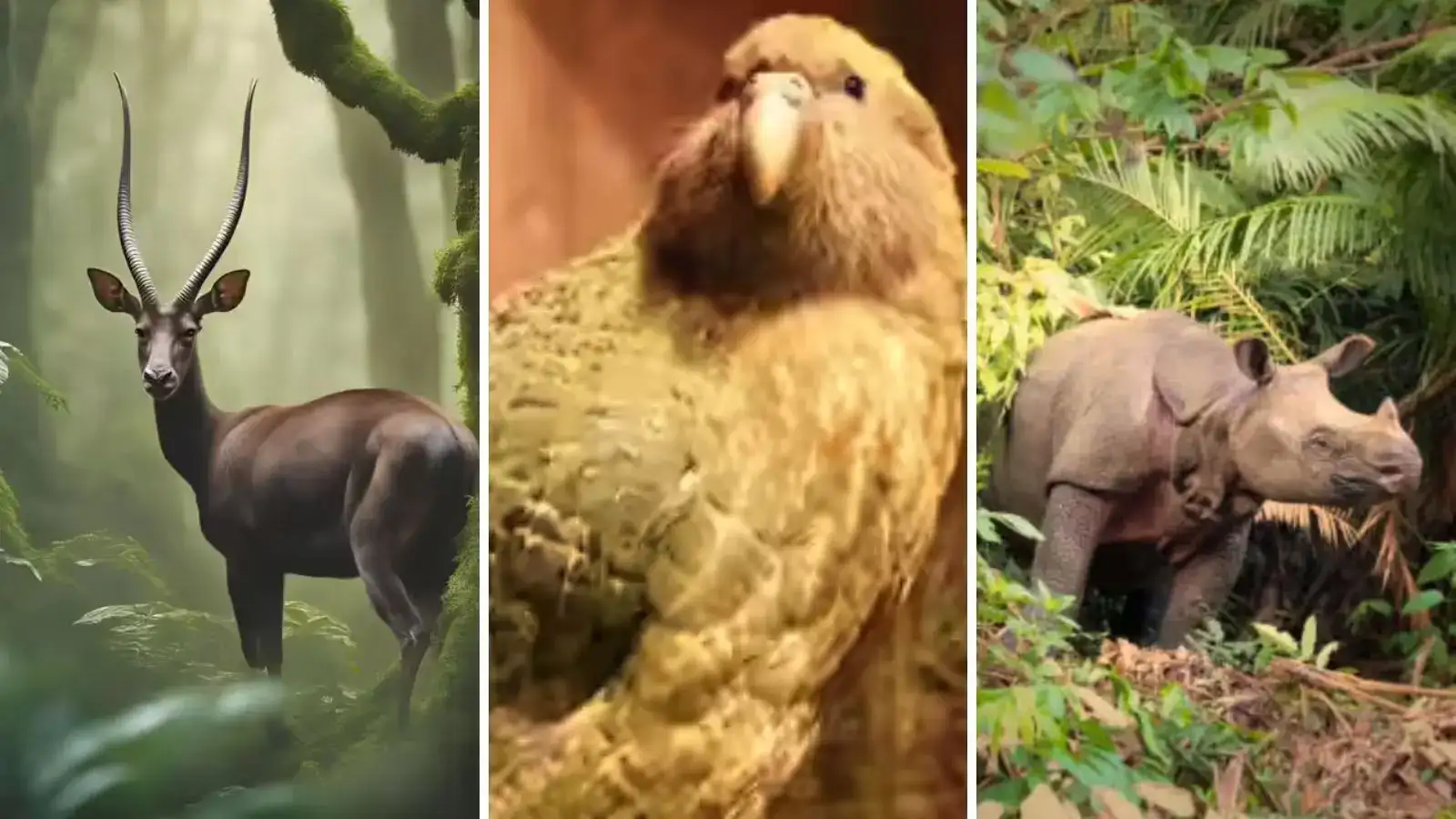
Vaquita: The World's Rarest Marine Mammal
The Vaquita is one of the most critically endangered marine mammals on the planet. Found only in the waters of Mexico’s Gulf of California, this small porpoise has experienced a dramatic population decline over the past few decades.
The primary threat to its survival comes from illegal fishing practices. Vaquitas often become trapped in fishing nets, leading to accidental deaths. With only a tiny number believed to remain in the wild, conservationists are racing against time to prevent the species from becoming extinct. The Vaquita's struggle serves as a stark reminder of the impact human activities can have on marine ecosystems.
Saola: The Elusive “Asian Unicorn”
Often referred to as the “Asian Unicorn,” the Saola is among the rarest mammals on Earth. Native to the dense forests of Laos and Vietnam, this mysterious species remained unknown to science until the early 1990s.
Its elusive nature has made it incredibly difficult to study, and sightings remain exceptionally rare. Habitat destruction, along with illegal hunting, continues to threaten its existence. Many experts fear that without stronger conservation measures, the Saola could disappear before researchers fully understand its behaviour and ecology.
Amur Leopard : One of the Rarest Big Cats Alive
The Amur Leopard is renowned for its striking spotted coat and remarkable ability to survive in harsh, cold environments. Found primarily in forests along the Russia-China border, it remains one of the world's rarest big cats.
Decades of habitat loss, poaching, and declining prey populations have pushed the species to the brink. Although conservation programmes have helped stabilise numbers in recent years, the Amur Leopard remains critically endangered. Every individual animal plays a vital role in ensuring the future survival of the species.
Kakapo : The Flightless Parrot Fighting for Survival
The Kakapo is unlike any other parrot in the world. Native to New Zealand, this large, nocturnal bird cannot fly and spends much of its life on the ground.
Its unique characteristics made it highly vulnerable when invasive predators such as rats, cats, and stoats were introduced to its habitat. The species came dangerously close to extinction, but intensive conservation efforts have helped keep it alive. Today, every remaining Kakapo is closely monitored, making it one of the most carefully protected birds on Earth.
Javan Rhinoceros : A Giant on the Brink of Extinction
The Javan Rhinoceros is one of the rarest large mammals in the world. Once found across much of Asia, it now survives in a single protected region of Indonesia.
Years of hunting and habitat destruction drastically reduced its population. The species faces an uncertain future because its remaining numbers are concentrated in one location. A disease outbreak, natural disaster, or major environmental change could have devastating consequences. Despite receiving less attention than some other rhino species, the Javan Rhinoceros remains one of conservation's greatest priorities.
Why Protecting Endangered Animals Matters
The loss of a species is irreversible. Every animal plays a unique role in maintaining ecological balance, and their disappearance can trigger consequences that affect entire ecosystems. Protecting endangered animals not only preserves biodiversity but also safeguards the health of forests, oceans, and other natural habitats that support life on Earth.
As these five species continue their battle for survival, their future depends heavily on global conservation efforts, habitat protection, and greater public awareness. Without action, future generations may only know these extraordinary animals through photographs and history books.
Vaquita: The World's Rarest Marine Mammal
The Vaquita is one of the most critically endangered marine mammals on the planet. Found only in the waters of Mexico’s Gulf of California, this small porpoise has experienced a dramatic population decline over the past few decades.
The primary threat to its survival comes from illegal fishing practices. Vaquitas often become trapped in fishing nets, leading to accidental deaths. With only a tiny number believed to remain in the wild, conservationists are racing against time to prevent the species from becoming extinct. The Vaquita's struggle serves as a stark reminder of the impact human activities can have on marine ecosystems.
Saola: The Elusive “Asian Unicorn”
Often referred to as the “Asian Unicorn,” the Saola is among the rarest mammals on Earth. Native to the dense forests of Laos and Vietnam, this mysterious species remained unknown to science until the early 1990s.
Its elusive nature has made it incredibly difficult to study, and sightings remain exceptionally rare. Habitat destruction, along with illegal hunting, continues to threaten its existence. Many experts fear that without stronger conservation measures, the Saola could disappear before researchers fully understand its behaviour and ecology.
Amur Leopard : One of the Rarest Big Cats Alive
The Amur Leopard is renowned for its striking spotted coat and remarkable ability to survive in harsh, cold environments. Found primarily in forests along the Russia-China border, it remains one of the world's rarest big cats.
Decades of habitat loss, poaching, and declining prey populations have pushed the species to the brink. Although conservation programmes have helped stabilise numbers in recent years, the Amur Leopard remains critically endangered. Every individual animal plays a vital role in ensuring the future survival of the species.
Kakapo : The Flightless Parrot Fighting for Survival
The Kakapo is unlike any other parrot in the world. Native to New Zealand, this large, nocturnal bird cannot fly and spends much of its life on the ground.
Its unique characteristics made it highly vulnerable when invasive predators such as rats, cats, and stoats were introduced to its habitat. The species came dangerously close to extinction, but intensive conservation efforts have helped keep it alive. Today, every remaining Kakapo is closely monitored, making it one of the most carefully protected birds on Earth.
Javan Rhinoceros : A Giant on the Brink of Extinction
The Javan Rhinoceros is one of the rarest large mammals in the world. Once found across much of Asia, it now survives in a single protected region of Indonesia.
Years of hunting and habitat destruction drastically reduced its population. The species faces an uncertain future because its remaining numbers are concentrated in one location. A disease outbreak, natural disaster, or major environmental change could have devastating consequences. Despite receiving less attention than some other rhino species, the Javan Rhinoceros remains one of conservation's greatest priorities.
Why Protecting Endangered Animals Matters
The loss of a species is irreversible. Every animal plays a unique role in maintaining ecological balance, and their disappearance can trigger consequences that affect entire ecosystems. Protecting endangered animals not only preserves biodiversity but also safeguards the health of forests, oceans, and other natural habitats that support life on Earth.
As these five species continue their battle for survival, their future depends heavily on global conservation efforts, habitat protection, and greater public awareness. Without action, future generations may only know these extraordinary animals through photographs and history books.
Next Story