
5 Fascinating Reptiles That Reveal Secrets of the Dinosaur Age

Long after the dinosaurs disappeared from Earth around 66 million years ago, some remarkable reptile lineages continued to survive and evolve. While modern reptiles are not all direct descendants of dinosaurs, several living species are closely connected to ancient reptilian groups that shared the planet with them. From a mysterious creature with a “third eye” to a giant lizard with a powerful bite, these reptiles with ancient dinosaur connections offer a fascinating glimpse into prehistoric life.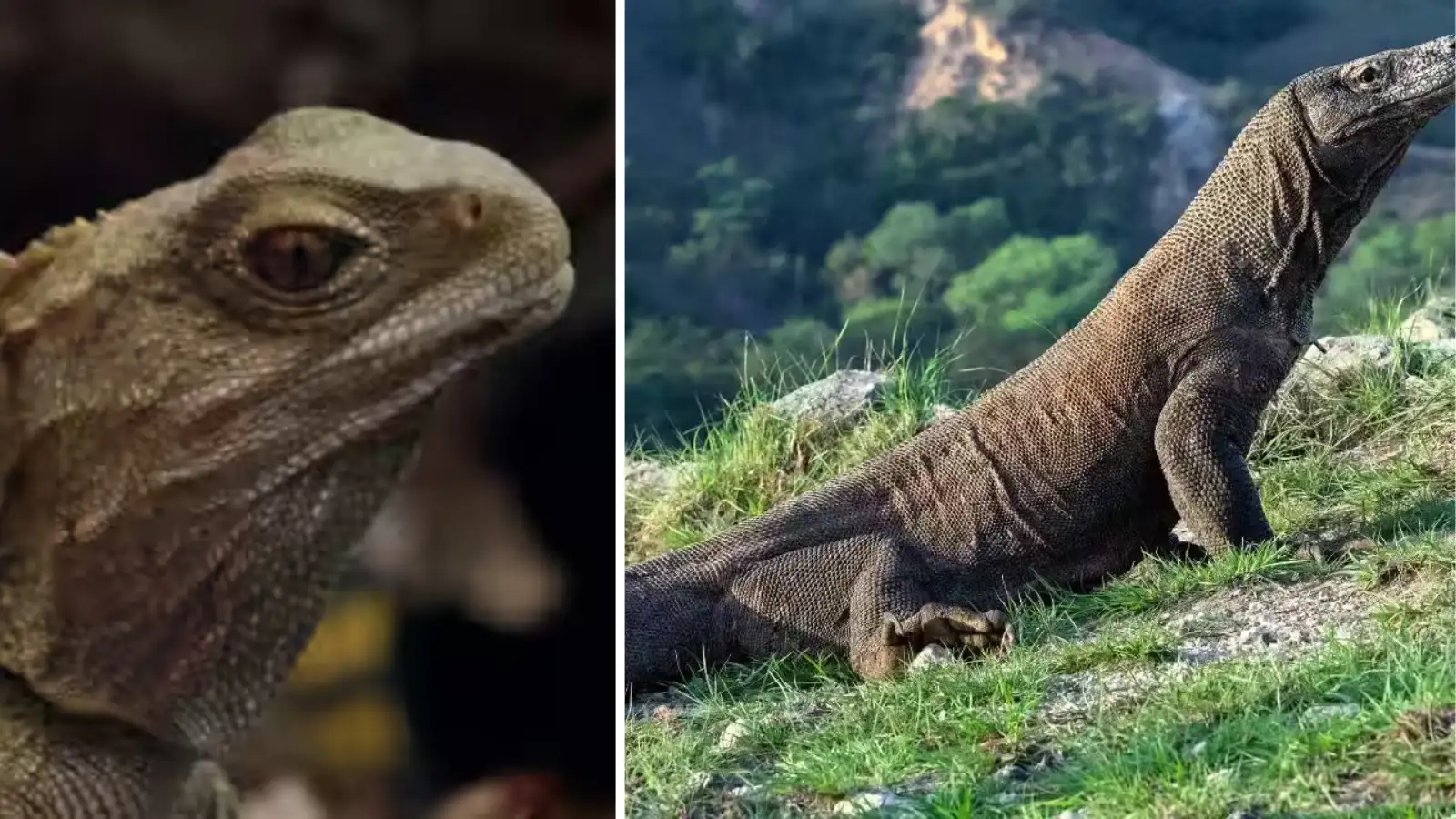
One of the tuatara’s strangest features is its parietal eye, a light-sensitive structure on the top of its head. Although it cannot form images like normal eyes, it plays a role in sensing light.
The tuatara also has an unusually slow growth rate and can remain active in temperatures that would be challenging for many other reptiles. These unusual characteristics make it one of the most fascinating survivors of ancient reptile lineages.
Modern crocodilians still display several features that have remained remarkably effective over millions of years. Their heavily armoured skin, streamlined bodies, powerful jaws and low-slung posture are perfectly suited to life in and around water.
Their ancient body plan helped crocodilian relatives survive major environmental changes and extinction events that wiped out many other species. Today, they remain among the most recognisable living representatives of an ancient branch of the reptile family tree.
Its hunting equipment is impressive. The Komodo dragon has serrated teeth, muscular jaws and venom-producing glands that can help weaken prey. It can also use its powerful body and claws to overpower animals.
Although the Komodo dragon is not a living dinosaur, its predatory adaptations can offer a striking reminder of how some ancient carnivorous reptiles may have relied on powerful jaws, sharp teeth and efficient hunting strategies.
Its textured shell resembles bark and blends with vegetation and debris, while its unusual head shape adds to its camouflage.
The mata mata is also a specialised predator. Instead of chasing fish, it can remain still and suddenly open its large mouth, creating a powerful suction effect that draws prey into its mouth. Its primitive-looking appearance makes it one of the world's most unusual turtles.
Life in the Galápagos has pushed this reptile to develop remarkable adaptations. After feeding underwater, it returns to land and spends time basking on sun-warmed volcanic rocks to restore its body temperature.
It also has specialised glands that help remove excess salt absorbed while feeding in the sea. The result is a reptile that looks ancient but has evolved an extraordinary solution to the challenges of its island environment.
Their survival also demonstrates how adaptable reptiles can be. Whether through unusual sensory organs, powerful jaws, extreme camouflage or the ability to forage underwater, each species carries clues about the long evolutionary history of reptiles.
1. Tuatara: The Reptile With a “Third Eye”
Native to New Zealand, the tuatara may look like an ordinary lizard, but it belongs to a much older reptilian lineage called Rhynchocephalia. Members of this group existed alongside some of the earliest dinosaurs more than 200 million years ago.One of the tuatara’s strangest features is its parietal eye, a light-sensitive structure on the top of its head. Although it cannot form images like normal eyes, it plays a role in sensing light.
The tuatara also has an unusually slow growth rate and can remain active in temperatures that would be challenging for many other reptiles. These unusual characteristics make it one of the most fascinating survivors of ancient reptile lineages.
2. Crocodiles and Alligators: Ancient Archosaur Survivors
Crocodiles and alligators have a particularly close evolutionary connection to dinosaurs. Both belong to Archosauria, the broader group that includes dinosaurs, birds and crocodilians.Modern crocodilians still display several features that have remained remarkably effective over millions of years. Their heavily armoured skin, streamlined bodies, powerful jaws and low-slung posture are perfectly suited to life in and around water.
Their ancient body plan helped crocodilian relatives survive major environmental changes and extinction events that wiped out many other species. Today, they remain among the most recognisable living representatives of an ancient branch of the reptile family tree.
3. Komodo Dragon: The World's Largest Living Lizard
The Komodo dragon is the largest living lizard and one of the most formidable reptiles on Earth. Found naturally on several Indonesian islands, this giant monitor lizard belongs to an ancient lineage that has been evolving for millions of years.Its hunting equipment is impressive. The Komodo dragon has serrated teeth, muscular jaws and venom-producing glands that can help weaken prey. It can also use its powerful body and claws to overpower animals.
You may also like
- Hot Tea and Cancer Risk: Does Drinking Very Hot Tea Harm Your Health? Dr. Varun Goyal Reveals the Truth
- Heart Health Warning: Why Is Your Heart Rate Unhealthy Before 40 Without Blood Pressure or Diabetes
- Delhi Lakshmi Yojana: Will ₹2,500 be credited to your account, or is there a wait? Here's how to check your application status.
- PM Surya Ghar Application Rejected: Here's How to Fix Errors Online
- Man Bitten by Rat While Watching Movie in Theater; Awarded ₹18,000 Compensation
Although the Komodo dragon is not a living dinosaur, its predatory adaptations can offer a striking reminder of how some ancient carnivorous reptiles may have relied on powerful jaws, sharp teeth and efficient hunting strategies.
4. Mata Mata Turtle: A Living Master of Camouflage
With its rough, ridged shell and strange, flattened head, the mata mata turtle looks almost like a creature from prehistoric times. It is native to freshwater habitats in parts of South America and has evolved an extraordinary appearance that helps it disappear into muddy riverbeds.Its textured shell resembles bark and blends with vegetation and debris, while its unusual head shape adds to its camouflage.
The mata mata is also a specialised predator. Instead of chasing fish, it can remain still and suddenly open its large mouth, creating a powerful suction effect that draws prey into its mouth. Its primitive-looking appearance makes it one of the world's most unusual turtles.
5. Galápagos Marine Iguana : The Only Sea-Fed Lizard
The Galápagos marine iguana is unlike almost any other living lizard. It is the only modern lizard known to forage in the ocean, diving into cold coastal waters to feed mainly on algae growing on underwater rocks.Life in the Galápagos has pushed this reptile to develop remarkable adaptations. After feeding underwater, it returns to land and spends time basking on sun-warmed volcanic rocks to restore its body temperature.
It also has specialised glands that help remove excess salt absorbed while feeding in the sea. The result is a reptile that looks ancient but has evolved an extraordinary solution to the challenges of its island environment.
Why These Reptiles Are So Fascinating
These animals are not simply “living dinosaurs”. Instead, they represent different branches of the ancient reptilian family tree, some of which share deep evolutionary connections with dinosaurs or existed alongside them.Their survival also demonstrates how adaptable reptiles can be. Whether through unusual sensory organs, powerful jaws, extreme camouflage or the ability to forage underwater, each species carries clues about the long evolutionary history of reptiles.
A Glimpse Into Earth's Prehistoric Past
From the tuatara's mysterious third eye to the marine iguana's underwater lifestyle, these reptiles with ancient dinosaur connections show that prehistoric-looking creatures are still part of the modern world. They may not be dinosaurs themselves, but their ancient evolutionary histories make them fascinating survivors of Earth's distant past.





Loving Newspoint? Download the app now
