
7 Incredible Meteor Impact Lakes Around the World That Were Created by Space Collisions

Meteor impact lakes are among the rarest natural formations on Earth, created when massive space rocks collided with the planet's surface millions of years ago. While most lakes originate from glaciers, rivers or volcanic activity, these remarkable water bodies were born from powerful asteroid and meteor strikes. Today, they not only showcase nature's dramatic past but also help scientists study Earth's geological evolution, ancient climates and even conditions similar to those on other planets. Here are seven incredible meteor impact lakes from around the world that continue to fascinate researchers and travellers alike.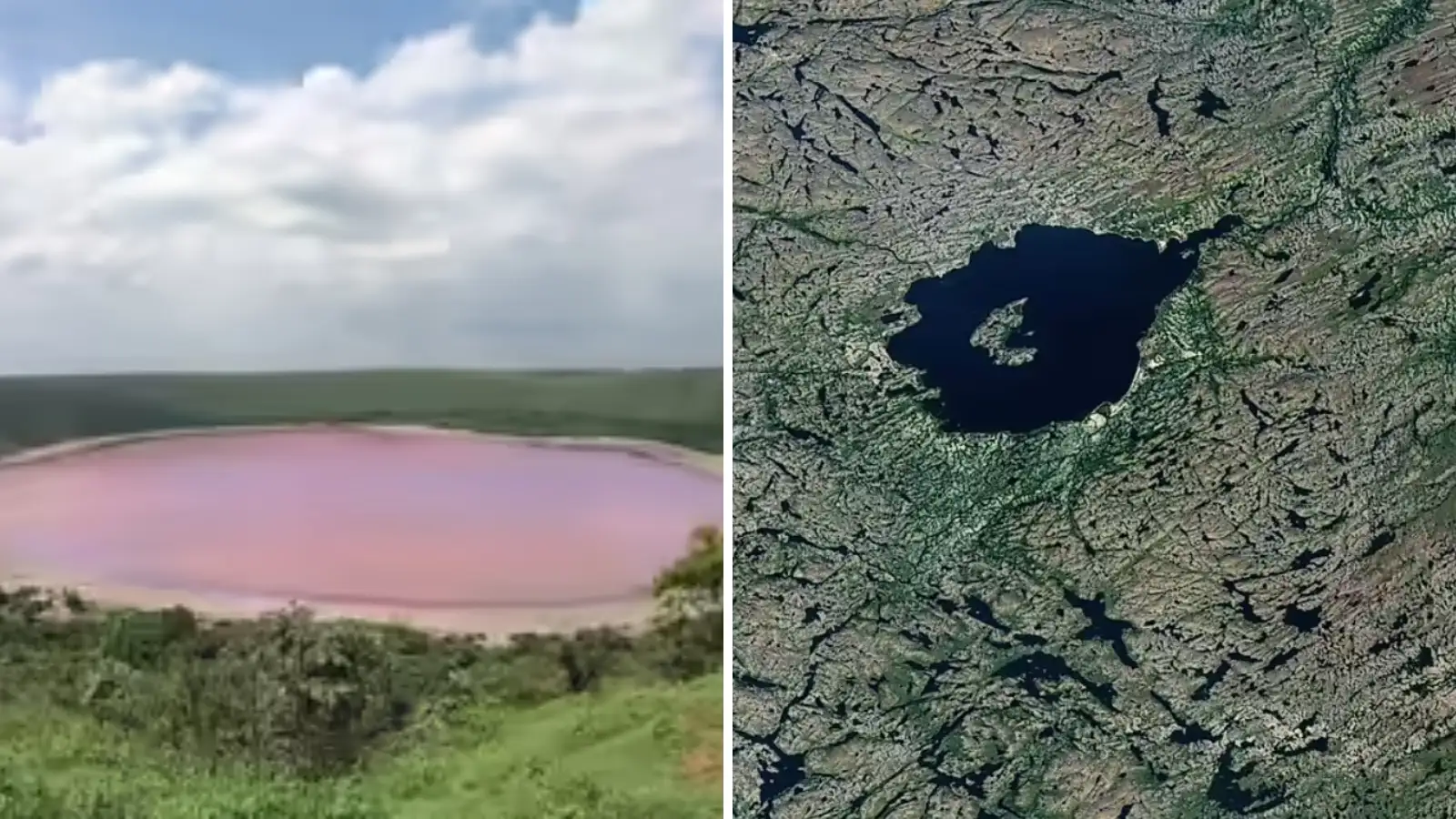
1. Lake Manicouagan , Canada – The Famous 'Eye of Quebec'
One of the most spectacular impact structures visible from space, Lake Manicouagan in Quebec is instantly recognisable for its giant ring-shaped appearance. Formed around 214 million years ago, the crater was created when an asteroid nearly five kilometres wide slammed into Earth.
The lake surrounds René-Levasseur Island, a central uplift created when the Earth's crust rebounded immediately after the impact. Spanning almost 100 kilometres in diameter, the formation remains one of the world's largest preserved impact craters and offers valuable insights into Earth's late Triassic history.
2. Lake Bosomtwe , Ghana – A Crater Lake Rich in Science and Culture
Hidden within Ghana's Ashanti Region, Lake Bosomtwe occupies a beautifully circular impact crater formed roughly one million years ago. Although smaller than many other crater lakes , its scientific value is immense.
The lake supports nearby communities through fishing and also holds deep cultural significance for local people. Beneath its calm waters lies another treasure - layers of ancient sediments that have helped researchers reconstruct thousands of years of climate history across West Africa.
3. Karakul Lake , Tajikistan – One of the World's Highest Impact Lakes
Located in the remote Pamir Mountains, Karakul Lake sits nearly 4,000 metres above sea level, making it one of the highest major meteor impact lakes on Earth.
The enormous crater is believed to have formed around 20 million years ago, though its true origin became clear only after satellite observations revealed its circular structure. Surrounded by rugged mountains and sparse vegetation, Karakul presents an unforgettable landscape shaped by both cosmic and natural forces.
4. Lonar Lake , India – A Rare Crater in Volcanic Rock
Nestled in Maharashtra's Deccan Plateau, Lonar Lake is one of the world's most unusual impact lakes because it formed in basaltic volcanic rock rather than ordinary sedimentary terrain.
Scientists now agree that a meteor created the crater somewhere between 50,000 and 500,000 years ago. The lake's highly alkaline and saline waters support unique microorganisms, making it an important site for biological and geological research. Its surroundings are equally fascinating, with centuries-old temples adding cultural charm to the dramatic crater landscape.
1. Lake Manicouagan , Canada – The Famous 'Eye of Quebec'
One of the most spectacular impact structures visible from space, Lake Manicouagan in Quebec is instantly recognisable for its giant ring-shaped appearance. Formed around 214 million years ago, the crater was created when an asteroid nearly five kilometres wide slammed into Earth.
The lake surrounds René-Levasseur Island, a central uplift created when the Earth's crust rebounded immediately after the impact. Spanning almost 100 kilometres in diameter, the formation remains one of the world's largest preserved impact craters and offers valuable insights into Earth's late Triassic history.
2. Lake Bosomtwe , Ghana – A Crater Lake Rich in Science and Culture
Hidden within Ghana's Ashanti Region, Lake Bosomtwe occupies a beautifully circular impact crater formed roughly one million years ago. Although smaller than many other crater lakes , its scientific value is immense.
The lake supports nearby communities through fishing and also holds deep cultural significance for local people. Beneath its calm waters lies another treasure - layers of ancient sediments that have helped researchers reconstruct thousands of years of climate history across West Africa.
3. Karakul Lake , Tajikistan – One of the World's Highest Impact Lakes
Located in the remote Pamir Mountains, Karakul Lake sits nearly 4,000 metres above sea level, making it one of the highest major meteor impact lakes on Earth.
The enormous crater is believed to have formed around 20 million years ago, though its true origin became clear only after satellite observations revealed its circular structure. Surrounded by rugged mountains and sparse vegetation, Karakul presents an unforgettable landscape shaped by both cosmic and natural forces.
4. Lonar Lake , India – A Rare Crater in Volcanic Rock
Nestled in Maharashtra's Deccan Plateau, Lonar Lake is one of the world's most unusual impact lakes because it formed in basaltic volcanic rock rather than ordinary sedimentary terrain.
Scientists now agree that a meteor created the crater somewhere between 50,000 and 500,000 years ago. The lake's highly alkaline and saline waters support unique microorganisms, making it an important site for biological and geological research. Its surroundings are equally fascinating, with centuries-old temples adding cultural charm to the dramatic crater landscape.
Next Story