
8 Ocean Creatures That Can Live Without Sunlight and Still Thrive in Total Darkness

Ocean creatures that can live without sunlight are among the most fascinating examples of nature's ability to adapt. Thousands of metres below the ocean's surface, sunlight never reaches the seabed, yet life continues to flourish in these extreme environments. Instead of relying on photosynthesis, many deep-sea species survive by feeding on bacteria, chemical compounds released from the Earth's crust, or tiny organic particles drifting down from the upper ocean. These remarkable adaptations allow them to thrive under crushing pressure, freezing temperatures, and complete darkness. Here are eight incredible ocean creatures that prove life can exist even where the Sun's rays never shine.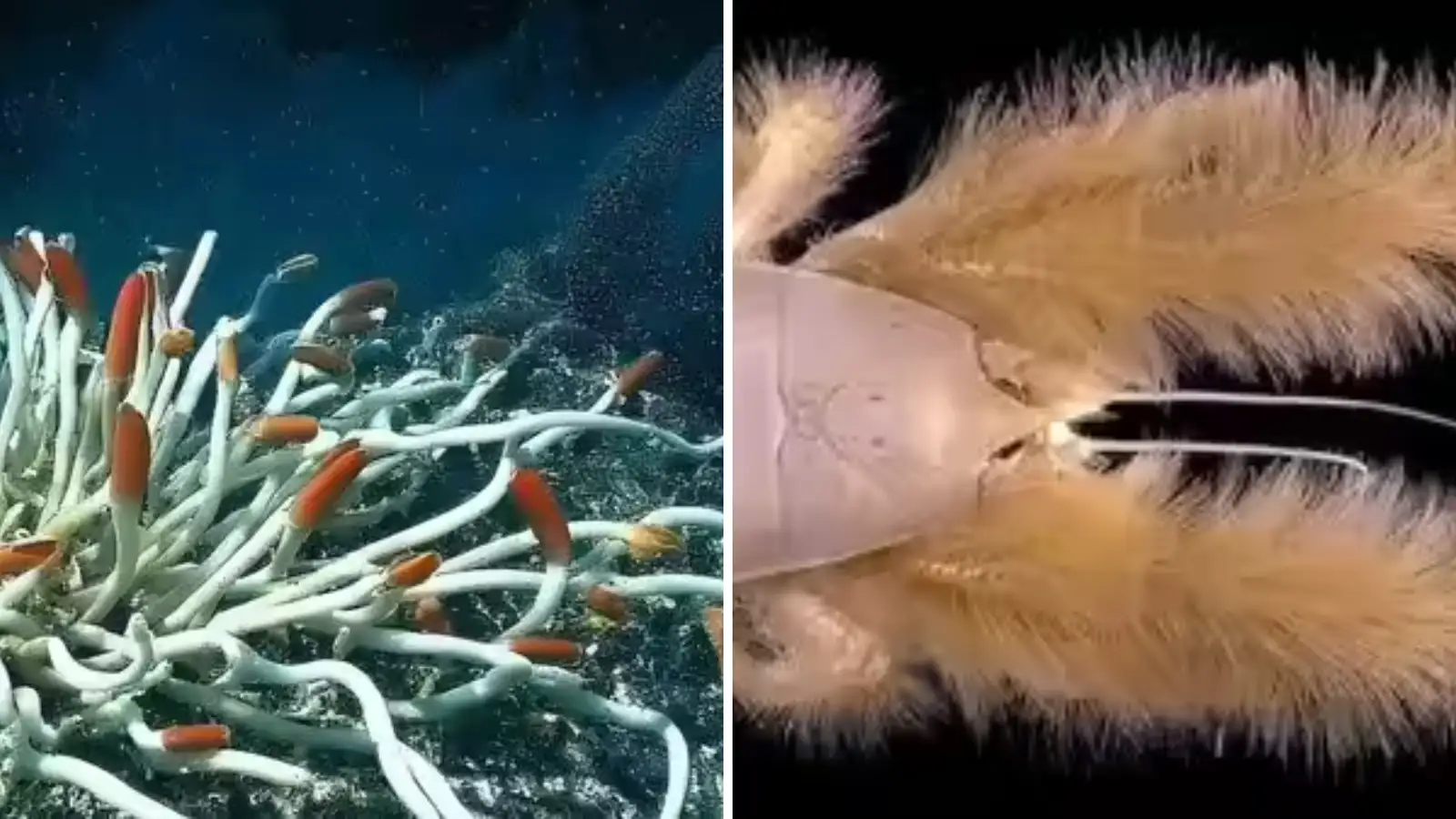
1. Giant Tube Worms : Deep-Sea Survivors Powered by Chemistry
Among the most iconic residents of hydrothermal vents , giant tube worms form dense colonies across the ocean floor. Their long white tubes are topped with bright red plumes that absorb oxygen and chemicals from the surrounding water.
These unusual animals have no mouth or digestive system. Instead, they rely entirely on beneficial bacteria living inside their bodies. The bacteria convert chemicals such as hydrogen sulphide into nutrients, providing food for the worms. This extraordinary partnership allows giant tube worms to survive without sunlight or traditional food sources.
2. Deep-Sea Mussels: Shellfish That Depend on Chemical Energy
Deep-sea mussels flourish around cold seeps, where methane and sulphide naturally escape through cracks in the seabed. Large colonies often spread across muddy ocean floors, creating thriving underwater ecosystems.
Rather than filtering plankton like their shallow-water relatives, these mussels host specialised bacteria within their gills. The microbes transform seep chemicals into energy, enabling the mussels to survive in the dark. Their colonies also provide shelter for various worms, crabs, snails, and small fish.
3. Hydrothermal Vent Shrimp: Masters of Life Near Scorching Waters
Hydrothermal vent shrimp gather in huge numbers near underwater vents, where water temperatures can shift dramatically within a few centimetres. These shrimp live close to superheated water because it supports the growth of bacteria they depend on for food.
Some species even carry bacteria on their own bodies, while others graze on bacterial mats covering nearby rocks. Since sunlight never reaches these depths, many vent shrimp have poor eyesight and instead use specialised organs that detect the faint glow produced by hot vent fluids.
4. Yeti Crabs: The Deep-Sea Farmers
Yeti crabs are instantly recognisable because of their hairy claws, but those bristly limbs serve a much greater purpose than appearance.
The crab deliberately waves its claws through chemical-rich water, encouraging bacteria to grow on the hairs. Once enough bacteria have accumulated, the crab scrapes them off and eats them. This remarkable farming technique allows the species to generate its own food supply without relying on sunlight.
5. Pompeii Worms: Living on the Edge of Extreme Heat
Pompeii worms rank among the toughest marine creatures ever discovered. They build protective tubes directly on hydrothermal vent chimneys, surviving in one of the harshest habitats on Earth.
Their bodies remain positioned between extremely hot vent fluids and much cooler seawater, allowing them to tolerate temperatures that would kill most marine animals. Thick layers of bacteria covering their bodies are believed to provide both protection and nourishment, helping them survive in this hostile environment.
6. Vampire Squid : A Gentle Drifter of the Deep Ocean
Despite its intimidating name, the vampire squid is a peaceful deep-sea animal rather than a fierce hunter. It inhabits regions where oxygen levels are extremely low, making it difficult for many other species to survive.
Instead of chasing prey, the vampire squid extends long sticky filaments to collect marine snow—tiny particles of dead plankton, organic debris, and microscopic matter drifting down from surface waters. Its exceptionally slow metabolism helps it conserve energy in an environment where food is scarce.
7. Mariana Snailfish : The Deepest Fish Ever Recorded
The Mariana snailfish lives near the bottom of the Mariana Trench, one of the deepest places on Earth. It is considered the deepest fish ever observed in its natural habitat.
Its soft, flexible body is specially adapted to withstand enormous underwater pressure. The snailfish mainly feeds on small crustaceans roaming the trench floor, surviving entirely without access to sunlight while occupying the top of its local food chain.
8. Hadal Amphipods : Nature's Deepest Ocean Clean-Up Crew
Hadal amphipods are small shrimp-like crustaceans that inhabit the deepest ocean trenches. They constantly search the seabed for anything edible that sinks from above.
Meals are unpredictable, ranging from dead fish to drifting wood and other organic remains. These scavengers quickly consume whatever food becomes available and play an essential role in recycling nutrients, helping maintain the fragile balance of deep-sea ecosystems.
How Do Deep-Sea Animals Survive Without Sunlight?
Unlike life near the ocean's surface, deep-sea organisms cannot rely on sunlight for energy. Instead, many species survive through chemosynthesis, a process in which bacteria convert chemicals like hydrogen sulphide and methane into food. Others feed on marine snow, the constant stream of organic material sinking from upper ocean layers. These unique survival strategies demonstrate that life can thrive even in complete darkness.
The deep ocean remains one of Earth's least explored frontiers, yet it is home to some of the planet's most extraordinary life forms. From giant tube worms powered by chemical energy to vampire squid feeding on drifting marine snow and hadal amphipods recycling nutrients on the ocean floor, these ocean creatures that can live without sunlight showcase nature's remarkable resilience. Their incredible adaptations continue to reshape our understanding of how life survives in the most extreme environments on Earth.
1. Giant Tube Worms : Deep-Sea Survivors Powered by Chemistry
Among the most iconic residents of hydrothermal vents , giant tube worms form dense colonies across the ocean floor. Their long white tubes are topped with bright red plumes that absorb oxygen and chemicals from the surrounding water.
These unusual animals have no mouth or digestive system. Instead, they rely entirely on beneficial bacteria living inside their bodies. The bacteria convert chemicals such as hydrogen sulphide into nutrients, providing food for the worms. This extraordinary partnership allows giant tube worms to survive without sunlight or traditional food sources.
2. Deep-Sea Mussels: Shellfish That Depend on Chemical Energy
Deep-sea mussels flourish around cold seeps, where methane and sulphide naturally escape through cracks in the seabed. Large colonies often spread across muddy ocean floors, creating thriving underwater ecosystems.
Rather than filtering plankton like their shallow-water relatives, these mussels host specialised bacteria within their gills. The microbes transform seep chemicals into energy, enabling the mussels to survive in the dark. Their colonies also provide shelter for various worms, crabs, snails, and small fish.
3. Hydrothermal Vent Shrimp: Masters of Life Near Scorching Waters
Hydrothermal vent shrimp gather in huge numbers near underwater vents, where water temperatures can shift dramatically within a few centimetres. These shrimp live close to superheated water because it supports the growth of bacteria they depend on for food.
Some species even carry bacteria on their own bodies, while others graze on bacterial mats covering nearby rocks. Since sunlight never reaches these depths, many vent shrimp have poor eyesight and instead use specialised organs that detect the faint glow produced by hot vent fluids.
4. Yeti Crabs: The Deep-Sea Farmers
Yeti crabs are instantly recognisable because of their hairy claws, but those bristly limbs serve a much greater purpose than appearance.
The crab deliberately waves its claws through chemical-rich water, encouraging bacteria to grow on the hairs. Once enough bacteria have accumulated, the crab scrapes them off and eats them. This remarkable farming technique allows the species to generate its own food supply without relying on sunlight.
You may also like
- Culture-led travel takes centre stage as 67% Indians plan holidays around heritage, festivals and food; reveals report
- Cinnamon and fenugreek tea can be beneficial in PCOD, learn the benefits and the right way to drink it.
- IRDAI Proposes Tougher Rules for Insurance Agents to Boost Transparency and Protect Policyholders
- Ajinkya Rahane's father let him travel alone on a Mumbai local at just 7; years later, what his father told him is a masterclass in raising independent children
- These 20th-century jobs are redundant now, and we should be thankful!
5. Pompeii Worms: Living on the Edge of Extreme Heat
Pompeii worms rank among the toughest marine creatures ever discovered. They build protective tubes directly on hydrothermal vent chimneys, surviving in one of the harshest habitats on Earth.
Their bodies remain positioned between extremely hot vent fluids and much cooler seawater, allowing them to tolerate temperatures that would kill most marine animals. Thick layers of bacteria covering their bodies are believed to provide both protection and nourishment, helping them survive in this hostile environment.
6. Vampire Squid : A Gentle Drifter of the Deep Ocean
Despite its intimidating name, the vampire squid is a peaceful deep-sea animal rather than a fierce hunter. It inhabits regions where oxygen levels are extremely low, making it difficult for many other species to survive.
Instead of chasing prey, the vampire squid extends long sticky filaments to collect marine snow—tiny particles of dead plankton, organic debris, and microscopic matter drifting down from surface waters. Its exceptionally slow metabolism helps it conserve energy in an environment where food is scarce.
7. Mariana Snailfish : The Deepest Fish Ever Recorded
The Mariana snailfish lives near the bottom of the Mariana Trench, one of the deepest places on Earth. It is considered the deepest fish ever observed in its natural habitat.
Its soft, flexible body is specially adapted to withstand enormous underwater pressure. The snailfish mainly feeds on small crustaceans roaming the trench floor, surviving entirely without access to sunlight while occupying the top of its local food chain.
8. Hadal Amphipods : Nature's Deepest Ocean Clean-Up Crew
Hadal amphipods are small shrimp-like crustaceans that inhabit the deepest ocean trenches. They constantly search the seabed for anything edible that sinks from above.
Meals are unpredictable, ranging from dead fish to drifting wood and other organic remains. These scavengers quickly consume whatever food becomes available and play an essential role in recycling nutrients, helping maintain the fragile balance of deep-sea ecosystems.
How Do Deep-Sea Animals Survive Without Sunlight?
Unlike life near the ocean's surface, deep-sea organisms cannot rely on sunlight for energy. Instead, many species survive through chemosynthesis, a process in which bacteria convert chemicals like hydrogen sulphide and methane into food. Others feed on marine snow, the constant stream of organic material sinking from upper ocean layers. These unique survival strategies demonstrate that life can thrive even in complete darkness.
The deep ocean remains one of Earth's least explored frontiers, yet it is home to some of the planet's most extraordinary life forms. From giant tube worms powered by chemical energy to vampire squid feeding on drifting marine snow and hadal amphipods recycling nutrients on the ocean floor, these ocean creatures that can live without sunlight showcase nature's remarkable resilience. Their incredible adaptations continue to reshape our understanding of how life survives in the most extreme environments on Earth.






Loving Newspoint? Download the app now
