
Animals That Can See Better Than Humans: 8 Creatures With Incredible Vision

When it comes to eyesight, humans are far from the champions of the animal kingdom. In fact, several animals that can see better than humans possess visual abilities that seem almost unbelievable. Some can detect prey from kilometres away, while others can navigate in near-total darkness or perceive colours that are completely invisible to us. These remarkable creatures reveal just how diverse and powerful vision can be in nature. Here are eight animals with extraordinary eyesight that leave human vision far behind.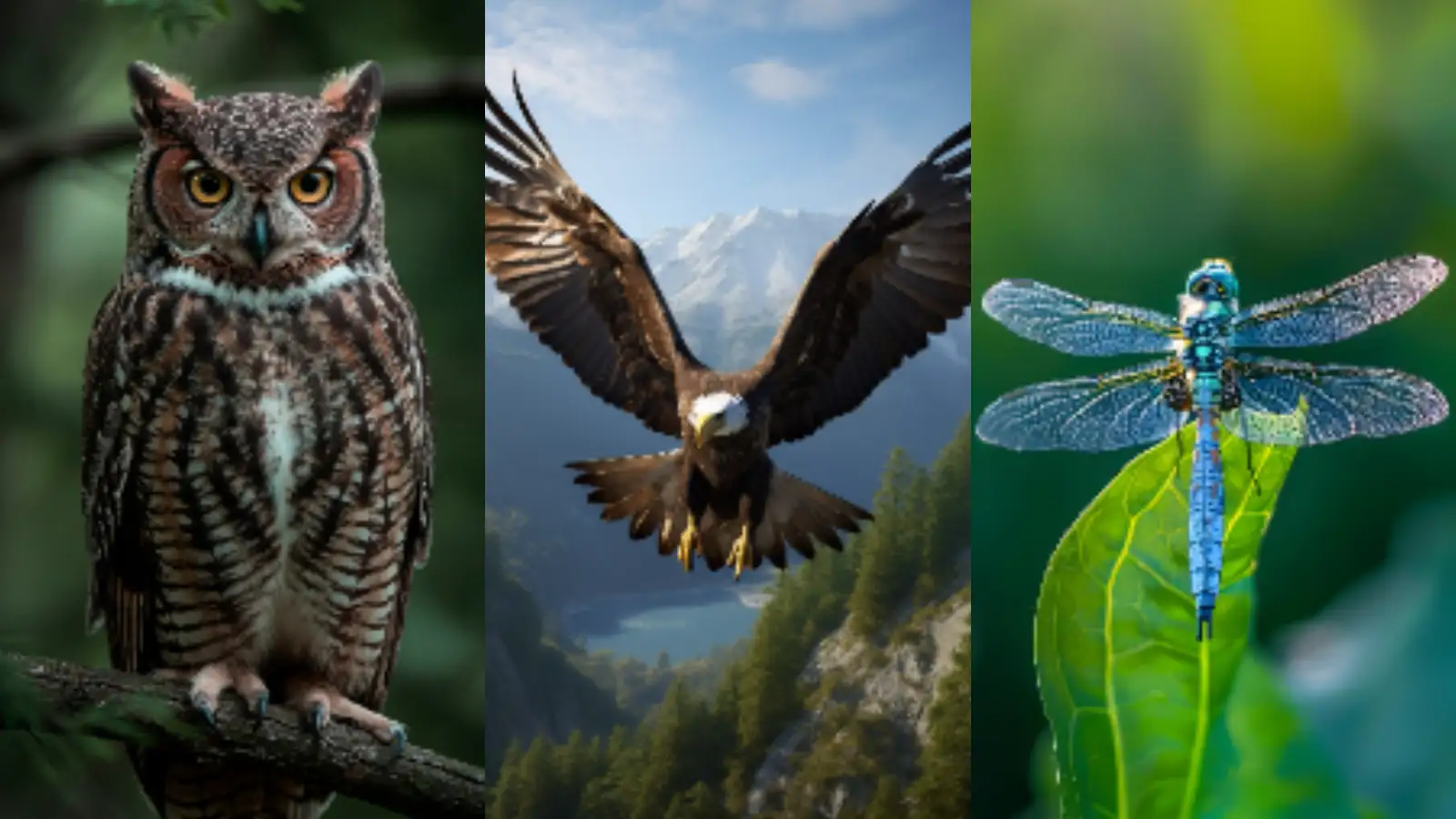
1. Eagle: The Ultimate Long-Distance Spotter
Eagles are renowned for their exceptional eyesight, and for good reason. Their vision is estimated to be around five times sharper than that of humans. This allows them to identify small animals such as rabbits, rodents, or fish from several kilometres away.
Their eyes contain a high concentration of photoreceptor cells, enabling them to detect fine details even while soaring at great heights. This extraordinary visual precision makes eagles among the most successful hunters in the wild.
2. Mantis Shrimp: The Creature That Sees Hidden Colours
The mantis shrimp possesses one of the most complex visual systems known to science. While humans rely on three types of colour receptors, mantis shrimp have up to sixteen.
This unique advantage allows them to detect ultraviolet light, polarized light, and a range of colours beyond human perception. Each eye can also move independently, giving the animal a highly sophisticated view of its surroundings. Scientists continue to study these fascinating creatures to better understand their extraordinary visual capabilities.
3. Owl: The King of Night Vision
Owls are perfectly adapted for life after sunset. Their large eyes are designed to gather as much light as possible, allowing them to see clearly in extremely dim conditions.
Packed with rod cells that excel in low-light environments, owl eyes help them detect movement with remarkable accuracy. Their forward-facing eyes also provide excellent depth perception, enabling precise hunting even in near darkness.
4. Dragonfly: The Insect With Near-360-Degree Vision
Dragonflies are among the most skilled aerial hunters in the insect world, thanks largely to their incredible eyesight. Their massive compound eyes contain roughly 30,000 individual visual units called facets.
These eyes cover most of their head, providing almost complete 360-degree vision. Dragonflies can quickly detect movement from multiple directions and react with astonishing speed, making them highly efficient predators.
5. Cat: The Twilight Vision Expert
Domestic cats may appear ordinary, but their eyesight is specially designed for low-light conditions. A reflective layer behind the retina, known as the tapetum lucidum, enhances their ability to see in dim environments.
This is also the reason cat eyes appear to glow when illuminated at night. Cats can see several times better than humans in low light, allowing them to move confidently and hunt effectively during dawn and dusk.
6. Chameleon: The Animal With Eyes That Move Independently
Chameleons have one of the most unusual visual systems in nature. Their eyes can move independently, allowing them to observe two different directions simultaneously.
This gives them a nearly complete view of their surroundings without moving their heads. When prey is detected, both eyes can instantly focus on the target, helping the chameleon strike with impressive accuracy using its long tongue.
7. Hawk: Precision Vision From the Sky
Like eagles, hawks possess incredibly sharp eyesight. They can detect tiny movements on the ground from great distances, making them highly effective predators.
Their eyes contain a dense concentration of sensory cells that provide excellent visual clarity. Hawks can also process visual information rapidly, allowing them to track fast-moving prey while flying at high speeds.
8. Goat: The Animal With a Panoramic View
Goats may not be famous for their eyesight, but their unique horizontal pupils give them a major advantage. These pupils provide an exceptionally wide field of vision, helping them monitor their surroundings for potential threats.
With the ability to see a broad area without turning their heads, goats can quickly detect approaching predators and react accordingly. This adaptation has helped them survive in challenging environments for thousands of years.
What These Animals Teach Us About Vision
The natural world is filled with creatures whose eyesight far surpasses our own in different ways. From eagles spotting prey from incredible distances to mantis shrimp perceiving colours invisible to humans, each species has evolved unique visual abilities suited to its lifestyle.
1. Eagle: The Ultimate Long-Distance Spotter
Eagles are renowned for their exceptional eyesight, and for good reason. Their vision is estimated to be around five times sharper than that of humans. This allows them to identify small animals such as rabbits, rodents, or fish from several kilometres away.
Their eyes contain a high concentration of photoreceptor cells, enabling them to detect fine details even while soaring at great heights. This extraordinary visual precision makes eagles among the most successful hunters in the wild.
2. Mantis Shrimp: The Creature That Sees Hidden Colours
The mantis shrimp possesses one of the most complex visual systems known to science. While humans rely on three types of colour receptors, mantis shrimp have up to sixteen.
This unique advantage allows them to detect ultraviolet light, polarized light, and a range of colours beyond human perception. Each eye can also move independently, giving the animal a highly sophisticated view of its surroundings. Scientists continue to study these fascinating creatures to better understand their extraordinary visual capabilities.
3. Owl: The King of Night Vision
Owls are perfectly adapted for life after sunset. Their large eyes are designed to gather as much light as possible, allowing them to see clearly in extremely dim conditions.
Packed with rod cells that excel in low-light environments, owl eyes help them detect movement with remarkable accuracy. Their forward-facing eyes also provide excellent depth perception, enabling precise hunting even in near darkness.
4. Dragonfly: The Insect With Near-360-Degree Vision
Dragonflies are among the most skilled aerial hunters in the insect world, thanks largely to their incredible eyesight. Their massive compound eyes contain roughly 30,000 individual visual units called facets.
These eyes cover most of their head, providing almost complete 360-degree vision. Dragonflies can quickly detect movement from multiple directions and react with astonishing speed, making them highly efficient predators.
You may also like
- Human Metapneumovirus (HMPV) During Pregnancy: What Expecting Moms Should Know
- Gentle Parenting vs Permissive Parenting: What's the Difference?
- 5 Major Money Changes to Watch in June 2026: RBI Policy, Tax Deadlines, LPG Prices and More
- SBI Annuity Deposit Scheme: Earn a Fixed Monthly Income from a One-Time Investment
- 353 cadets cross the Antim Pag at NDA's 150th passing out parade
5. Cat: The Twilight Vision Expert
Domestic cats may appear ordinary, but their eyesight is specially designed for low-light conditions. A reflective layer behind the retina, known as the tapetum lucidum, enhances their ability to see in dim environments.
This is also the reason cat eyes appear to glow when illuminated at night. Cats can see several times better than humans in low light, allowing them to move confidently and hunt effectively during dawn and dusk.
6. Chameleon: The Animal With Eyes That Move Independently
Chameleons have one of the most unusual visual systems in nature. Their eyes can move independently, allowing them to observe two different directions simultaneously.
This gives them a nearly complete view of their surroundings without moving their heads. When prey is detected, both eyes can instantly focus on the target, helping the chameleon strike with impressive accuracy using its long tongue.
7. Hawk: Precision Vision From the Sky
Like eagles, hawks possess incredibly sharp eyesight. They can detect tiny movements on the ground from great distances, making them highly effective predators.
Their eyes contain a dense concentration of sensory cells that provide excellent visual clarity. Hawks can also process visual information rapidly, allowing them to track fast-moving prey while flying at high speeds.
8. Goat: The Animal With a Panoramic View
Goats may not be famous for their eyesight, but their unique horizontal pupils give them a major advantage. These pupils provide an exceptionally wide field of vision, helping them monitor their surroundings for potential threats.
With the ability to see a broad area without turning their heads, goats can quickly detect approaching predators and react accordingly. This adaptation has helped them survive in challenging environments for thousands of years.
What These Animals Teach Us About Vision
The natural world is filled with creatures whose eyesight far surpasses our own in different ways. From eagles spotting prey from incredible distances to mantis shrimp perceiving colours invisible to humans, each species has evolved unique visual abilities suited to its lifestyle.






More from our partners


Loving Newspoint? Download the app now
