
Australia’s Pink Lakes: The Amazing Science Behind Their Colour and Why Some May Lose Their Famous Pink Glow

Australia’s pink lakes are among the country's most extraordinary natural attractions, captivating travellers with their striking bubblegum, salmon and crimson shades. These colourful lakes look almost unreal, often leaving visitors wondering whether the vibrant hues are natural. While they have become social media favourites and popular tourist destinations, scientists say these lakes are far more than scenic wonders. Hidden beneath their colourful surfaces are unique ecosystems packed with microscopic life that can survive some of Earth's harshest conditions. However, changing weather patterns and environmental disturbances are now threatening the delicate balance that gives these lakes their iconic appearance.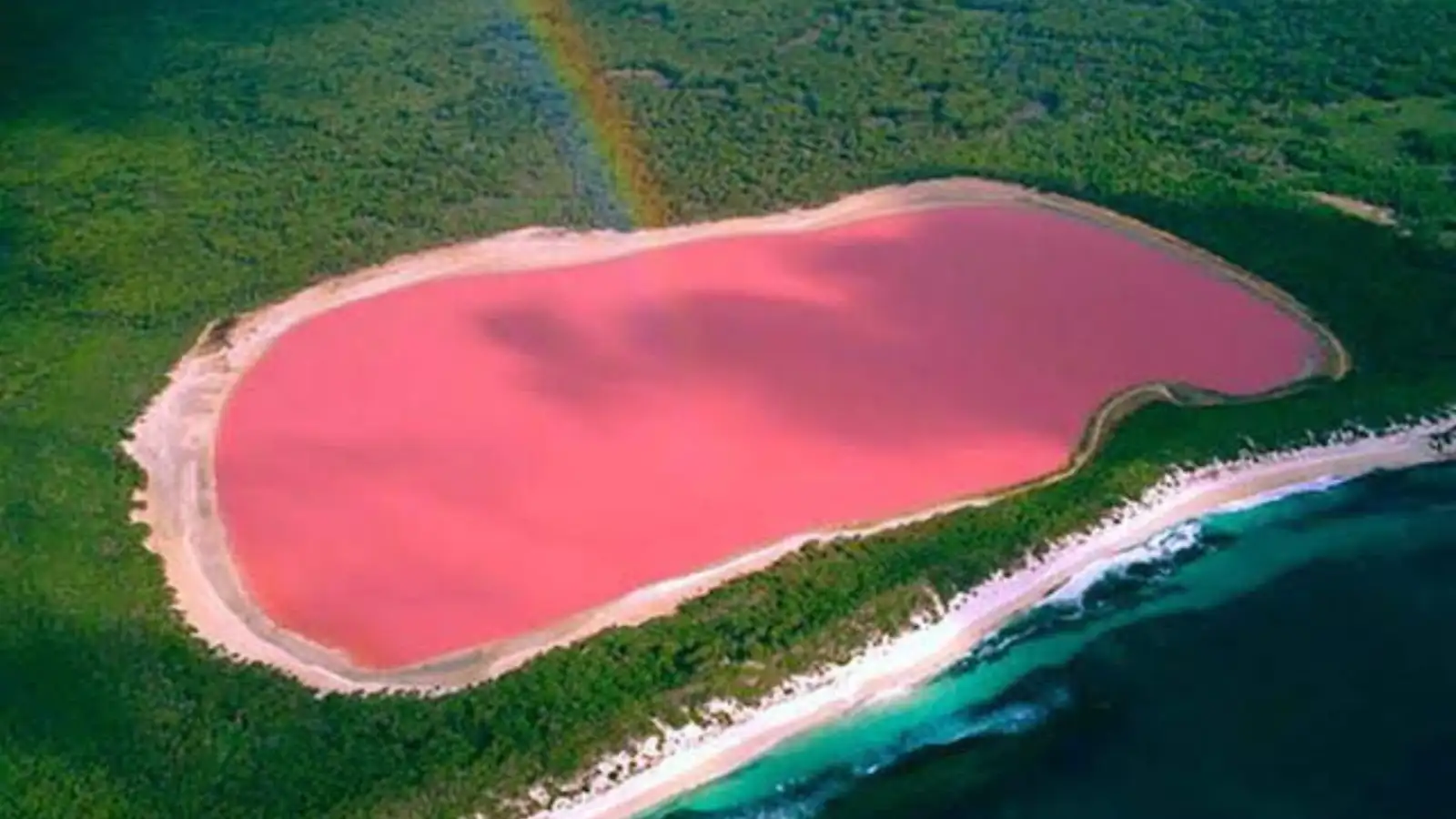
What Makes Australia’s Pink Lakes So Colourful?
Despite what many people believe, salt alone does not create the pink colour seen in these lakes. The real reason lies in tiny salt-loving microorganisms known as halophiles that thrive in extremely salty water.
These lakes are classified as hypersaline, meaning their salt concentration is several times greater than that of seawater. Such harsh conditions prevent most plants and animals from surviving, but they provide the perfect habitat for specialised microbes.
One of the best-known organisms found in these lakes is a microscopic algae that produces beta-carotene , the same natural pigment responsible for the orange colour of carrots. This pigment protects the algae from intense sunlight and harmful ultraviolet rays while helping it survive in the extreme environment.
Alongside the algae, several bacteria also contribute to the lakes' spectacular colours, creating shades that range from soft pink to deep crimson.
Tiny Microorganisms Work Together to Create the Pink Hue
For years, scientists believed that a single type of algae was mainly responsible for the colour of Australia's pink lakes . However, modern genetic research has revealed a much more fascinating story.
DNA studies of one of Australia's most famous pink lakes found that the algae made up only a tiny portion of the lake's microscopic life. Instead, researchers discovered that a bacterium called Salinibacter ruber plays a major role by producing a powerful pink pigment known as bacterioruberin.
Scientists now believe that the stunning colours are produced not by one organism but by an entire community of microorganisms working together. Their combined pigments blend to create the striking bubblegum shades that have made these lakes world famous.
Why Australia Has So Many Pink Lakes
Pink lakes exist in several countries, including Spain, Senegal, Mexico and Azerbaijan. However, Australia has one of the largest concentrations due to its unique geography and climate.
Millions of years ago, many inland river systems gradually dried up as evaporation exceeded rainfall. As water disappeared, minerals and salts were left behind, forming highly saline lake beds. Over time, these environments became ideal habitats for salt-loving microbes.
Australia's ancient landscapes, dry climate and naturally salty underground water have helped these remarkable ecosystems develop over countless generations, making the country home to hundreds of naturally occurring pink lakes.
More Than Beautiful Landscapes: Why Scientists Study Pink Lakes
To tourists, these lakes are stunning travel destinations. To researchers, they are valuable natural laboratories.
The microorganisms living inside Australia's pink lakes are known as extremophiles because they can survive in conditions that would be deadly for most living organisms. They tolerate intense heat, high salt levels and strong ultraviolet radiation with remarkable efficiency.
Studying these resilient microbes is helping scientists better understand how life adapts to extreme environments. Their findings could even provide clues about whether similar forms of life might exist on planets with harsh conditions, including Mars.
Can Australia's Pink Lakes Lose Their Colour?
Although many people assume these lakes always remain pink, their colour can change surprisingly quickly when environmental conditions shift.
The famous Lake Hillier , once known for its year-round bubblegum appearance, experienced a dramatic transformation after heavy rainfall in 2022. Freshwater flowing into the lake diluted its salt concentration and changed its chemical balance.
As salinity dropped, other microorganisms began multiplying, reducing the dominance of the pigment-producing microbes responsible for the lake's vibrant colour. The result was a noticeable fading of its iconic pink shade.
Scientists believe the lake could eventually regain its famous appearance as evaporation increases salinity once again, but the recovery may take several years.
Human Activity Has Already Changed Some Pink Lakes
Natural weather events are not the only threat facing these fragile ecosystems.
Western Australia's well-known Pink Lake near Esperance serves as a powerful reminder of how easily these environments can change. Once famous for its brilliant colour, the lake gradually lost its pink appearance after salt extraction, road construction and changes to its natural water flow disrupted the ecosystem.
Researchers continue to investigate whether the lake's original microbial community can be restored, but there is still uncertainty about whether some of the essential microorganisms remain.
Climate Change Could Make Pink Lakes Less Predictable
Scientists believe climate change may create even greater challenges for Australia's pink lakes in the future.
Shifts in rainfall, rising temperatures and changing evaporation rates can all influence the delicate conditions required for pigment-producing microbes to thrive. Even relatively small changes in water chemistry or salt concentration can cause a lake to fade from bright pink to pale grey or blue.
Because these ecosystems rely on a precise combination of sunlight, salinity, water quality and microbial life, maintaining that balance has become increasingly difficult in a changing climate.
Why Australia's Pink Lakes Matter
Australia's pink lakes are much more than picturesque travel destinations. They represent millions of years of natural evolution and host some of the planet's most specialised microscopic life forms.
Their brilliant colours are a visible sign of thriving ecosystems that continue to teach scientists about survival in extreme environments and the possibility of life beyond Earth. Protecting these remarkable lakes will not only preserve one of Australia's most iconic natural wonders but also safeguard valuable scientific knowledge that could shape future discoveries.
What Makes Australia’s Pink Lakes So Colourful?
Despite what many people believe, salt alone does not create the pink colour seen in these lakes. The real reason lies in tiny salt-loving microorganisms known as halophiles that thrive in extremely salty water.
These lakes are classified as hypersaline, meaning their salt concentration is several times greater than that of seawater. Such harsh conditions prevent most plants and animals from surviving, but they provide the perfect habitat for specialised microbes.
One of the best-known organisms found in these lakes is a microscopic algae that produces beta-carotene , the same natural pigment responsible for the orange colour of carrots. This pigment protects the algae from intense sunlight and harmful ultraviolet rays while helping it survive in the extreme environment.
Alongside the algae, several bacteria also contribute to the lakes' spectacular colours, creating shades that range from soft pink to deep crimson.
Tiny Microorganisms Work Together to Create the Pink Hue
For years, scientists believed that a single type of algae was mainly responsible for the colour of Australia's pink lakes . However, modern genetic research has revealed a much more fascinating story.
DNA studies of one of Australia's most famous pink lakes found that the algae made up only a tiny portion of the lake's microscopic life. Instead, researchers discovered that a bacterium called Salinibacter ruber plays a major role by producing a powerful pink pigment known as bacterioruberin.
Scientists now believe that the stunning colours are produced not by one organism but by an entire community of microorganisms working together. Their combined pigments blend to create the striking bubblegum shades that have made these lakes world famous.
Why Australia Has So Many Pink Lakes
Pink lakes exist in several countries, including Spain, Senegal, Mexico and Azerbaijan. However, Australia has one of the largest concentrations due to its unique geography and climate.
Millions of years ago, many inland river systems gradually dried up as evaporation exceeded rainfall. As water disappeared, minerals and salts were left behind, forming highly saline lake beds. Over time, these environments became ideal habitats for salt-loving microbes.
Australia's ancient landscapes, dry climate and naturally salty underground water have helped these remarkable ecosystems develop over countless generations, making the country home to hundreds of naturally occurring pink lakes.
More Than Beautiful Landscapes: Why Scientists Study Pink Lakes
To tourists, these lakes are stunning travel destinations. To researchers, they are valuable natural laboratories.
The microorganisms living inside Australia's pink lakes are known as extremophiles because they can survive in conditions that would be deadly for most living organisms. They tolerate intense heat, high salt levels and strong ultraviolet radiation with remarkable efficiency.
Studying these resilient microbes is helping scientists better understand how life adapts to extreme environments. Their findings could even provide clues about whether similar forms of life might exist on planets with harsh conditions, including Mars.
Can Australia's Pink Lakes Lose Their Colour?
Although many people assume these lakes always remain pink, their colour can change surprisingly quickly when environmental conditions shift.
The famous Lake Hillier , once known for its year-round bubblegum appearance, experienced a dramatic transformation after heavy rainfall in 2022. Freshwater flowing into the lake diluted its salt concentration and changed its chemical balance.
As salinity dropped, other microorganisms began multiplying, reducing the dominance of the pigment-producing microbes responsible for the lake's vibrant colour. The result was a noticeable fading of its iconic pink shade.
Scientists believe the lake could eventually regain its famous appearance as evaporation increases salinity once again, but the recovery may take several years.
Human Activity Has Already Changed Some Pink Lakes
Natural weather events are not the only threat facing these fragile ecosystems.
You may also like
- Scenic monsoon bus trips in India: Beautiful routes that should be on every traveller's bucket list
- Happy Friendship Day 2026: Top 50 Wishes, Messages, Quotes, Images, Facebook & Whatsapp status
- High cholesterol: Cholesterol deposited in the heart's arteries will melt away like wax; just include these 3 foods in your diet
- Today is the ITR deadline, but will the last date be extended? The Income Tax Department has given a clear answer..
- SSY Calculation: Invest ₹50 daily to build a fund of ₹8 lakh; secure your daughter's future with this Post Office scheme..
Western Australia's well-known Pink Lake near Esperance serves as a powerful reminder of how easily these environments can change. Once famous for its brilliant colour, the lake gradually lost its pink appearance after salt extraction, road construction and changes to its natural water flow disrupted the ecosystem.
Researchers continue to investigate whether the lake's original microbial community can be restored, but there is still uncertainty about whether some of the essential microorganisms remain.
Climate Change Could Make Pink Lakes Less Predictable
Scientists believe climate change may create even greater challenges for Australia's pink lakes in the future.
Shifts in rainfall, rising temperatures and changing evaporation rates can all influence the delicate conditions required for pigment-producing microbes to thrive. Even relatively small changes in water chemistry or salt concentration can cause a lake to fade from bright pink to pale grey or blue.
Because these ecosystems rely on a precise combination of sunlight, salinity, water quality and microbial life, maintaining that balance has become increasingly difficult in a changing climate.
Why Australia's Pink Lakes Matter
Australia's pink lakes are much more than picturesque travel destinations. They represent millions of years of natural evolution and host some of the planet's most specialised microscopic life forms.
Their brilliant colours are a visible sign of thriving ecosystems that continue to teach scientists about survival in extreme environments and the possibility of life beyond Earth. Protecting these remarkable lakes will not only preserve one of Australia's most iconic natural wonders but also safeguard valuable scientific knowledge that could shape future discoveries.






Loving Newspoint? Download the app now
