
Can AI-Generated Videos Fool Millions? Here's How to Spot Them

Not long ago, a fake video was easy to spot. The editing looked rough, the audio didn't match the lips and the entire clip felt unnatural. If something looked suspicious, most people could tell within seconds. That isn't always true anymore.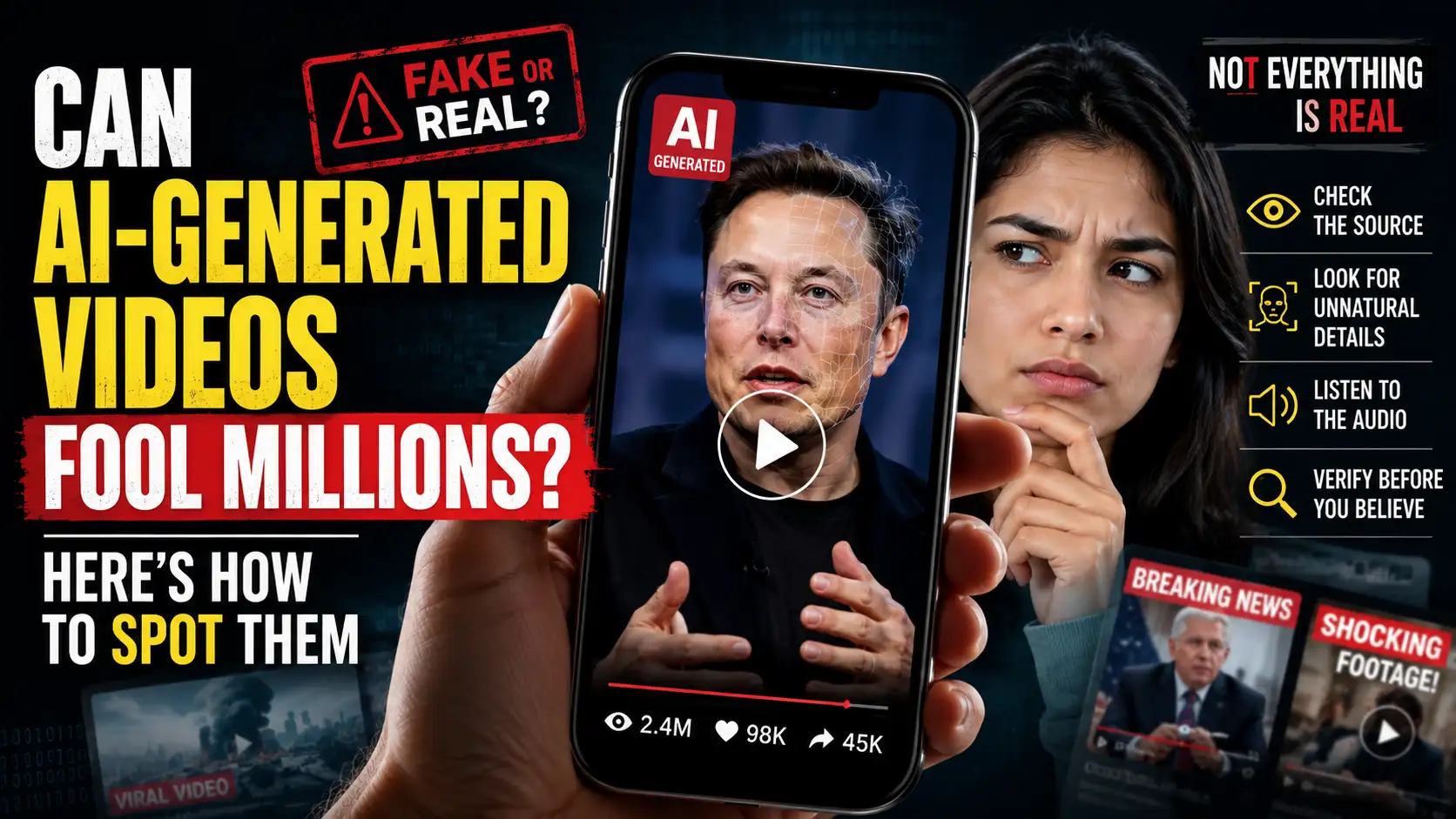
Today's AI tools can generate videos that look remarkably real. A public figure can appear to say something they never said. A celebrity can be shown promoting a product they've never endorsed. In many cases, the difference between a genuine video and a fabricated one isn't visible at first glance. That's exactly why experts say digital awareness matters now more than ever.
In the past few years, artificial intelligence has developed at an amazing rate. Where it used to require expensive software and professional editing skills, you can now do it via online tools open to just about anyone.
Modern AI can recreate facial expressions, match lip movements with generated speech and even clone someone's voice using only a short audio sample. Some creators use these tools to make educational videos, visual effects or harmless entertainment. Others use them to spread false information or create misleading content that is designed to attract traffic. That's where the real concern begins. The technology itself isn't the problem. It's how easily it can be misused.
Why So Many People Believe These Videos
Most of us still trust what we can see. A convincing video often feels more believable than a written post because our brains naturally connect moving images with reality. That's one reason AI-generated videos spread so quickly. By the time someone questions whether the clip is genuine, it may already have been viewed thousands or even millions of times.
Social media makes that process even faster. A dramatic headline, a familiar face and a shocking claim are often enough to encourage people to share a video without checking where it came from. Once it starts gaining momentum, correcting the misinformation becomes much harder than stopping it in the first place.
There’s no one trick that works all the time, but little things go a long way. Begin with the source. If there’s a big claim in a video and it’s only posted by an unfamiliar account, be wary. Official announcements by governments, public figures or well-known organisations will generally be shared via their verified channels.
Then, play the video more than once. Look at the mouth and expressions of the speaker. Artificial intelligence has progressed a lot, but some videos still have small differences between speech and lip movements or expressions that are not completely natural.
The audio is also worth mentioning. AI-generated voices are becoming more realistic, but they can sometimes sound a little flat, too polished, or lack the small pauses and breathing patterns of natural conversation. Finally, don't rely on one video alone. A quick search through trusted news organisations or recognised fact-checking platforms can often confirm whether the clip is genuine or has already been identified as misleading.
AI Isn't Going Anywhere
Artificial intelligence is already changing the way people work, study and create content. Newsrooms use it to organise information. Doctors use it to support medical analysis. It is used by filmmakers to enhance visual effects. Used responsibly, it can save time and unlock new creative possibilities. The question is not about how to fear AI. It’s about learning how to question what we consume.
As these tools become more sophisticated, it’s on users too. Spending a few extra seconds fact-checking a video before sharing it may seem a small step, but it could prevent misinformation from spreading much further.
One of the biggest reasons fake videos succeed isn't because people are careless. It's because the internet moves faster than verification. A clip can circle the globe before experts have a chance to examine it. By then, opinions have already been formed, and screenshots have been shared countless times. That's why a little patience has become one of the most valuable digital habits.
The next time a video leaves you shocked, angry or surprised, resist the urge to forward it immediately. Spend a minute checking where it came from. In today's online world, that one minute can make all the difference.
Today's AI tools can generate videos that look remarkably real. A public figure can appear to say something they never said. A celebrity can be shown promoting a product they've never endorsed. In many cases, the difference between a genuine video and a fabricated one isn't visible at first glance. That's exactly why experts say digital awareness matters now more than ever.
When Fake Started Looking Real
In the past few years, artificial intelligence has developed at an amazing rate. Where it used to require expensive software and professional editing skills, you can now do it via online tools open to just about anyone.
Modern AI can recreate facial expressions, match lip movements with generated speech and even clone someone's voice using only a short audio sample. Some creators use these tools to make educational videos, visual effects or harmless entertainment. Others use them to spread false information or create misleading content that is designed to attract traffic. That's where the real concern begins. The technology itself isn't the problem. It's how easily it can be misused.
Why So Many People Believe These Videos
Most of us still trust what we can see. A convincing video often feels more believable than a written post because our brains naturally connect moving images with reality. That's one reason AI-generated videos spread so quickly. By the time someone questions whether the clip is genuine, it may already have been viewed thousands or even millions of times.
You may also like
- Five minutes of lemon steam does what scrubbing a microwave can't
- There's a hidden reason why most laundry detergents are blue, and it has nothing to do with cleaning power
- What your favourite lipstick shade says about your personality
- Dengue During Pregnancy In Monsoon: Is It Dangerous and How to Stay Safe?
- What is a Philately Passport that has Bengaluru travellers lining up and why has it become such a prized possession
Social media makes that process even faster. A dramatic headline, a familiar face and a shocking claim are often enough to encourage people to share a video without checking where it came from. Once it starts gaining momentum, correcting the misinformation becomes much harder than stopping it in the first place.
Little Things Tell a Bigger Story
There’s no one trick that works all the time, but little things go a long way. Begin with the source. If there’s a big claim in a video and it’s only posted by an unfamiliar account, be wary. Official announcements by governments, public figures or well-known organisations will generally be shared via their verified channels.
Then, play the video more than once. Look at the mouth and expressions of the speaker. Artificial intelligence has progressed a lot, but some videos still have small differences between speech and lip movements or expressions that are not completely natural.
The audio is also worth mentioning. AI-generated voices are becoming more realistic, but they can sometimes sound a little flat, too polished, or lack the small pauses and breathing patterns of natural conversation. Finally, don't rely on one video alone. A quick search through trusted news organisations or recognised fact-checking platforms can often confirm whether the clip is genuine or has already been identified as misleading.
AI Isn't Going Anywhere
Artificial intelligence is already changing the way people work, study and create content. Newsrooms use it to organise information. Doctors use it to support medical analysis. It is used by filmmakers to enhance visual effects. Used responsibly, it can save time and unlock new creative possibilities. The question is not about how to fear AI. It’s about learning how to question what we consume.
As these tools become more sophisticated, it’s on users too. Spending a few extra seconds fact-checking a video before sharing it may seem a small step, but it could prevent misinformation from spreading much further.
The Internet Rewards Speed; The Truth Takes Time
One of the biggest reasons fake videos succeed isn't because people are careless. It's because the internet moves faster than verification. A clip can circle the globe before experts have a chance to examine it. By then, opinions have already been formed, and screenshots have been shared countless times. That's why a little patience has become one of the most valuable digital habits.
The next time a video leaves you shocked, angry or surprised, resist the urge to forward it immediately. Spend a minute checking where it came from. In today's online world, that one minute can make all the difference.






Loving Newspoint? Download the app now
