
8 Handloom Sarees of India and the State Each One Comes From

A saree is never just a saree. The thread count, the border pattern, the way light falls on the weave, all of it points back to a specific town, a specific community of weavers, and a specific set of conditions that no other place in India quite replicates. Here are eight handloom sarees and the states they call home.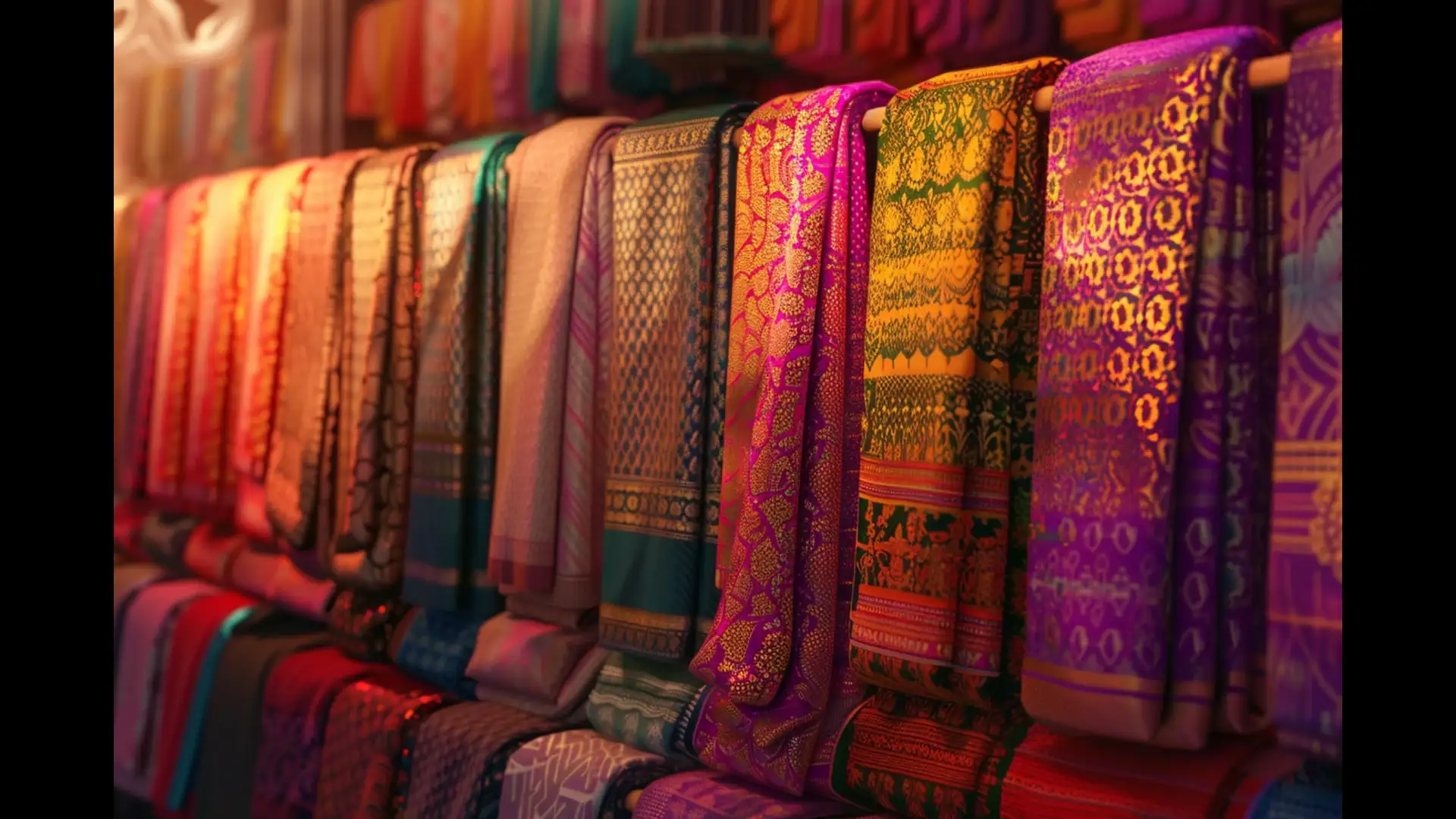
Banarasi, Uttar Pradesh
Varanasi has been weaving silk for over five centuries, and the Banarasi saree is its most recognisable product. The defining feature is the zari, gold or silver metallic thread woven into the fabric to create dense floral and foliate patterns drawn from Mughal court aesthetics. The base cloth is typically silk: pure katan silk, organza, or a georgette variant. The brocade work on the border and the pallu is often so heavy it can stand on its own. Weavers in the Banaras region work on pit looms, and a single heavily worked saree can take several weeks to complete.Kanjivaram, Tamil Nadu
Kanchipuram, a temple town about 75 kilometres from Chennai, produces what many consider the benchmark silk saree of South India. Kanjivaram silk is woven from pure mulberry silk threads and the zari is real gold or silver. What sets it apart structurally is that the body and the border are woven separately on different shuttles and then interlocked, a technique called korvai, so the two sections are joined rather than one continuous weave. The contrast between body colour and border colour is a signature of the style. The sarees are heavy, lustrous, and built to last decades.You may also like
- Smell Good After Shower: Why do some people smell good after showering? Try these hacks too.
- How much effort does Kohli put in to stay fit on the field? Learn about his diet routine.
- Far from crowded hill stations, India's 'Last Inhabited Village' sits at 11,320 feet, has a 500-year-old temple and offers a glimpse of Kinnauri culture; here's how to reach it
- Why Is Govardhan Puja Bigger Than Diwali in Braj?
- Death Symptoms: The body gives these 3 signs 24 hours before death! Nurse shares shocking experience
Chanderi, Madhya Pradesh
Chanderi is a small town in Madhya Pradesh that has been producing fine cotton and silk fabric since at least the medieval period. The Chanderi saree is known for its translucency, the weave is so light that the fabric appears to float. It is typically made from a blend of silk warp and cotton weft, which gives it a soft sheen without the weight of a full silk saree. The traditional motifs are small: coins, geometric shapes, and stylised flowers woven into the border. The fabric is popular in summer precisely because of how little it weighs.Pochampally, Telangana
Pochampally is a village near Hyderabad that gives its name to one of India's most distinctive weaving traditions: ikat. In ikat weaving, the threads are dyed in a specific pattern before they go onto the loom, so the design emerges from the yarn itself rather than from supplementary thread or embroidery. Pochampally ikat uses geometric patterns, diamonds, chevrons, and angular grids, in bold colour combinations. The technique requires the weaver to calculate the final pattern entirely in reverse before a single thread is woven, which is why even small errors are visible in the finished cloth. Both silk and cotton versions exist.Sambalpuri, Odisha
Sambalpuri sarees come from western Odisha, particularly the districts around Sambalpur, Bargarh, and Sonepur. Like Pochampally, they use ikat, but the Odia tradition calls it bandha and the motifs draw from a different visual vocabulary: conch shells, lotus flowers, wheels, and fish, all symbols with deep roots in Odia culture and temple iconography. The colour palette tends toward earthy reds, deep greens, and rich blacks. The cotton used is locally grown, and the dyeing and weaving are traditionally done within the same weaver family.Paithani, Maharashtra
Paithani sarees originate from Paithan, a town on the banks of the Godavari in Aurangabad district. The defining feature is the pallu: a tapestry-woven section where each colour is woven in separately using the interlocking weft technique, producing a design so detailed it can resemble a painting. The most traditional motifs are the peacock and the lotus, arranged in rows across the pallu. The body of a Paithani is typically a solid colour with a narrow zari border, which makes the pallu the clear centrepiece. Pure silk and real zari are used in the finest examples, and the weaving is slow, a heavily worked pallu can take months.Tant, West Bengal
Tant is Bengal's everyday cotton saree, woven primarily in the Hooghly and Nadia districts. It is the opposite of the heavy ceremonial sarees on this list: lightweight, breathable, and made for daily wear in a humid climate. The weave is open and soft, and the border is typically a simple stripe or check in a contrasting colour. What makes Tant remarkable is the sheer volume of production and the consistency of quality across thousands of small loom-rooms. It is the saree Bengali women have worn to the market, to work, and to the puja for generations, functional, affordable, and quietly beautiful.Kasavu, Kerala
The Kasavu saree is Kerala's ceremonial cotton saree, worn during Onam and at weddings. It is almost always white or off-white with a single broad border of real gold zari, the kasavu, running along the length. The simplicity is deliberate: the fabric is meant to reflect Kerala's aesthetic of restraint, where the quality of the cloth and the precision of the gold border do the work that elsewhere would be done by colour and embroidery. Kasavu sarees are woven in clusters around Balaramapuram near Thiruvananthapuram and in parts of Thrissur district, both of which have maintained the tradition across generations of weaver families. Each of these eight sarees is a complete craft system, a particular thread, a particular dye, a particular loom technique that developed in one place and nowhere else. The geography is not incidental. It is the reason the saree exists in the form it does.





Loving Newspoint? Download the app now
