
Are We Documenting Life More Than Living It?

Think about the last time something exciting happened. Did you experience it first, or did you reach for your phone? For many of us, documenting a moment has become almost like a reflex action. Before tasting a meal, we take a picture. Before enjoying a concert, we record a video. Before opening a gift, we think about capturing the reaction. It's not necessarily a bad thing. Photos and videos help us hold on to moments we never want to forget. But there’s a difference between saving a memory and living it. We've all seen it happen or done it ourselves holding up a phone at a concert, a birthday, or a family gathering, trying to capture the perfect shot. Sometimes in the process, we end up watching the moment through a screen instead of actually experiencing it.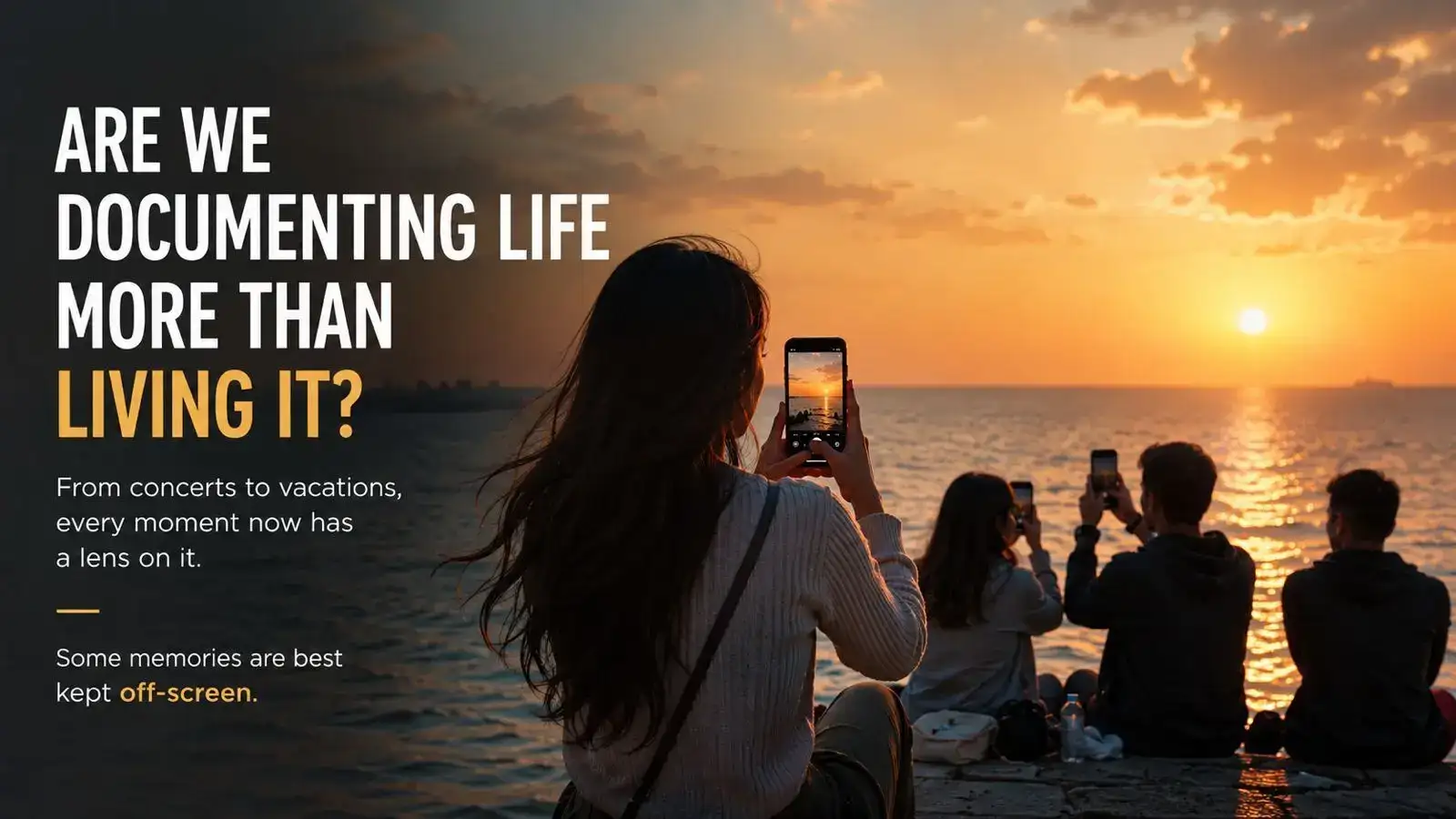
If It's Not Posted, Did It Even Happen?
Social media has changed the way we think about experiences. A trip is no longer just a trip, It's a photo dump. A story highlight, a reel, a collection of posts waiting to be shared. Without realising, many people have begun to associate experiences with visibility. A memory can sometimes feel more real, once it's been shared online. A photo gets uploaded, friends react to it and suddenly the moment feels complete. This isn't about wanting attention, for many of us, sharing has simply become part of everyday life. We've grown used to capturing experiences and letting others be a part of them. Still it raises an interesting question: why do some moments feel unfinished until they're posted online?The Pressure to Show We're Living
Spend just a few minutes scrolling through social media and you'll see people traveling, celebrating milestones, trying new restaurants, attending concerts, and ticking things off their bucket lists. It can seem like everyone is constantly doing something exciting. Without even realizing it many people start feeling a quiet pressure to keep up. Not because anyone asks them to, but because that's the culture we've become surrounded by. When everyone else's highlights are on display, it can feel like our own experiences need to be seen too. As a result, moments are no longer just moments. Experiences start serving a second bigger purpose not just to be enjoyed, but to show that we were there and that our lives are interesting too.Difference Between Reel and Real Moments
The pressure isn't always dramatic or intentional. Mostly it's subtle. It's the feeling of reaching for your phone before fully taking in the view, or thinking about the caption while the moment is still happening. Over time, sharing becomes so automatic that we rarely stop to question it. Posts become a way of saying, "Look, I'm doing something meaningful." The irony is that some of our happiest moments happen when nobody is watching, a long conversation with a friend, a spontaneous road trip, a quiet evening spent laughing with family. These moments rarely go viral, but they become the memories we cherish most.Memories and Content Are Not the Same Thing
The difference between content and memories is that content is designed to be seen while memories are designed to be felt. Content is curated, edited, filtered, and carefully selected while memories are messy, emotional, imperfect, and deeply personal. A vacation post might show beautiful beaches and smiling faces but it doesn't show the missed flights, the tiredness, the wrong turns, or the unexpected challenges. What we share online is often a highlight reel, while what we experience in real life is much richer and more complicated and it's not bad to make a reel but the problem is when we start valuing the highlight reel more than the actual experience.Why We Need Offline Moments
Not every memory needs an audience. Some moments deserve to exist only for the people who experienced them. In a world where almost everything can be shared instantly, keeping certain experiences private can feel surprisingly refreshing. It allows us to enjoy moments without thinking about captions, engagement, or how they might appear to others. When we stop worrying about documenting every second, we become more present. We listen more carefully, notice more details, and connect more deeply with the people around us. We stop performing life and start participating in it and that is the true feeling of living.Finding a Balance
Photos help us remember, videos help us revisit special moments.The goal isn't to stop taking photos or delete social media, documenting life isn't the problem here. Sharing experiences can inspire connection.The challenge is making sure the act of recording doesn't become more important than the experience itself. Take the picture, capture the memory, but then put the phone away. Watch the concert with your own eyes. Enjoy the meal while it's still hot. Stand still for a moment and look at the sunset instead of searching for the perfect angle. Because some of life's most meaningful moments aren't the ones that end up on your profile, they're the ones you were too busy living to post.To Live Without Being Live All The Time
Technology has given us the ability to capture more memories than any generation before us. That's a beautiful thing. But memories were never meant to live only in our camera rolls.They were meant to live within us and while there is nothing wrong with documenting life, it's worth remembering that the purpose of a moment is not to become content but to be lived.Next Story