
Does Drinking Tea in the Morning Reduce Iron Absorption? Here's What Research Reveals

Most people prefer to start their day with tea, as it contains caffeine, which can boost alertness right after waking up. However, research suggests that your morning tea may interfere with iron absorption , particularly non-heme iron found in plant-based foods. This may be a health concern, especially for people who are at risk of iron deficiency.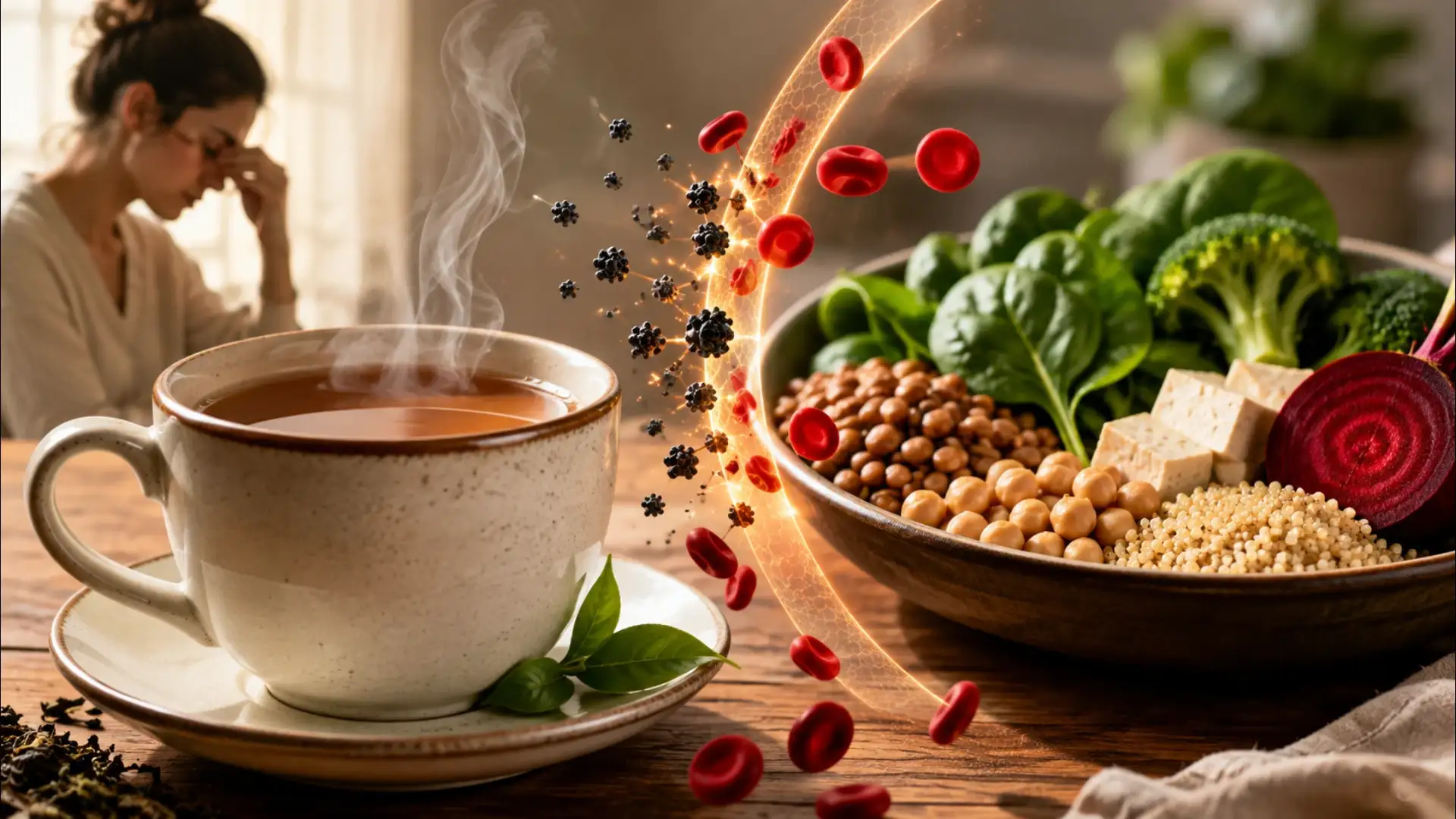
Research has found that morning tea contains compounds such as tannins and polyphenols that bind with non-heme iron in food. This makes it harder for the body to absorb iron, and this effect is strongest when tea is consumed with or immediately after meals.
To identify whether this may be affecting you, look for symptoms such as:
Research has found that morning tea contains compounds such as tannins and polyphenols that bind with non-heme iron in food. This makes it harder for the body to absorb iron, and this effect is strongest when tea is consumed with or immediately after meals.
How Does Morning Tea Slow Down Iron Absorption?
Research suggests that iron is an essential mineral that the body needs, as it plays an important role in haemoglobin production. Iron is also responsible for carrying oxygen throughout the body, maintaining energy levels, and supporting cognitive and immune function. However, drinking tea in the morning, especially on an empty stomach or close to meals, may reduce the body's ability to absorb iron from certain foods.You may also like
- Major Change in US Visa Rules: Application Will Be Rejected If Even One Document Is Missing
- EPFO: A major gift in August—access stuck funds in a jiffy via the e-Praapti Portal
- Solar Eclipse : When will this year's second solar eclipse occur, August 11 or 12? Will the Sutak period be observed in India?
- Can a D&C Cause a Thin Endometrium? Signs, Recovery and Pregnancy Chances
- Simple ways prevent waterborne diseases in monsoons
To identify whether this may be affecting you, look for symptoms such as:
- Fatigue
- Weakness
- Brain fog
- Dizziness
- Pale skin
- Breathlessness
Who Is Most At Risk Of Reduced Iron Absorption?
The risk of reduced iron absorption is higher among people who fall into specific categories that make them more vulnerable to low iron levels. These groups should be especially mindful of their iron levels and consider regular testing:- Women of reproductive age
- Pregnant women
- Adolescents
- Vegetarians and vegans
- People with iron-deficiency anaemia
- Frequent tea drinkers






Loving Newspoint? Download the app now
