
The QWERTY Origin: Why Computer Keyboards Aren't Arranged Alphabetically

To understand why modern computer keyboards and smartphone touchscreens utilize the QWERTY layout, one must travel back to the late 1860s during the infancy of mechanical typing technology. In 1868, American inventor Christopher Latham Sholes, along with his business partners Samuel W. Soulé and Carlos Glidden, patented one of the earliest commercially successful mechanical typewriters. Sholes's initial prototype featured a physical keyboard layout arranged in strict alphabetical order across two rows, mimicking the familiar structure of dictionaries, typesetter cases, and traditional alphabet learning materials.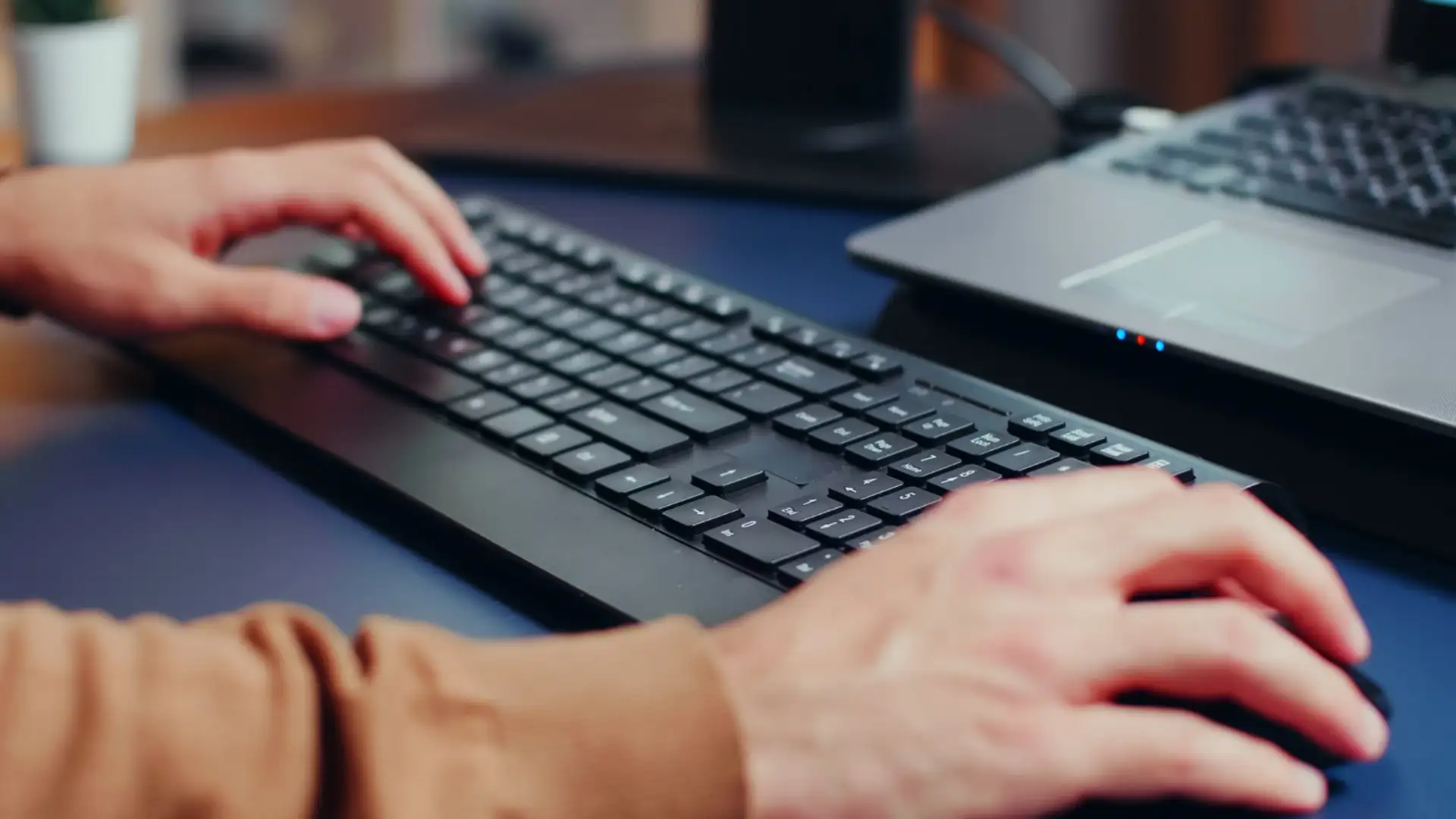
However, as typists gained proficiency and typing speeds increased, a severe mechanical design flaw emerged. Early mechanical typewriters operated using a complex system of internal metal typebars, slender mechanical arms with raised letters carved onto their tips. When a user pressed a key on the board, the corresponding metal typebar swung upward through a narrow central ring to strike an ink-soaked ribbon against the paper sheet.
When operators typed quickly on an alphabetical layout, frequently paired letters in the English language (such as "TH", "ST", "IN", or "ER") sat directly adjacent to one another inside the mechanical basket. Pressing neighboring keys in rapid succession caused their metal typebars to swing upward simultaneously, resulting in frequent mechanical jams where metal arms collided, locked together, and forced typists to manually pull the inked bars apart, smudging paper and slowing down overall document production.
By analyzing English letter frequencies and common bigrams (two-letter combinations that frequently appear together in words), Sholes strategically separated commonly paired letters across different physical zones of the keyboard matrix. Moving frequently used letter combinations away from adjacent positions meant their respective mechanical typebars were located on opposite sides of the central swinging basket. When a typist entered common words, the typebars alternated swinging from left to right rather than striking from the exact same physical region. This simple spatial separation dramatically reduced mechanical collisions, allowing operators to type continuously at high speeds without hardware interruptions.
By 1873, Sholes and Densmore finalized the letter arrangement, producing the layout known today as QWERTY named after the first six letters appearing on the top alphanumeric row. They sold the commercial manufacturing rights to E. Remington and Sons, a famous firearms and sewing machine manufacturer equipped with the precision machinery required to mass-produce typewriters. The Remington No. 2 typewriter, released in 1878, featured both uppercase and lowercase letters alongside the standardized QWERTY arrangement, cementing the layout's place in commercial offices nationwide.
Despite proven ergonomic advantages offered by layouts like Dvorak or Colemak, QWERTY remained the undisputed global standard due to a powerful economic principle known as path dependence and network lock-in. By the time electric typewriters and personal computers replaced mechanical systems in the mid-to-late 20th century, millions of secretaries, clerks, typists, and schools had already invested heavily in QWERTY touch-typing training.
Computer hardware manufacturers realized that introducing an ergonomically superior layout would force businesses to retrain their entire workforce at immense cost. As a result, when computer terminals, laptop keyboards, and eventual glass touchscreen smartphones were designed, engineers retained the QWERTY layout to ensure immediate user familiarity. What began as a clever 1870s mechanical fix for jamming metal typebars remains the universal interface connecting human thought to digital devices today.
However, as typists gained proficiency and typing speeds increased, a severe mechanical design flaw emerged. Early mechanical typewriters operated using a complex system of internal metal typebars, slender mechanical arms with raised letters carved onto their tips. When a user pressed a key on the board, the corresponding metal typebar swung upward through a narrow central ring to strike an ink-soaked ribbon against the paper sheet.
When operators typed quickly on an alphabetical layout, frequently paired letters in the English language (such as "TH", "ST", "IN", or "ER") sat directly adjacent to one another inside the mechanical basket. Pressing neighboring keys in rapid succession caused their metal typebars to swing upward simultaneously, resulting in frequent mechanical jams where metal arms collided, locked together, and forced typists to manually pull the inked bars apart, smudging paper and slowing down overall document production.
You may also like
- Basque waist is fashion next favourite. What is it?
- How much will you earn on an FD of ₹20,000 to ₹1 lakh? Understand the full breakdown.
- Does the first husband still have to pay alimony if the wife remarries? Here is what the law says.
- When 'I'm fine' means anything but fine
- Puffy Eyes in the Morning? These Simple Changes May Help
Engineering the QWERTY Layout to Optimize Workflow
To solve this persistent mechanical bottleneck, Sholes spent several years experimenting with key positions alongside his colleague James Densmore. Their objective was not, as popular urban legend often claims, to intentionally slow typists down to a crawl. Instead, their goal was to manipulate key placement to maximize typing efficiency and prevent physical jams.By analyzing English letter frequencies and common bigrams (two-letter combinations that frequently appear together in words), Sholes strategically separated commonly paired letters across different physical zones of the keyboard matrix. Moving frequently used letter combinations away from adjacent positions meant their respective mechanical typebars were located on opposite sides of the central swinging basket. When a typist entered common words, the typebars alternated swinging from left to right rather than striking from the exact same physical region. This simple spatial separation dramatically reduced mechanical collisions, allowing operators to type continuously at high speeds without hardware interruptions.
By 1873, Sholes and Densmore finalized the letter arrangement, producing the layout known today as QWERTY named after the first six letters appearing on the top alphanumeric row. They sold the commercial manufacturing rights to E. Remington and Sons, a famous firearms and sewing machine manufacturer equipped with the precision machinery required to mass-produce typewriters. The Remington No. 2 typewriter, released in 1878, featured both uppercase and lowercase letters alongside the standardized QWERTY arrangement, cementing the layout's place in commercial offices nationwide.
Path Dependence: Why QWERTY Survived into the Digital Age
By the early 20th century, alternative keyboard arrangements were developed to improve typing efficiency and reduce finger fatigue. The most famous alternative, the Dvorak Simplified Keyboard (patented by Dr. August Dvorak in 1936), was specifically engineered using modern ergonomics. Dvorak placed the most common vowels and consonants on the home row, allowing typists to execute approximately 70 percent of keystrokes without reaching, compared to only 32 percent on QWERTY.Despite proven ergonomic advantages offered by layouts like Dvorak or Colemak, QWERTY remained the undisputed global standard due to a powerful economic principle known as path dependence and network lock-in. By the time electric typewriters and personal computers replaced mechanical systems in the mid-to-late 20th century, millions of secretaries, clerks, typists, and schools had already invested heavily in QWERTY touch-typing training.
Computer hardware manufacturers realized that introducing an ergonomically superior layout would force businesses to retrain their entire workforce at immense cost. As a result, when computer terminals, laptop keyboards, and eventual glass touchscreen smartphones were designed, engineers retained the QWERTY layout to ensure immediate user familiarity. What began as a clever 1870s mechanical fix for jamming metal typebars remains the universal interface connecting human thought to digital devices today.






Loving Newspoint? Download the app now
