
Festive Food Safety: How to Store Sweets and Leftovers Without Increasing Health Risks

Festivals often involve preparing large quantities of food, exchanging sweets and serving meals to family and friends. While these traditions bring people together, busy kitchens and food left sitting out for long periods can increase the risk of contamination.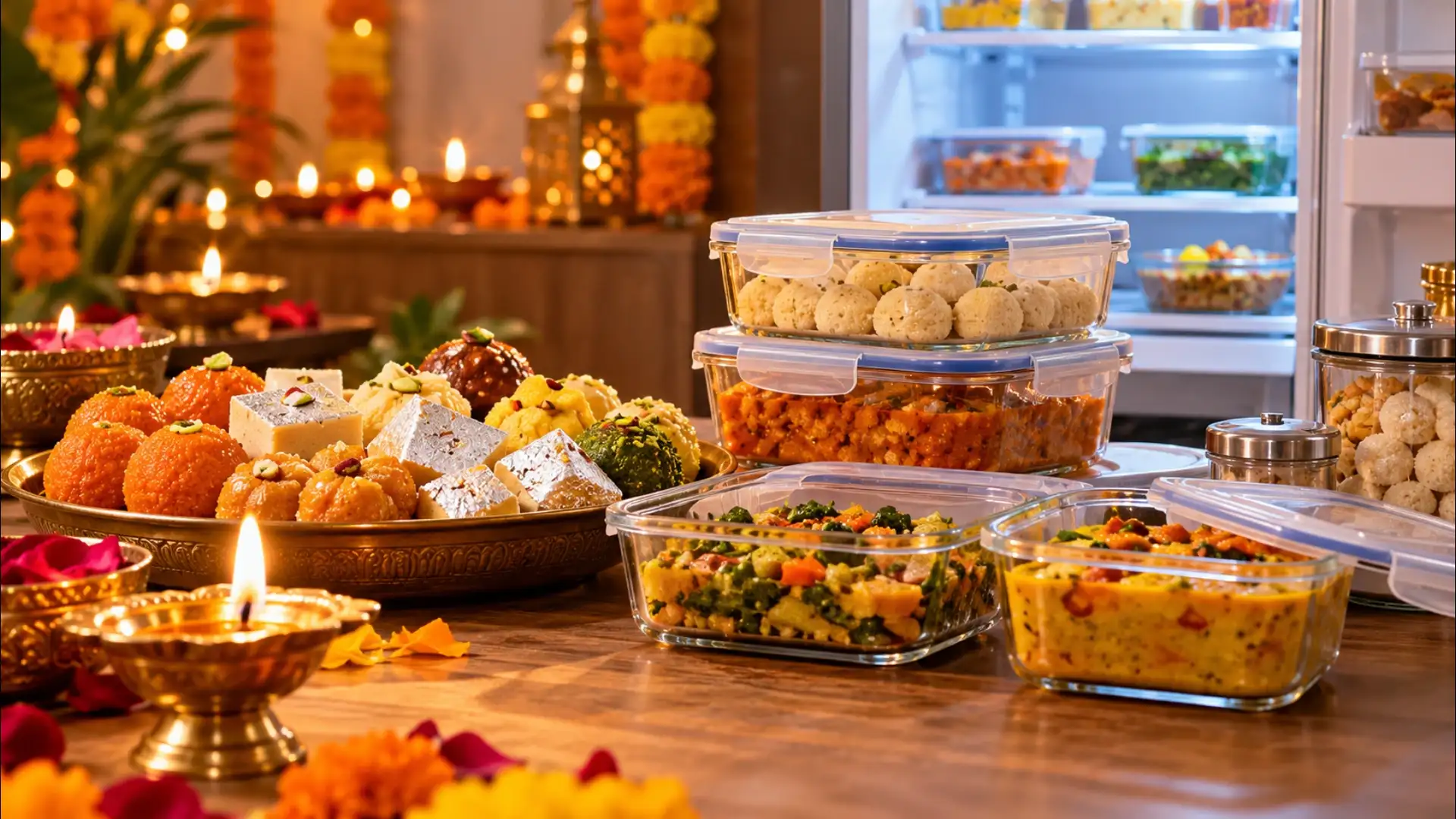
Food safety depends on how ingredients are handled, how quickly perishable dishes are cooled and whether storage conditions are suitable. Simple precautions can reduce avoidable risks without changing the foods people enjoy during celebrations. Understanding the difference between shelf-stable sweets and perishable desserts is particularly important when preparing food in advance or transporting it to another home.
Check packaging, labels, expiry or best-before dates where applicable, and any storage instructions provided by the manufacturer.
Avoid products with damaged packaging, unusual discolouration or signs of poor handling.
Appearance and smell cannot guarantee that a product is safe, so proper storage and handling remain important even when food looks normal.
For packaged products, retain the label until the food has been consumed, especially if it contains information about refrigeration or allergens.
Some dry sweets may be suitable for storage at room temperature when kept in clean, covered containers under the conditions specified by the manufacturer.
Milk-based desserts, cream-filled products and other highly perishable foods generally require refrigeration.
Do not assume that a sweet is safe at room temperature simply because it was purchased from a reputable shop. Follow the product's storage instructions and avoid leaving perishable food out for extended periods.
Divide large quantities into smaller, shallow containers so that they cool more quickly. Keep the refrigerator at a safe temperature, generally 4°C or below.
Use clean utensils when serving food and avoid returning food to a container after it has been handled by several people.
Reheat leftovers thoroughly where appropriate, and discard food that has been stored unsafely. Reheating does not necessarily make improperly stored food safe.
If food must be transported, use suitable insulated containers and maintain appropriate temperature conditions.
People serving large groups should plan preparation and storage carefully instead of relying on food remaining safe throughout a long celebration.
Good food hygiene is not complicated, but it requires consistency. A few sensible precautions can help families enjoy festive meals while reducing avoidable foodborne illness risks.
Food safety depends on how ingredients are handled, how quickly perishable dishes are cooled and whether storage conditions are suitable. Simple precautions can reduce avoidable risks without changing the foods people enjoy during celebrations. Understanding the difference between shelf-stable sweets and perishable desserts is particularly important when preparing food in advance or transporting it to another home.
How Should You Choose Sweets From a Shop?
Buy food from businesses that maintain clean preparation and serving areas.Check packaging, labels, expiry or best-before dates where applicable, and any storage instructions provided by the manufacturer.
Avoid products with damaged packaging, unusual discolouration or signs of poor handling.
Appearance and smell cannot guarantee that a product is safe, so proper storage and handling remain important even when food looks normal.
For packaged products, retain the label until the food has been consumed, especially if it contains information about refrigeration or allergens.
Do All Indian Sweets Need Refrigeration?
No. Storage requirements depend on the ingredients, moisture content and preparation method.Some dry sweets may be suitable for storage at room temperature when kept in clean, covered containers under the conditions specified by the manufacturer.
You may also like
- Jailer 2 Box Office Collection Day 4: Rajinikanth's Film Nears ₹200 Crore India Net, Worldwide Total Crosses ₹424 Crore
- Delhi to Patna in 13 hours: Special Vande Bharat train to run 3 days a week with only 6 stops
- Will gold and silver prices fluctuate again? Check out the latest rates for today.
- I want to build on what I have achieved this year: Dhiraj Bommadevara
- Up to 5% Blending Introduced in Diesel; Oil Companies Adding Biodiesel to Cut Costs
Milk-based desserts, cream-filled products and other highly perishable foods generally require refrigeration.
Do not assume that a sweet is safe at room temperature simply because it was purchased from a reputable shop. Follow the product's storage instructions and avoid leaving perishable food out for extended periods.
How Should You Store Festive Leftovers?
Refrigerate perishable leftovers promptly rather than leaving them on the dining table for hours.Divide large quantities into smaller, shallow containers so that they cool more quickly. Keep the refrigerator at a safe temperature, generally 4°C or below.
Use clean utensils when serving food and avoid returning food to a container after it has been handled by several people.
Reheat leftovers thoroughly where appropriate, and discard food that has been stored unsafely. Reheating does not necessarily make improperly stored food safe.
What About Food Prepared for Guests?
Wash hands before preparing food and after handling raw ingredients. Clean utensils and surfaces between tasks, and keep raw foods separate from ready-to-eat dishes.If food must be transported, use suitable insulated containers and maintain appropriate temperature conditions.
People serving large groups should plan preparation and storage carefully instead of relying on food remaining safe throughout a long celebration.
Good food hygiene is not complicated, but it requires consistency. A few sensible precautions can help families enjoy festive meals while reducing avoidable foodborne illness risks.






Loving Newspoint? Download the app now
