
Ghosting Isn't Just Being Left on Read| It's Grieving Someone Who Never Really Left Properly

There isn't a rulebook for ghosting . No one tells you what to do when someone who used to send you ‘Good morning’ texts suddenly disappears. No one prepares you for the strange feeling of staring at your phone, convincing yourself they're probably just busy. At first, it doesn't even feel like heartbreak . It feels like waiting, waiting for a reply, waiting for an explanation, waiting for things to go back to how they were.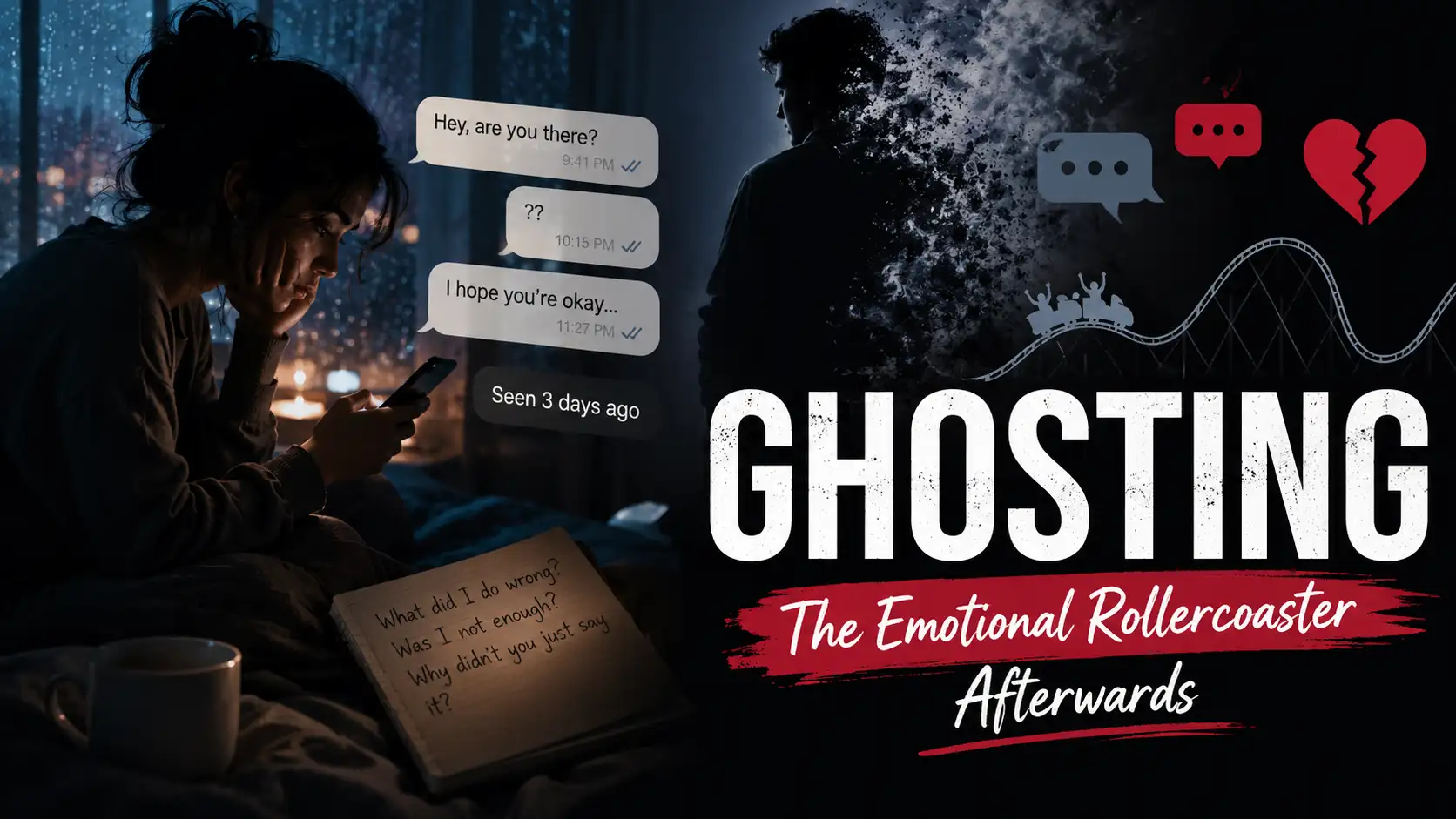
But days turn into weeks, and somewhere between checking your notifications and pretending you don't care anymore, you realise you're mourning someone who's still alive, someone who simply chose silence over honesty. And somehow, that silence hurts more than a goodbye ever could.
The hardest part about ghosting isn't always losing someone. It's losing the routine. It's reaching for your phone because you saw something funny and remembering there's no one to send it to anymore. It's hearing a song that instantly reminds you of them. It's opening Instagram, hoping they've posted something, anything that explains why they vanished. You don't just lose a person, you lose the future your mind quietly started building with them.
Ghosting turns ordinary people into investigators; you reread conversations that ended weeks ago, you wonder if your last message sounded too eager, and you notice the exact day they stopped using heart emojis. You remember one awkward joke you made and suddenly decide that's probably why they left. It's exhausting. Not because you're looking for answers, but because your mind refuses to accept that there may never be one.
Healing after ghosting is never a straight line. You're finally starting to feel okay, and then their name appears in your Story views. Or they accidentally like an old picture. Or your friend casually mentions they saw them somewhere. Suddenly, all the progress you've made feels like it disappears overnight. You start creating conversations in your head. "Maybe they're going to text." "Maybe they're embarrassed." "Maybe they just needed space." Hope has a funny way of showing up exactly when you're trying to let go.
Ghosting has a way of making you question things that had nothing to do with the relationship. You hesitate before double-texting anyone. You stop showing excitement because you don't want to seem "too much". You become scared of getting attached, even when someone is treating you well. It's not because one person disappeared. It's because they disappeared without telling you why. When people leave without an explanation, it's easy to convince yourself that the explanation must be you.
It doesn't happen dramatically. One morning, you wake up and realise you didn't check if they were online. You hear the song that once reminded you of them, and instead of feeling a knot in your stomach, you simply let it play. Their name pops into your mind less often. Their absence stops feeling like an open wound and starts feeling like an old scar. You never got the closure you thought you needed. But somewhere along the way, you created your own.
People who are emotionally available don't usually disappear without a conversation. They communicate, even when the truth is uncomfortable. Ghosting often isn't about your worth; it reflects someone else's inability to handle difficult conversations, endings, or accountability. That doesn't erase the hurt. But it does remind you that someone else's silence should never become the voice you use to judge yourself.
The strange thing about ghosting is that you spend weeks waiting for one message, only to realise the message you really needed was the one you eventually gave yourself. "If someone can walk out of my life without a single explanation, maybe they were never meant to stay in it." And maybe that's the beginning of healing, not when they come back, but when you stop hoping they will.
But days turn into weeks, and somewhere between checking your notifications and pretending you don't care anymore, you realise you're mourning someone who's still alive, someone who simply chose silence over honesty. And somehow, that silence hurts more than a goodbye ever could.
You Don't Miss the Person at First, You Miss the Version of Them You Knew
The hardest part about ghosting isn't always losing someone. It's losing the routine. It's reaching for your phone because you saw something funny and remembering there's no one to send it to anymore. It's hearing a song that instantly reminds you of them. It's opening Instagram, hoping they've posted something, anything that explains why they vanished. You don't just lose a person, you lose the future your mind quietly started building with them.
You may also like
- No town water or rain for weeks: Australian off-grid homesteader shows how she stores every drop to survive, and netizens ask if it's legal!
- Why are more people spraying vinegar around their front door every week? The sharp smell may help deter ants while cleaning the threshold
- EPFO 3.0 is set to transform retirement planning! Everything from PF claims to pensions will become easier—here are 7 major changes..
- How Your Body Recovers After Egg Retrieval: What to Expect Day by Day
- Dua Lipa and Husband Callum Turner Turn Up the Romance in Italy
Your Brain Becomes a Detective
Ghosting turns ordinary people into investigators; you reread conversations that ended weeks ago, you wonder if your last message sounded too eager, and you notice the exact day they stopped using heart emojis. You remember one awkward joke you made and suddenly decide that's probably why they left. It's exhausting. Not because you're looking for answers, but because your mind refuses to accept that there may never be one.
The Tiny Things That Pull You Back In
Healing after ghosting is never a straight line. You're finally starting to feel okay, and then their name appears in your Story views. Or they accidentally like an old picture. Or your friend casually mentions they saw them somewhere. Suddenly, all the progress you've made feels like it disappears overnight. You start creating conversations in your head. "Maybe they're going to text." "Maybe they're embarrassed." "Maybe they just needed space." Hope has a funny way of showing up exactly when you're trying to let go.
Nobody Talks About the Damage It Does to Your Confidence
Ghosting has a way of making you question things that had nothing to do with the relationship. You hesitate before double-texting anyone. You stop showing excitement because you don't want to seem "too much". You become scared of getting attached, even when someone is treating you well. It's not because one person disappeared. It's because they disappeared without telling you why. When people leave without an explanation, it's easy to convince yourself that the explanation must be you.
One Day, You Stop Waiting
It doesn't happen dramatically. One morning, you wake up and realise you didn't check if they were online. You hear the song that once reminded you of them, and instead of feeling a knot in your stomach, you simply let it play. Their name pops into your mind less often. Their absence stops feeling like an open wound and starts feeling like an old scar. You never got the closure you thought you needed. But somewhere along the way, you created your own.
Maybe Ghosting Says More About Them Than You
People who are emotionally available don't usually disappear without a conversation. They communicate, even when the truth is uncomfortable. Ghosting often isn't about your worth; it reflects someone else's inability to handle difficult conversations, endings, or accountability. That doesn't erase the hurt. But it does remind you that someone else's silence should never become the voice you use to judge yourself.
Healing takes time
The strange thing about ghosting is that you spend weeks waiting for one message, only to realise the message you really needed was the one you eventually gave yourself. "If someone can walk out of my life without a single explanation, maybe they were never meant to stay in it." And maybe that's the beginning of healing, not when they come back, but when you stop hoping they will.






Loving Newspoint? Download the app now
