
Global Perspectives: How Different Countries Define Work-Life Balance

The search for a healthy equilibrium between professional duties and personal time is a universal goal. However, what " work-life balance " actually looks like varies dramatically depending on where you are in the world. While one culture might view working late into the evening as a sign of dedication and drive, another might interpret it as poor time management or a lack of personal fulfillment.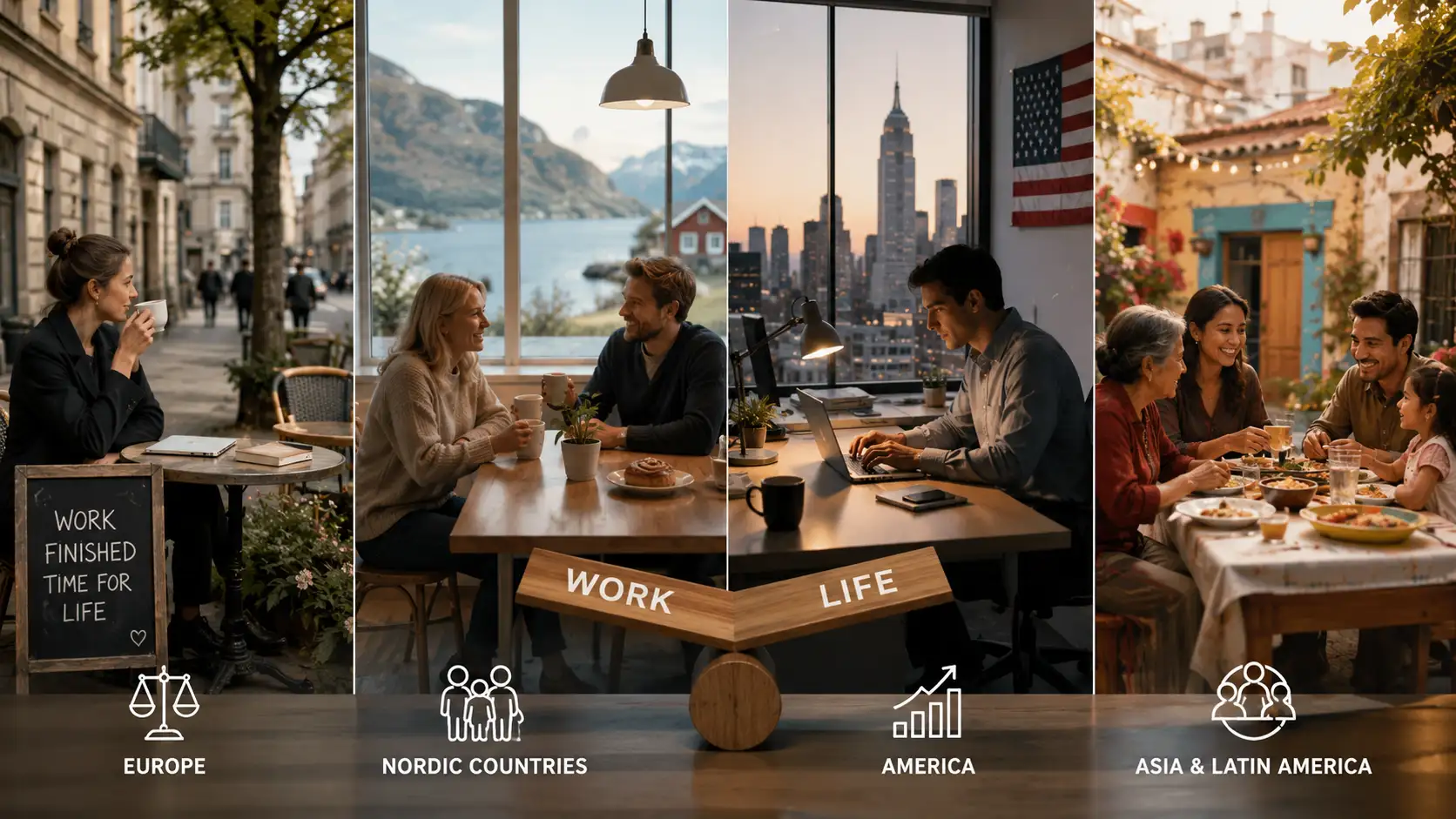
From rigid statutory boundaries in Western Europe to the relational, fluid workdays found in parts of Asia and Latin America, cultural norms, employment laws, and social expectations deeply shape how different nations define a successful life.
In countries like Germany and the Netherlands, efficiency during official office hours is highly valued. Workers are expected to focus intensely while at their desks, allowing them to finish their tasks promptly and log off. Germany records some of the lowest average annual working hours in the world, operating on the principle that rested employees are inherently more productive.
Similarly, France famously introduced "right to disconnect" legislation, legally protecting employees from answering work emails or taking professional phone calls outside of agreed working hours. In these cultures, personal time, family dinners, and extended annual leave are considered sacred, non-negotiable elements of everyday life.
Flexible working arrangements, generous paid parental leave, and shorter working weeks are deeply embedded in society. Concepts like the Swedish tradition of fika taking a daily pause away from screens to connect with colleagues over coffee highlight a cultural belief that work should enhance human connection rather than replace it.
For many American professionals, work-life balance is framed not as a societal guarantee, but as an individual challenge to be solved through careful time management or flexible remote working arrangements. However, shifting attitudes among younger generations are beginning to challenge this norm, driving greater demand for personal boundaries and mental health support.
Meanwhile, in many Latin American cultures, work-life balance is defined through strong social and family ties. Professional life is often viewed as a means to support family and social relationships rather than the central focus of identity. Shared meals, extended midday breaks, and vibrant social gatherings are considered essential components of a healthy routine.
From rigid statutory boundaries in Western Europe to the relational, fluid workdays found in parts of Asia and Latin America, cultural norms, employment laws, and social expectations deeply shape how different nations define a successful life.
The European Approach: Protection and Disconnection
Across much of Western and Northern Europe, work-life balance is treated as a fundamental social right protected by strict regulation.In countries like Germany and the Netherlands, efficiency during official office hours is highly valued. Workers are expected to focus intensely while at their desks, allowing them to finish their tasks promptly and log off. Germany records some of the lowest average annual working hours in the world, operating on the principle that rested employees are inherently more productive.
Similarly, France famously introduced "right to disconnect" legislation, legally protecting employees from answering work emails or taking professional phone calls outside of agreed working hours. In these cultures, personal time, family dinners, and extended annual leave are considered sacred, non-negotiable elements of everyday life.
You may also like
- This Kerala girl climbed North Africa's highest peak at 8; her father's parenting came down to one question: "I asked her if she wanted to give up... she said a strict no"
- From lullabies to careers: Keeping screens aside
- Underarm odor: Do you often experience the smell of sweat in your armpits? This simple trick while showering will eliminate the odor problem
- A balcony filled with butterflies asks us to notice small miracles – something difficult to find in our world
- Top 8 Mehendi Designs to Embrace This Monsoon Season
The Nordic Model: Quality of Life First
Nordic countries like Denmark, Sweden, and Norway consistently top global happiness and well-being rankings. Here, the definition of success places personal well-being, parental support, and community involvement alongside career milestones.Flexible working arrangements, generous paid parental leave, and shorter working weeks are deeply embedded in society. Concepts like the Swedish tradition of fika taking a daily pause away from screens to connect with colleagues over coffee highlight a cultural belief that work should enhance human connection rather than replace it.
The American Ideal: Hustle and Ambition
In contrast, the traditional work culture in the United States often links personal value and success directly to career advancement and professional output. Long hours, minimal statutory paid leave, and a strong "hustle mentality" have historically been viewed as badges of honour.For many American professionals, work-life balance is framed not as a societal guarantee, but as an individual challenge to be solved through careful time management or flexible remote working arrangements. However, shifting attitudes among younger generations are beginning to challenge this norm, driving greater demand for personal boundaries and mental health support.
Asia and Latin America: Integration and Family Life
In several Asian economies, such as Japan and South Korea, strong societal expectations around corporate loyalty have traditionally led to long office hours. However, governments in these regions are actively introducing measures to cap weekly hours and encourage rest to prevent extreme workplace exhaustion.Meanwhile, in many Latin American cultures, work-life balance is defined through strong social and family ties. Professional life is often viewed as a means to support family and social relationships rather than the central focus of identity. Shared meals, extended midday breaks, and vibrant social gatherings are considered essential components of a healthy routine.
A Diverse Global Landscape
Ultimately, there is no single, perfect blueprint for work-life balance. Whether achieved through legal protections, flexible schedules, or strong personal boundaries, how a nation balances work and leisure reflects its deepest societal values. Understanding these global differences reminds us that there are many different ways to build a meaningful, satisfying life.





Loving Newspoint? Download the app now
