
Before ACs and Coolers, How Did Indian Homes Beat the Heat With Traditional Hand Fans?

Long before electric fans and air conditioners became common, hand fans were essential household objects in many parts of India. Made from palm leaves, bamboo, grass, cloth and other locally available materials, these simple tools helped people cope with hot weather using nothing more than a gentle movement of the wrist. Over time, hand fans also became part of religious ceremonies, royal settings, folk traditions and decorative crafts. Their designs varied across regions, reflecting local resources, artistic skills and everyday needs. Exploring the history of hand fans offers a glimpse into how Indian households adapted to the climate while developing distinctive traditions of practical craftsmanship.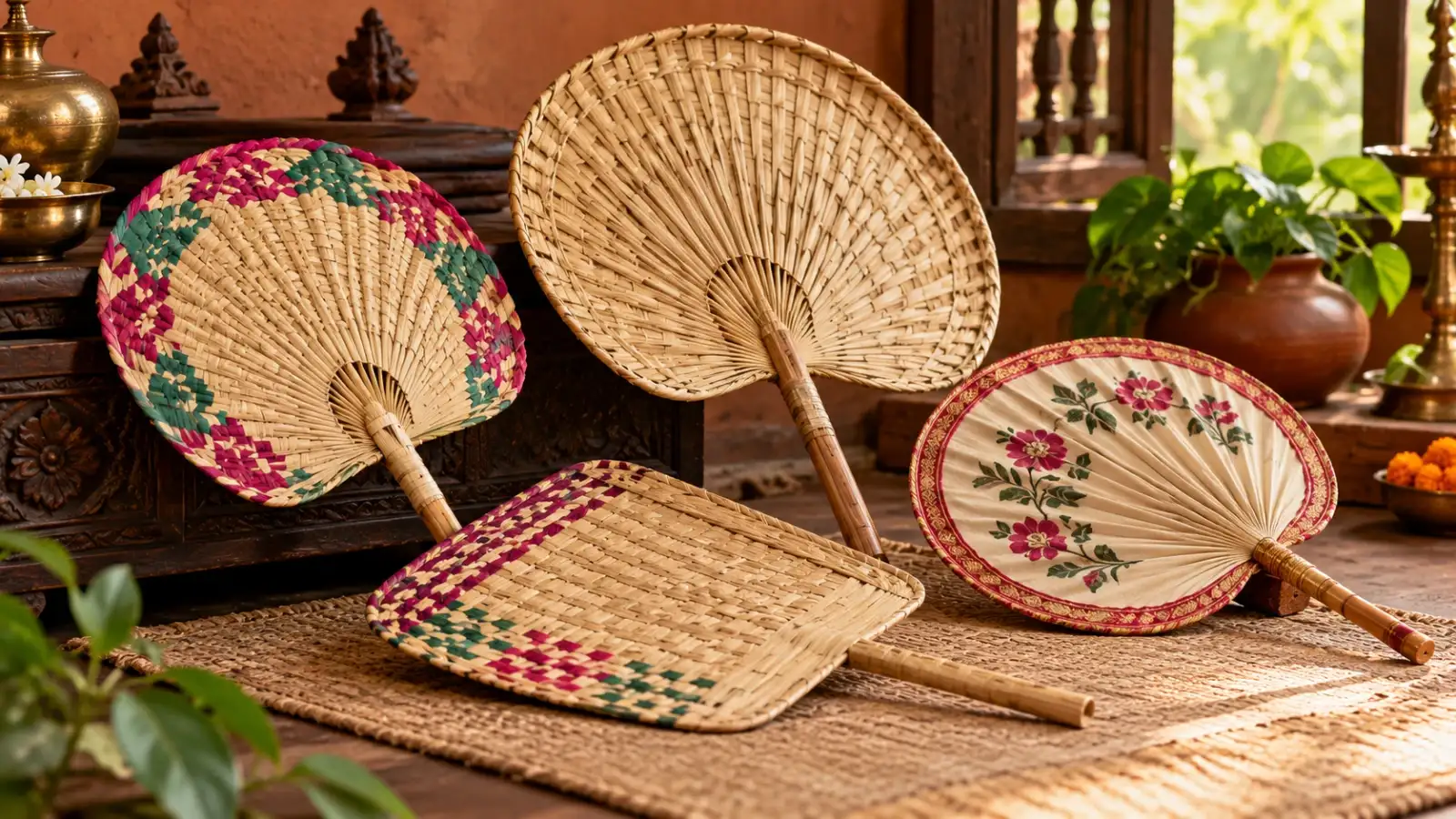
In Indian homes, hand fans served a straightforward purpose: moving air towards the face and body to provide temporary relief from heat. Their use was particularly valuable in regions with long, hot summers and limited access to mechanical cooling.
The earliest household fans were not necessarily elaborate objects. Many were designed for daily use, with local makers adapting their shape and construction to suit available materials and the needs of the people using them.
Grass, reeds and other plant fibres were also used in various local crafts. Some fans were woven into simple circular or rectangular forms, while others featured decorative patterns created through the arrangement of natural materials.
These designs reflected practical knowledge passed down through generations. Makers understood how to work with materials that were accessible in their surroundings, creating household objects that were functional without requiring complicated tools.
Some fans were designed with long handles for comfortable use, while others could be held directly by the edge. Their size, shape and density affected how easily they could be carried, stored and used.
The distinction between everyday and ceremonial fans was also important. A simple woven fan might be used in a household kitchen or courtyard, while a carefully decorated version could serve a religious, cultural or formal purpose.
Fans also have a place in several Indian religious traditions. In some temples, attendants use fans as part of the ritual care offered to deities, particularly during warm weather. The materials and designs vary according to local customs and the traditions of the institution.
In these contexts, the fan becomes more than a practical tool. Its use can express respect, service and the symbolic importance of caring for a revered figure.
In some communities, fan-making formed part of a wider tradition of working with bamboo, palm leaves or other natural materials. Such crafts often relied on knowledge passed between family members and local artisans.
Traditional fans also appeared in folk performances, festivals and seasonal markets. Their decoration could reflect regional preferences, festive colours or locally familiar designs.
Their usefulness was not limited to households. Vendors, craftspeople and travellers could carry them easily, while larger fans were used in particular settings to move air for several people.
The arrival of electric fans gradually changed household cooling, particularly as electricity became more accessible. However, hand fans continued to be used in places where simple, low-cost cooling was practical or where traditional customs remained important.
They also appeal to people interested in natural materials, handmade objects and heritage-inspired interiors. A woven fan can serve as a wall decoration or a reminder of older household practices.
Supporting skilled artisans and buying locally made crafts can help maintain traditional techniques. However, handmade objects should be treated as more than decorative souvenirs: they represent the knowledge, labour and cultural context behind their creation.
The history of hand fans in Indian homes reflects the relationship between climate, everyday needs and traditional craftsmanship. From simple palm-leaf designs to carefully decorated ceremonial objects, these fans developed in forms suited to different regions and purposes. Although electric cooling has reduced their role in many households, hand fans remain part of India's craft heritage and cultural life. Their continued use and preservation offer a connection to earlier generations, when practical household objects were often made by hand from materials found close to home.
1. Early Hand Fans and Everyday Life
Hand fans have a long history across many ancient civilisations, including the Indian subcontinent. Early examples were likely made from readily available natural materials such as leaves, feathers and woven plant fibres. These materials were practical because they were lightweight, inexpensive and easy to shape.In Indian homes, hand fans served a straightforward purpose: moving air towards the face and body to provide temporary relief from heat. Their use was particularly valuable in regions with long, hot summers and limited access to mechanical cooling.
The earliest household fans were not necessarily elaborate objects. Many were designed for daily use, with local makers adapting their shape and construction to suit available materials and the needs of the people using them.
2. Palm Leaves, Bamboo and Other Natural Materials
Traditional Indian hand fans developed in different forms according to regional resources. Palm leaves could be dried, flattened or woven into useful shapes, while bamboo provided a lightweight structure for fans that needed a frame or handle.Grass, reeds and other plant fibres were also used in various local crafts. Some fans were woven into simple circular or rectangular forms, while others featured decorative patterns created through the arrangement of natural materials.
These designs reflected practical knowledge passed down through generations. Makers understood how to work with materials that were accessible in their surroundings, creating household objects that were functional without requiring complicated tools.
3. How Hand Fans Varied Across India
India's regional diversity is visible in its traditional fan-making practices. In areas where palm leaves were readily available, leaf fans became a practical choice. In other places, bamboo, woven grass, cloth or decorative materials were used to create different styles.Some fans were designed with long handles for comfortable use, while others could be held directly by the edge. Their size, shape and density affected how easily they could be carried, stored and used.
The distinction between everyday and ceremonial fans was also important. A simple woven fan might be used in a household kitchen or courtyard, while a carefully decorated version could serve a religious, cultural or formal purpose.
4. Hand Fans in Royal Courts and Religious Traditions
Hand fans were not limited to ordinary household cooling. In royal courts and formal settings, attendants sometimes used elaborate fans as part of ceremonial service. These objects could be made from finer materials and decorated to reflect status or occasion.Fans also have a place in several Indian religious traditions. In some temples, attendants use fans as part of the ritual care offered to deities, particularly during warm weather. The materials and designs vary according to local customs and the traditions of the institution.
In these contexts, the fan becomes more than a practical tool. Its use can express respect, service and the symbolic importance of caring for a revered figure.
5. Traditional Hand Fans as Regional Crafts
Over time, hand fans became an opportunity for artisans to demonstrate their skills. Woven patterns, coloured surfaces, painted motifs and carefully shaped handles helped turn simple objects into decorative items.You may also like
- 'Quick tasks' before clock-out? Employee says the boss keeps extending workdays without overtime pay, sparking debates over burnout, boundaries and the pressure to always say yes
- Paytm AU Bank Credit Card: Get this new card with zero fees and enjoy significant savings on UPI payments..
- The wait for the 24th installment is over! Find out which farmers will have ₹2,000 transferred into their accounts this week..
- The Significance of Sixteen Adornments on Karva Chauth: A Blend of Beauty and Tradition
- Egyptian Sphinx: Fossils Near Reveal Ancient Gharial Crocodile
In some communities, fan-making formed part of a wider tradition of working with bamboo, palm leaves or other natural materials. Such crafts often relied on knowledge passed between family members and local artisans.
Traditional fans also appeared in folk performances, festivals and seasonal markets. Their decoration could reflect regional preferences, festive colours or locally familiar designs.
6. Why Hand Fans Remained Useful for So Long
Hand fans remained common because they were inexpensive, portable and did not require electricity. They could be used during power cuts, outdoor gatherings, travel and everyday activities in hot weather.Their usefulness was not limited to households. Vendors, craftspeople and travellers could carry them easily, while larger fans were used in particular settings to move air for several people.
The arrival of electric fans gradually changed household cooling, particularly as electricity became more accessible. However, hand fans continued to be used in places where simple, low-cost cooling was practical or where traditional customs remained important.
7. Traditional Hand Fans in Modern Indian Homes
Today, hand fans can still be found in rural households, religious settings, craft markets and homes that value traditional decoration. Some are purchased for practical use, while others are displayed as examples of regional craftsmanship.They also appeal to people interested in natural materials, handmade objects and heritage-inspired interiors. A woven fan can serve as a wall decoration or a reminder of older household practices.
Supporting skilled artisans and buying locally made crafts can help maintain traditional techniques. However, handmade objects should be treated as more than decorative souvenirs: they represent the knowledge, labour and cultural context behind their creation.
The history of hand fans in Indian homes reflects the relationship between climate, everyday needs and traditional craftsmanship. From simple palm-leaf designs to carefully decorated ceremonial objects, these fans developed in forms suited to different regions and purposes. Although electric cooling has reduced their role in many households, hand fans remain part of India's craft heritage and cultural life. Their continued use and preservation offer a connection to earlier generations, when practical household objects were often made by hand from materials found close to home.






Loving Newspoint? Download the app now
