
How to Start a Kitchen Garden With Just Five Pots

The idea of growing your own vegetables sounds lovely until you start thinking about space, pots, soil, seeds and everything else that seems to come with gardening.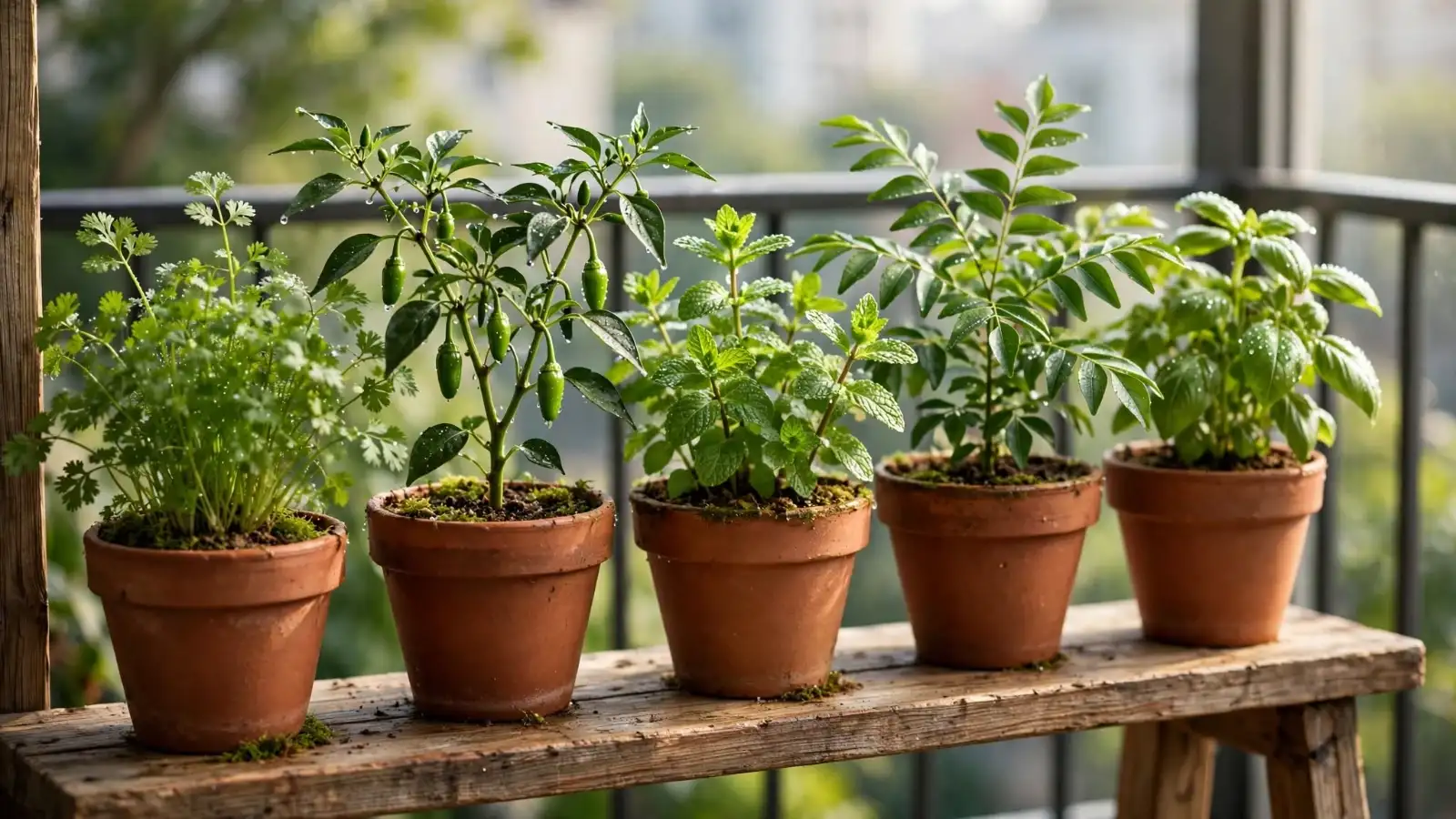
But a kitchen garden does not have to begin with a large terrace filled with dozens of containers.
If you have a sunny balcony, windowsill, terrace corner or even a small outdoor area, five well-chosen pots can be enough to get started. Container gardening is particularly useful for people living in apartments because plants can be moved, rearranged and grown according to the available space.
Use a container with drainage holes and sow the seeds directly into the growing medium. Keep the soil appropriately moist while the seeds establish, then harvest small amounts as the plant grows.
Instead of trying to produce a huge crop immediately, think of this first pot as your fresh herb supply.
Choose a sunny location and use a reasonably deep pot that gives the roots room to develop. Once established, the plant can continue producing chillies under suitable growing conditions.
This is also a good option if you want something that feels rewarding because you can actually see the harvest developing.
However, it is also known for spreading enthusiastically. Keeping it in its own pot is therefore a sensible choice rather than planting it directly alongside other herbs.
Give it enough light, keep the soil from becoming completely dry and trim it regularly to encourage fresh growth.
Leafy greens are particularly useful for small-space gardening because they do not require the same depth or sprawling space as larger fruiting vegetables. Container gardening guides commonly include leafy greens among suitable crops for pots.
You can also experiment with succession planting, sowing a small amount at intervals rather than putting all your seeds in at once.
A compact or patio tomato variety can work well if you have enough sunlight and a suitably large container. Alternatively, you could grow another chilli plant or choose a vegetable that suits your climate and available space.
Tomatoes generally need more room than herbs, so check the eventual size of the variety before choosing the pot.
Start Small and Learn as You Go
The biggest mistake beginners make is trying to grow everything at once.
Five pots are actually useful because they let you understand how much sunlight your space receives, how quickly the soil dries and how frequently each plant needs attention.
Every pot should have proper drainage, and a good-quality potting mix is preferable to heavy garden soil for container gardening.
Place the pots where they receive the appropriate amount of sunlight for their crops, check the soil regularly and harvest little and often where appropriate.
A five-pot kitchen garden may not replace your weekly vegetable shop, but it can give you something equally satisfying: the experience of growing food with your own hands.
But a kitchen garden does not have to begin with a large terrace filled with dozens of containers.
If you have a sunny balcony, windowsill, terrace corner or even a small outdoor area, five well-chosen pots can be enough to get started. Container gardening is particularly useful for people living in apartments because plants can be moved, rearranged and grown according to the available space.
Pot One: Coriander
Coriander is a practical choice for an Indian kitchen garden because small amounts are frequently used in everyday cooking.Use a container with drainage holes and sow the seeds directly into the growing medium. Keep the soil appropriately moist while the seeds establish, then harvest small amounts as the plant grows.
Instead of trying to produce a huge crop immediately, think of this first pot as your fresh herb supply.
Pot Two: Green Chillies
A green chilli plant can give you a surprisingly useful harvest from a single container.Choose a sunny location and use a reasonably deep pot that gives the roots room to develop. Once established, the plant can continue producing chillies under suitable growing conditions.
This is also a good option if you want something that feels rewarding because you can actually see the harvest developing.
Pot Three: Mint
Mint is easy to grow and particularly useful in drinks, chutneys and everyday cooking.However, it is also known for spreading enthusiastically. Keeping it in its own pot is therefore a sensible choice rather than planting it directly alongside other herbs.
Give it enough light, keep the soil from becoming completely dry and trim it regularly to encourage fresh growth.
Pot Four: Leafy Greens
The fourth pot can be dedicated to a leafy vegetable such as spinach or another locally suitable green.Leafy greens are particularly useful for small-space gardening because they do not require the same depth or sprawling space as larger fruiting vegetables. Container gardening guides commonly include leafy greens among suitable crops for pots.
You may also like
- New rules for birth and death registration to come into effect on October 1; court visits will now be required..
- No more hassle with the new FASTag! NHAI has launched OneTag; find out how it works..
- 'Bharat Taxi' services—including bikes, autos, and cabs—will reach UP villages; find out how it works..
- 10 Major Reasons for the Rejection of New Ration Card Applications and How to Avoid Them..
- Six documents, including a photograph of the house, are now mandatory for obtaining a new ration card; find out how to apply online..
You can also experiment with succession planting, sowing a small amount at intervals rather than putting all your seeds in at once.
Pot Five: Tomato or Chilli
Use the final pot for something that feels slightly more ambitious.A compact or patio tomato variety can work well if you have enough sunlight and a suitably large container. Alternatively, you could grow another chilli plant or choose a vegetable that suits your climate and available space.
Tomatoes generally need more room than herbs, so check the eventual size of the variety before choosing the pot.
Start Small and Learn as You Go
The biggest mistake beginners make is trying to grow everything at once.
Five pots are actually useful because they let you understand how much sunlight your space receives, how quickly the soil dries and how frequently each plant needs attention.
Every pot should have proper drainage, and a good-quality potting mix is preferable to heavy garden soil for container gardening.
Place the pots where they receive the appropriate amount of sunlight for their crops, check the soil regularly and harvest little and often where appropriate.
A five-pot kitchen garden may not replace your weekly vegetable shop, but it can give you something equally satisfying: the experience of growing food with your own hands.






Loving Newspoint? Download the app now
