
Unfurling History: The Key Milestones That Shaped India's National Flag Across Decades

The story of the Indian national flag began during a period of intense political awakening. On August 7, 1906, during the anti-partition protests against Lord Curzon's division of Bengal, the first unofficial national flag was unfurled at Parsee Bagan Square (Green Park) in Calcutta.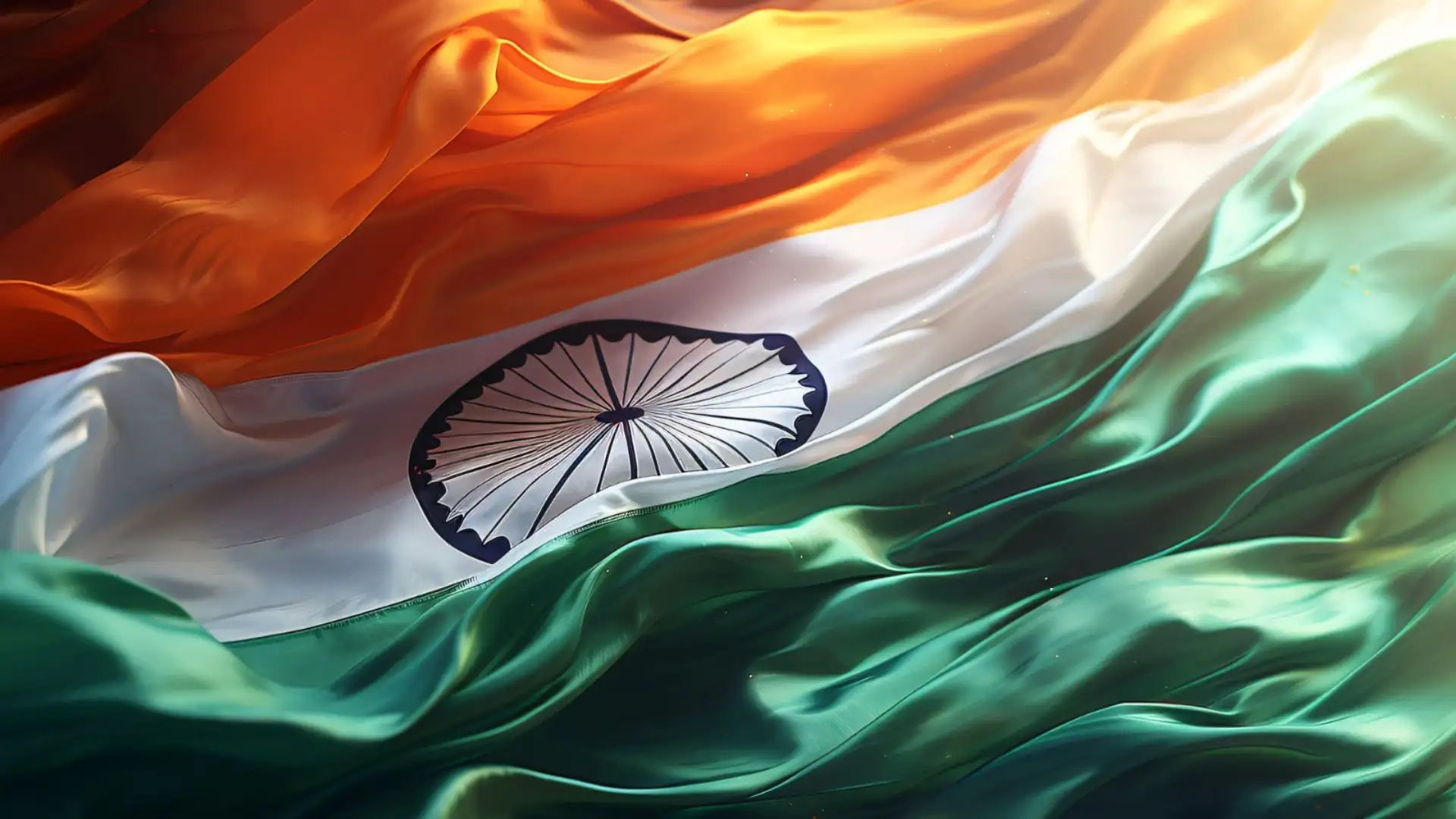
This historic banner featured three equal horizontal stripes of green, yellow, and red. The top green stripe displayed eight half-open white lotuses representing the eight provinces of British India. The middle yellow stripe bore the words
inscribed in Devanagari script. The bottom red stripe featured a white sun on the left and a white crescent moon with a star on the right, symbolizing Hindu-Muslim unity and national integration.
The Ashoka Chakra was chosen to represent the eternal wheel of law (
) and progressive motion. The official symbolism was reaffirmed: saffron for courage and renunciation, white for purity and truth, green for prosperity and connection to the soil, and the navy blue wheel representing dynamism, righteousness, and continuous movement forward.
This historic banner featured three equal horizontal stripes of green, yellow, and red. The top green stripe displayed eight half-open white lotuses representing the eight provinces of British India. The middle yellow stripe bore the words
inscribed in Devanagari script. The bottom red stripe featured a white sun on the left and a white crescent moon with a star on the right, symbolizing Hindu-Muslim unity and national integration.
Key Milestones in the Flag's Evolution
Over the next four decades, as the freedom struggle expanded, the flag underwent multiple transformations to reflect changing ideological priorities and political alliances:- 1907 (The Berlin Committee / Stuttgart Flag): Designed by Madam Bhikaji Cama, Veer Savarkar, and Shyamji Krishna Varma, this variant was hoisted at the International Socialist Conference in Stuttgart, Germany. It was similar to the 1906 flag, but featured a top saffron stripe with seven stars representing the Saptarishi constellation and a modified bottom stripe displaying the sun and crescent moon.
- 1917 (The Home Rule Movement Flag): Co-founded by Lokmanya Tilak and Annie Besant, this flag was introduced during the Home Rule movement. It featured five red and four green horizontal stripes, the Union Jack in the top-left corner signaling Dominion Status aspirations, seven stars of the Saptarishi constellation, and a crescent with a star in the top-right corner.
- 1921 (Pingali Venkayya’s Initial Design): During the Bezwada (Vijayawada) session of the All India Congress Committee, freedom fighter Pingali Venkayya presented a design featuring red and green stripes representing the major religious communities. Mahatma Gandhi suggested adding a white stripe on top to represent all remaining communities, along with a spinning wheel (
) in the center to symbolize economic self-reliance. - 1931 (The Official Tricolor Precursor): Recognizing that community-based color symbolism was problematic, the Congress Working Committee formally adopted a new flag. It featured three horizontal stripes: saffron on top for courage and sacrifice, white in the middle for peace and truth, and green at the bottom for faith and chivalry, with Gandhi's
placed in the center of the white stripe.
1947: The Modern Tiranga and the Ashoka Chakra
On July 22, 1947, just weeks before India attained independence, the Constituent Assembly met to adopt the national flag for the sovereign Republic of India. While retaining Pingali Venkayya’s color scheme and overall layout, the assembly replaced the spinning wheel with the Ashoka Chakra the 24-spoke navy blue wheel from the Lion Capital of Emperor Ashoka at Sarnath.The Ashoka Chakra was chosen to represent the eternal wheel of law (
) and progressive motion. The official symbolism was reaffirmed: saffron for courage and renunciation, white for purity and truth, green for prosperity and connection to the soil, and the navy blue wheel representing dynamism, righteousness, and continuous movement forward.
Next Story