
A Tale of Five Observatories: India Has 5 Jantar Mantars, but Only One is a UNESCO Heritage Site

In the early 18th century, Maharaja Sawai Jai Singh II of Amber (founder of Jaipur) set out to modernize astronomical study in India. Finding European and Islamic astronomical tables inconsistent, he commissioned the construction of five massive stone observatories across northern India between 1724 and 1735. The term "Jantar Mantar" derives from the Sanskrit words yantra (instrument) and mantra (calculation).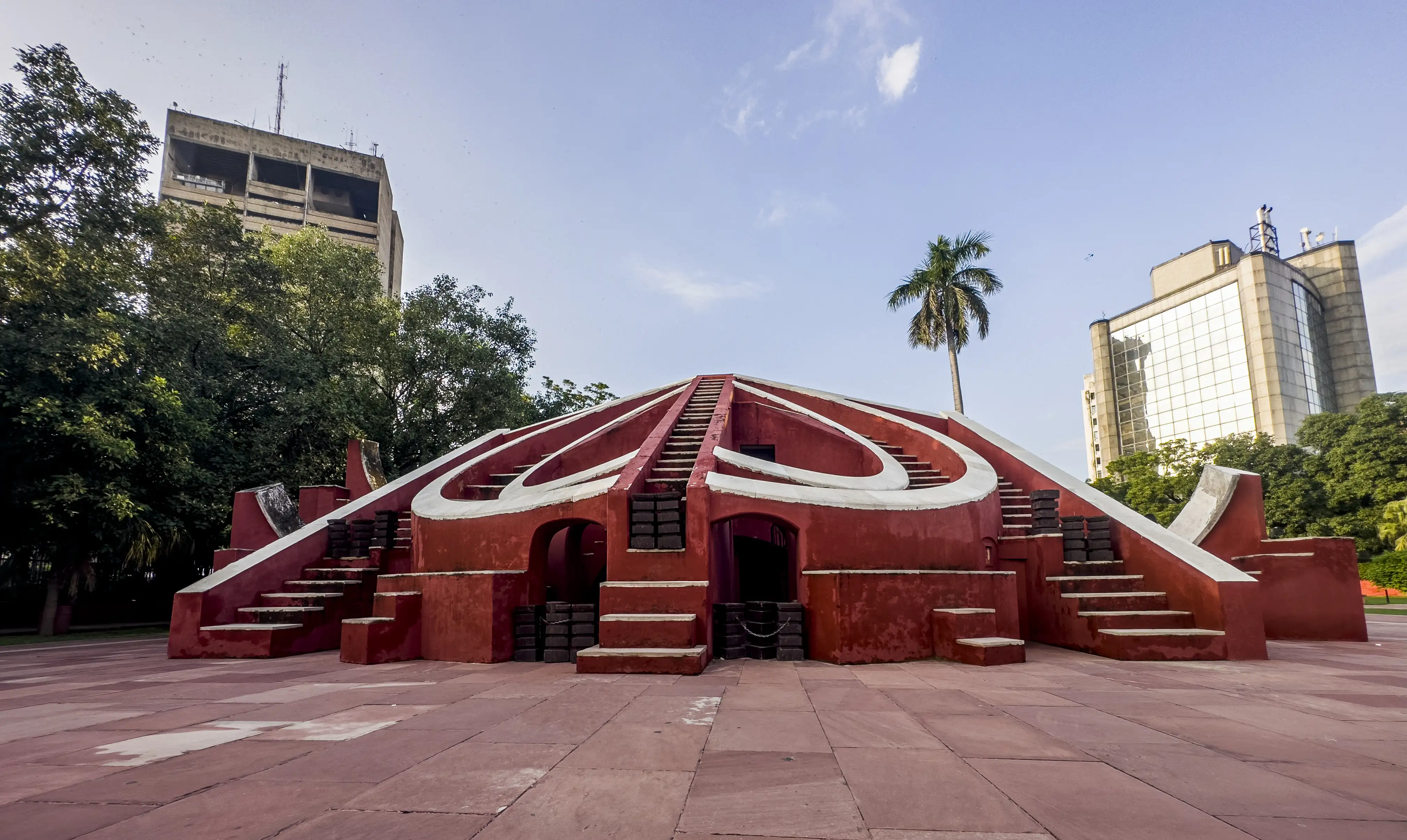
Rather than using small brass telescopes or portable equipment, Jai Singh built large-scale masonry instruments. He believed that stone structures would minimize errors caused by temperature shifts or physical wear, offering lasting accuracy for mapping planets, predicting eclipses, and tracking local time.
While the observatories in Delhi, Ujjain, and Varanasi remain protected monuments, only Jaipur’s site received the UNESCO World Heritage designation. UNESCO highlighted the Jaipur site for its extraordinary scale, structural integrity, and the completeness of its 19 working instruments, making it one of the most significant historical sites for observational astronomy globally.
Rather than using small brass telescopes or portable equipment, Jai Singh built large-scale masonry instruments. He believed that stone structures would minimize errors caused by temperature shifts or physical wear, offering lasting accuracy for mapping planets, predicting eclipses, and tracking local time.
Where Are India’s Five Jantar Mantars?
- Jaipur (Rajasthan): Built in 1734, the Jaipur observatory is the largest, most complete, and best-preserved of all five locations. It contains 19 architectural astronomical instruments, including the Vrihat Samrat Yantra, the world's largest stone sundial (standing 27 meters tall). Because of its exceptional preservation and operational instruments, Jaipur’s Jantar Mantar was inscribed as a UNESCO World Heritage Site in 2010.
- New Delhi: Completed in 1724, the Delhi observatory near Connaught Place was the first of the five built by Jai Singh. Featuring striking red-sandstone structures like the Samrat Yantra, Jai Prakash Yantra, and Ram Yantra, it remains a major landmark, public park, and historic gathering point in the central capital.
- Ujjain (Madhya Pradesh): Known as Vedh Shala, the Ujjain observatory was built in 1719 when Jai Singh served as the governor of Malwa. Ujjain holds historical significance in Indian astronomy as it lies on the ancient prime meridian used by traditional scholars. Unlike some of the other sites, parts of the Ujjain observatory are still used for generating local astrological calendars (panchangs).
- Varanasi (Uttar Pradesh): Built around 1737 atop the Man Mahal Palace overlooking the Rajghat steps along the Ganges River, the Varanasi observatory was constructed on a roof terrace. Though smaller than those in Jaipur or Delhi, it offers a blend of architectural heritage and riverside views.
- Mathura (Uttar Pradesh): Located inside the historic Mathura Fort, the fifth observatory was unfortunately destroyed during the late 19th century due to neglect and materials being re-purposed shortly before the 1857 uprising. Today, no functional stone instruments remain at the Mathura site.
Why Only Jaipur Received UNESCO Status
While the observatories in Delhi, Ujjain, and Varanasi remain protected monuments, only Jaipur’s site received the UNESCO World Heritage designation. UNESCO highlighted the Jaipur site for its extraordinary scale, structural integrity, and the completeness of its 19 working instruments, making it one of the most significant historical sites for observational astronomy globally. 





Loving Newspoint? Download the app now
