
Interesting Facts About the Taj Mahal You Probably Didn't Know

The Taj Mahal is one of the world's most admired monuments and a symbol of love, craftsmanship, and architectural brilliance. Located in Agra, Uttar Pradesh, this UNESCO World Heritage Site attracts millions of visitors every year. While its beauty is well known, the monument also has a fascinating history and many lesser-known facts. Here are some interesting and accurate facts about the Taj Mahal.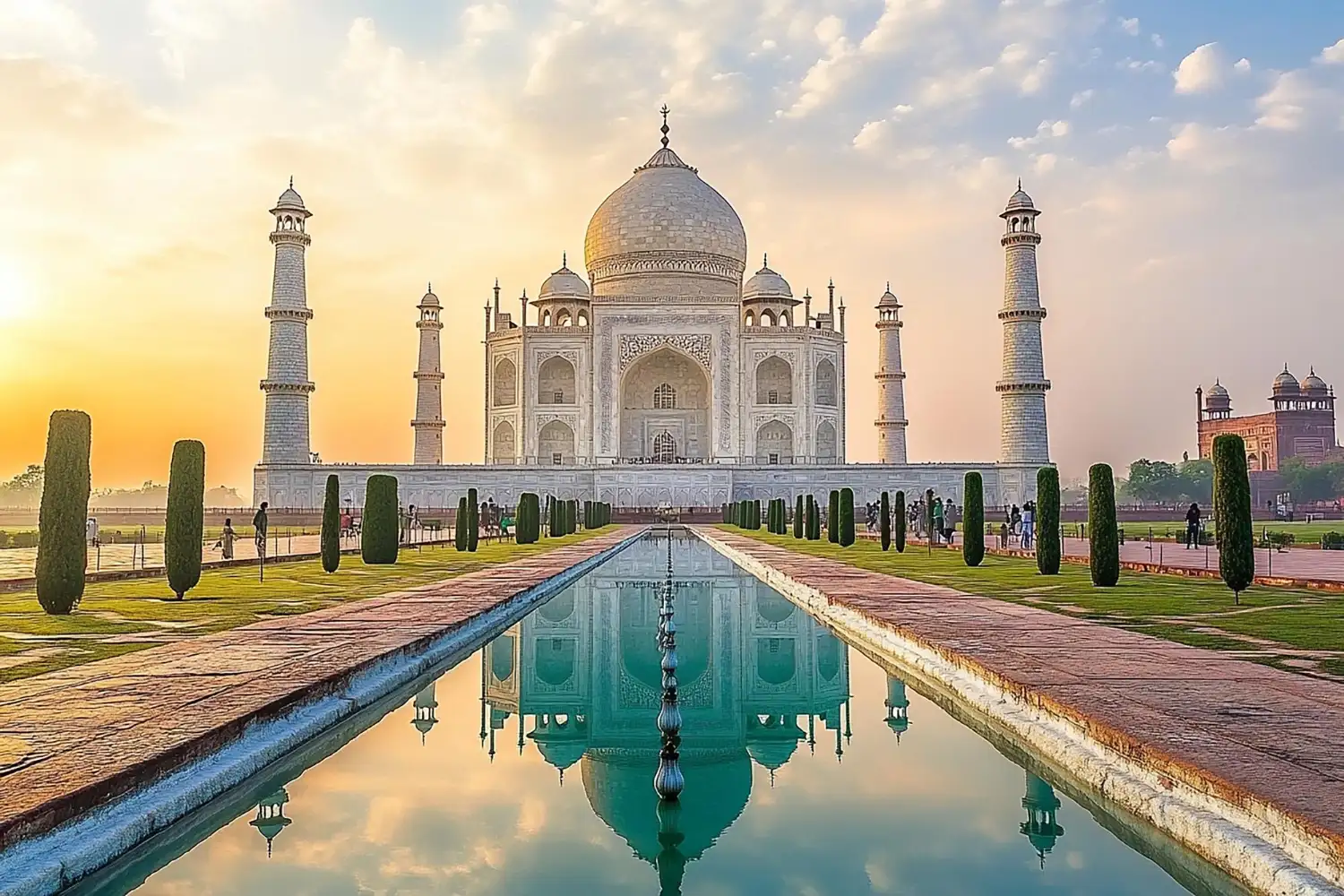
Built as a Memorial of Love
The Taj Mahal was commissioned by Mughal Emperor Shah Jahan in memory of his wife Mumtaz Mahal , who died in 1631 while giving birth to their 14th child. Construction began in 1632, and the main mausoleum was largely completed by 1648. Work on the surrounding complex continued for several more years, with the entire project generally considered complete around 1653.
A UNESCO World Heritage Site
The Taj Mahal was designated a UNESCO World Heritage Site in 1983. UNESCO describes it as "the jewel of Muslim art in India" and one of the finest examples of Mughal architecture , admired for its harmony, symmetry, and artistic excellence.
White Marble That Changes Appearance
One of the monument's most captivating features is how its white Makrana marble appears to change colour throughout the day. It often looks soft pink at sunrise, bright white under the midday sun, and takes on golden or bluish tones during sunset and moonlit nights. These changes are caused by natural light and atmospheric conditions.
Precious Stones Decorate the Marble
The Taj Mahal is famous for its intricate pietra dura (stone inlay) work. Artisans embedded semi-precious stones such as jade, jasper, turquoise, agate, lapis lazuli, carnelian, and malachite into the marble to create beautiful floral patterns and decorative designs.
Perfect Symmetry With One Exception
The entire Taj Mahal complex is designed with remarkable symmetry. The mosque and the guest house mirror each other, and the gardens are carefully aligned with the central mausoleum. The only major element that breaks this symmetry is Shah Jahan's tomb, which was placed beside Mumtaz Mahal's tomb after his death in 1666. Mumtaz's cenotaph occupies the central position inside the mausoleum.
The Minarets Lean Slightly Outward
The four minarets surrounding the mausoleum are not perfectly vertical. They are intentionally built with a slight outward tilt. This design helps protect the main structure, as the minarets would fall away from the mausoleum rather than onto it in the unlikely event of a collapse caused by a major earthquake or structural failure.
The Calligraphy Creates an Optical Illusion
Verses from the Quran decorate the entrance and walls of the Taj Mahal. The letters become gradually larger as they rise higher, creating an optical illusion that makes the script appear uniform in size when viewed from ground level.
A Grand Garden Inspired by Paradise
The Taj Mahal's gardens follow the traditional Mughal charbagh layout, which divides the space into four sections using water channels and pathways. The design represents the gardens of paradise described in Islamic tradition and adds to the monument's balanced appearance.
The Marble Came From Rajasthan
The white marble used in constructing the Taj Mahal was sourced primarily from Makrana in present-day Rajasthan. Materials from different parts of India and Central Asia were also brought to Agra for decoration and ornamentation.
Protected From Pollution
To reduce the impact of air pollution on the monument's marble, the area around the Taj Mahal is part of the Taj Trapezium Zone (TTZ), an environmental protection area established to control industrial emissions and vehicular pollution. Conservation efforts continue to help preserve the monument for future generations.
One of the New Seven Wonders of the World
In 2007, the Taj Mahal was voted one of the New Seven Wonders of the World in a global poll organised by the New7Wonders Foundation. Although the poll was not conducted by UNESCO, it significantly increased global recognition of the monument.
It Attracts Millions of Visitors Every Year
The Taj Mahal is among India's most visited tourist attractions. Visitors from across the globe come to admire its architecture, history, and cultural significance, making it one of the country's most iconic landmarks.
Timeless Beauty That Continues to Inspire
More than three centuries after it was built, the Taj Mahal remains a masterpiece of architecture and engineering. Its blend of history, art, and emotion continues to captivate travellers, historians, photographers, and architecture enthusiasts from around the world.
Disclaimer: This article is intended for general informational purposes only. The information is based on publicly available historical and educational sources. NewsPoint has not independently verified every historical detail.
Built as a Memorial of Love
The Taj Mahal was commissioned by Mughal Emperor Shah Jahan in memory of his wife Mumtaz Mahal , who died in 1631 while giving birth to their 14th child. Construction began in 1632, and the main mausoleum was largely completed by 1648. Work on the surrounding complex continued for several more years, with the entire project generally considered complete around 1653. A UNESCO World Heritage Site
The Taj Mahal was designated a UNESCO World Heritage Site in 1983. UNESCO describes it as "the jewel of Muslim art in India" and one of the finest examples of Mughal architecture , admired for its harmony, symmetry, and artistic excellence.White Marble That Changes Appearance
One of the monument's most captivating features is how its white Makrana marble appears to change colour throughout the day. It often looks soft pink at sunrise, bright white under the midday sun, and takes on golden or bluish tones during sunset and moonlit nights. These changes are caused by natural light and atmospheric conditions. Precious Stones Decorate the Marble
The Taj Mahal is famous for its intricate pietra dura (stone inlay) work. Artisans embedded semi-precious stones such as jade, jasper, turquoise, agate, lapis lazuli, carnelian, and malachite into the marble to create beautiful floral patterns and decorative designs.Perfect Symmetry With One Exception
The entire Taj Mahal complex is designed with remarkable symmetry. The mosque and the guest house mirror each other, and the gardens are carefully aligned with the central mausoleum. The only major element that breaks this symmetry is Shah Jahan's tomb, which was placed beside Mumtaz Mahal's tomb after his death in 1666. Mumtaz's cenotaph occupies the central position inside the mausoleum. The Minarets Lean Slightly Outward
The four minarets surrounding the mausoleum are not perfectly vertical. They are intentionally built with a slight outward tilt. This design helps protect the main structure, as the minarets would fall away from the mausoleum rather than onto it in the unlikely event of a collapse caused by a major earthquake or structural failure. The Calligraphy Creates an Optical Illusion
Verses from the Quran decorate the entrance and walls of the Taj Mahal. The letters become gradually larger as they rise higher, creating an optical illusion that makes the script appear uniform in size when viewed from ground level. A Grand Garden Inspired by Paradise
The Taj Mahal's gardens follow the traditional Mughal charbagh layout, which divides the space into four sections using water channels and pathways. The design represents the gardens of paradise described in Islamic tradition and adds to the monument's balanced appearance.You may also like
- Grooming Tips: How to look classy and attractive without spending a fortune? 5 surefire grooming tips
- Hair Wash During Periods: Does washing your hair on the first day of your period really increase bleeding? What do doctors say?
- Palamu Mustard Oil Incident: How dangerous is adulterated mustard oil, which took the lives of 6 people in Jharkhand?
- Quit Smoking: If you adopt these 4 methods, you will quit smoking immediately and will not touch it even by mistake.
- This 69-year-old paralysed man cleaned a river in silence until a young photographer noticed him
The Marble Came From Rajasthan
The white marble used in constructing the Taj Mahal was sourced primarily from Makrana in present-day Rajasthan. Materials from different parts of India and Central Asia were also brought to Agra for decoration and ornamentation. Protected From Pollution
To reduce the impact of air pollution on the monument's marble, the area around the Taj Mahal is part of the Taj Trapezium Zone (TTZ), an environmental protection area established to control industrial emissions and vehicular pollution. Conservation efforts continue to help preserve the monument for future generations. One of the New Seven Wonders of the World
In 2007, the Taj Mahal was voted one of the New Seven Wonders of the World in a global poll organised by the New7Wonders Foundation. Although the poll was not conducted by UNESCO, it significantly increased global recognition of the monument. It Attracts Millions of Visitors Every Year
The Taj Mahal is among India's most visited tourist attractions. Visitors from across the globe come to admire its architecture, history, and cultural significance, making it one of the country's most iconic landmarks. Timeless Beauty That Continues to Inspire
More than three centuries after it was built, the Taj Mahal remains a masterpiece of architecture and engineering. Its blend of history, art, and emotion continues to captivate travellers, historians, photographers, and architecture enthusiasts from around the world.Disclaimer: This article is intended for general informational purposes only. The information is based on publicly available historical and educational sources. NewsPoint has not independently verified every historical detail.






Loving Newspoint? Download the app now
