
5 Japanese Practices That Can Bring More Peace to Your Daily Life

When people think of Japan, neon-lit cities, cutting-edge technology, and remarkable efficiency often come to mind. Yet beyond this modern image lies a quiet philosophy that encourages a more mindful way of living. Today, life can feel like an endless cycle of deadlines, notifications, and constant mental clutter. We often don't realise how fast we're moving until exhaustion catches up with us. In a world that rarely slows down, these five Japanese habits focus less on rushing through life and more on finding meaning and balance in everyday moments.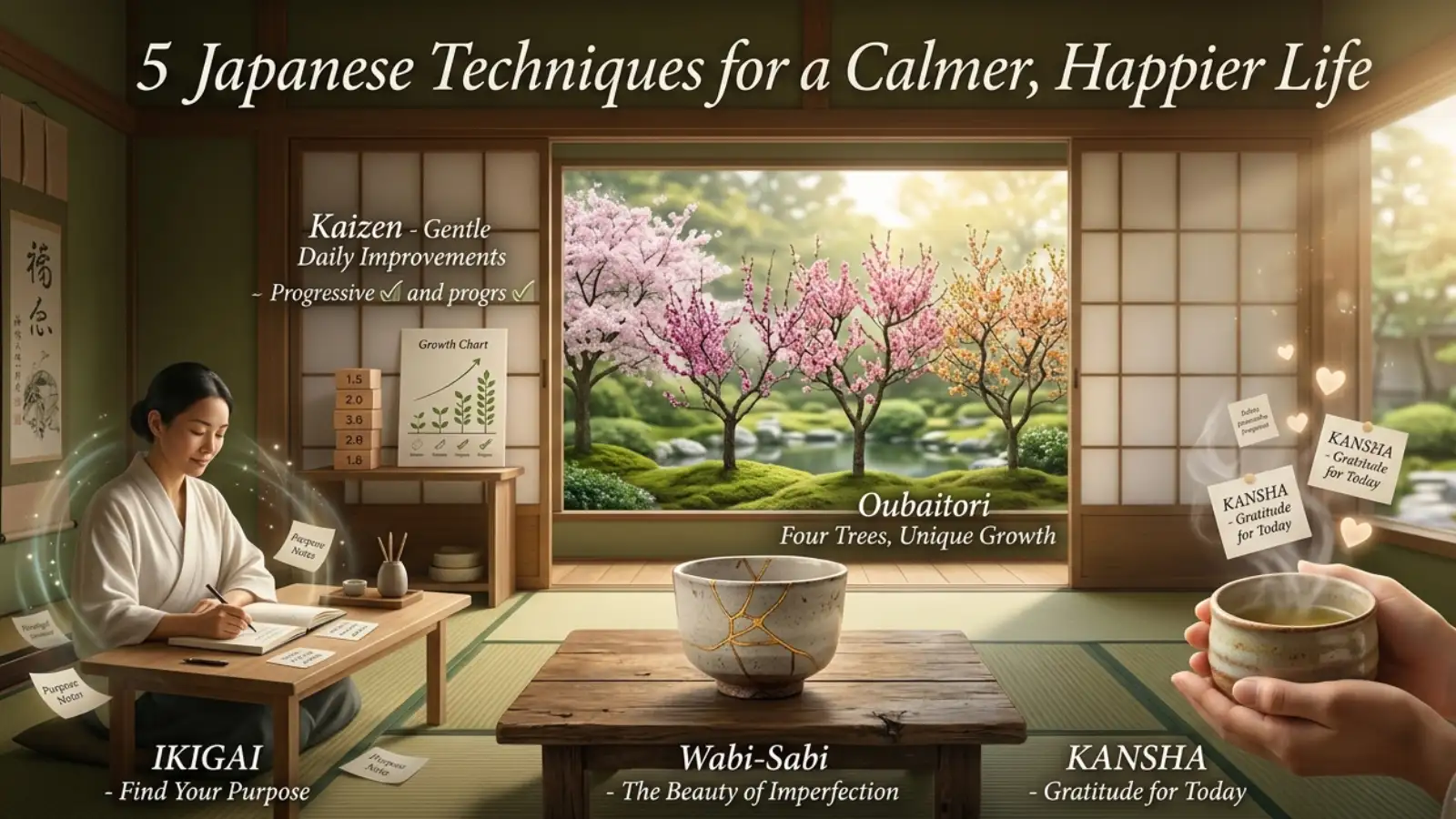
1. Ikigai
This Japanese philosophical concept of Ikigai roughly translates to "a reason for being." It encourages individuals to discover their life's purpose and find meaning in everyday living. Ikigai emphasises maintaining a balance between what you love, what you are good at, what the world needs, and what you can be rewarded for.
It is not just about grand achievements or dramatic life changes; rather, it focuses on finding purpose in small, everyday moments. Your ikigai can be found in simple routines, meaningful work, creative passions, or even quiet experiences that make life feel worthwhile. Practising ikigai daily can bring a sense of clarity, fulfilment, and direction to your life. It also helps reduce feelings of emptiness and the constant need for external validation.
2. Kaizen
Kaizen is a Japanese philosophy that focuses on continuous, small, and consistent improvements rather than sudden or drastic changes. It is based on the belief that even the smallest positive action, when repeated daily, can lead to significant long-term transformation.
Kaizen teaches that meaningful change does not happen overnight but is achieved through consistent effort over time. This philosophy can be applied to habits, work routines, health, learning, and personal development. It helps eliminate the fear of failure by shifting the focus from perfection to progress. Over time, practising kaizen can strengthen discipline, reduce feelings of overwhelm, and create a steady sense of growth and improvement.
3. Wabi-Sabi
Wabi-Sabi is a Japanese philosophy that celebrates the beauty of imperfection. It encourages people to appreciate things that are incomplete, weathered, and naturally aged over time rather than seeking flawless perfection. This concept can be seen in cracked pottery repaired with gold, faded photographs, and uneven textures.
Wabi-Sabi teaches individuals to embrace imperfections in a world that constantly demands perfection. By practising this philosophy, people learn to accept flaws in themselves and their surroundings, helping to reduce pressure, self-criticism, and unhealthy comparisons.
4. Oubaitori
Oubaitori is a Japanese philosophy that encourages people to stop comparing themselves to others. In today's highly competitive world, many young people often measure their progress against that of others, leading to stress and dissatisfaction. Oubaitori reminds us that every individual grows at their own pace and in their own unique way.
The concept is inspired by four spring blossoms - cherry, plum, peach, and apricot, which bloom differently yet are equally beautiful in their own time. Particularly relevant in the age of social media, Oubaitori helps individuals reduce feelings of anxiety and develop a healthier relationship with their personal journey. It promotes patience, emotional balance, and the understanding that life is not a race.
5. Kansha
Kansha is a Japanese philosophy that emphasises the practice of gratitude. It encourages people to be thankful for everything they have in life - not merely as a polite gesture, but as a deep and mindful appreciation of life, relationships, and everyday experiences. This philosophy inspires individuals to recognise the value in even the smallest moments, whether it is a meaningful conversation or a simple meal.
By focusing on what is already present rather than what is lacking, Kansha promotes a positive shift in mindset. This change in perspective can help reduce stress, ease negative thoughts, and foster a greater sense of emotional balance and contentment.
Perhaps the true beauty of these Japanese philosophies lies in their simplicity. They do not promise a perfect or stress-free life; instead, they encourage people to slow down, appreciate the present, and find peace in the everyday moments that are often overlooked.
1. Ikigai
This Japanese philosophical concept of Ikigai roughly translates to "a reason for being." It encourages individuals to discover their life's purpose and find meaning in everyday living. Ikigai emphasises maintaining a balance between what you love, what you are good at, what the world needs, and what you can be rewarded for. It is not just about grand achievements or dramatic life changes; rather, it focuses on finding purpose in small, everyday moments. Your ikigai can be found in simple routines, meaningful work, creative passions, or even quiet experiences that make life feel worthwhile. Practising ikigai daily can bring a sense of clarity, fulfilment, and direction to your life. It also helps reduce feelings of emptiness and the constant need for external validation.
2. Kaizen
Kaizen is a Japanese philosophy that focuses on continuous, small, and consistent improvements rather than sudden or drastic changes. It is based on the belief that even the smallest positive action, when repeated daily, can lead to significant long-term transformation. Kaizen teaches that meaningful change does not happen overnight but is achieved through consistent effort over time. This philosophy can be applied to habits, work routines, health, learning, and personal development. It helps eliminate the fear of failure by shifting the focus from perfection to progress. Over time, practising kaizen can strengthen discipline, reduce feelings of overwhelm, and create a steady sense of growth and improvement.
You may also like
- Vegan Diet: Avoiding everything from milk and cheese to meat, what do vegans eat?
- ₹19 Lakh Salary, Yet Zero Tax? How Smart Salary Structuring Can Legally Eliminate Your Tax Bill
- Corbett Safari: This zone of Corbett remains open even during the monsoon! Here, you can catch a glimpse of the 'Hercules' tiger..
- Quote of the day by Michel de Montaigne: "Marriage is like a cage; one sees the birds outside desperate to get in, and those inside desperate to…"
- Heart Disease Risk in Women: Premature menopause increases the risk of this disease; this problem is becoming a big problem for women.
3. Wabi-Sabi
Wabi-Sabi is a Japanese philosophy that celebrates the beauty of imperfection. It encourages people to appreciate things that are incomplete, weathered, and naturally aged over time rather than seeking flawless perfection. This concept can be seen in cracked pottery repaired with gold, faded photographs, and uneven textures. Wabi-Sabi teaches individuals to embrace imperfections in a world that constantly demands perfection. By practising this philosophy, people learn to accept flaws in themselves and their surroundings, helping to reduce pressure, self-criticism, and unhealthy comparisons.
4. Oubaitori
Oubaitori is a Japanese philosophy that encourages people to stop comparing themselves to others. In today's highly competitive world, many young people often measure their progress against that of others, leading to stress and dissatisfaction. Oubaitori reminds us that every individual grows at their own pace and in their own unique way. The concept is inspired by four spring blossoms - cherry, plum, peach, and apricot, which bloom differently yet are equally beautiful in their own time. Particularly relevant in the age of social media, Oubaitori helps individuals reduce feelings of anxiety and develop a healthier relationship with their personal journey. It promotes patience, emotional balance, and the understanding that life is not a race.
5. Kansha
Kansha is a Japanese philosophy that emphasises the practice of gratitude. It encourages people to be thankful for everything they have in life - not merely as a polite gesture, but as a deep and mindful appreciation of life, relationships, and everyday experiences. This philosophy inspires individuals to recognise the value in even the smallest moments, whether it is a meaningful conversation or a simple meal. By focusing on what is already present rather than what is lacking, Kansha promotes a positive shift in mindset. This change in perspective can help reduce stress, ease negative thoughts, and foster a greater sense of emotional balance and contentment.
Perhaps the true beauty of these Japanese philosophies lies in their simplicity. They do not promise a perfect or stress-free life; instead, they encourage people to slow down, appreciate the present, and find peace in the everyday moments that are often overlooked.






More from our partners


Loving Newspoint? Download the app now
