
Marine Iguana Facts: Meet the World’s Only Sea-Going Lizard That Sneezes Salt

The marine iguana is the world’s only sea-going lizard , a rare reptile that has evolved to survive in one of the most challenging environments on Earth - the ocean. Found only in Ecuador’s Galápagos Islands, this unique creature dives into the sea to feed on algae, swims through powerful currents, removes excess salt by sneezing, and can even shrink its body during periods of food scarcity. With its rough skin, sharp claws and spiny back, the marine iguana looks like a creature from another era, but its unusual adaptations make it one of nature’s most fascinating survivors.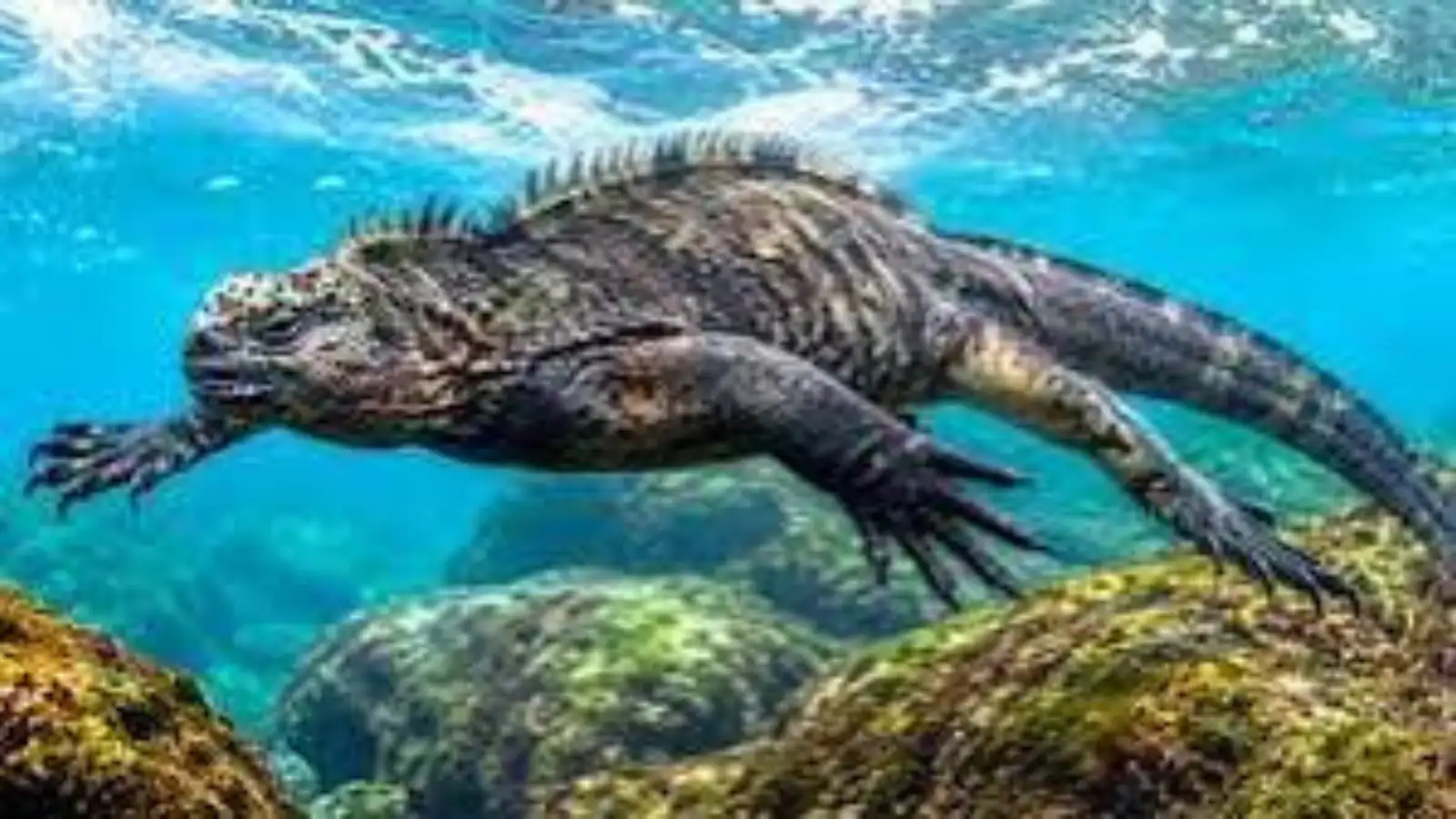
Unlike most reptiles that avoid deep water, the marine iguana has built its entire lifestyle around the sea. From underwater feeding to surviving extreme climate changes, every part of its body tells the story of millions of years of evolution.
Marine Iguana: The Only Lizard That Feeds Underwater
The marine iguana (Amblyrhynchus cristatus) is found exclusively in the Galápagos Islands, where it has adapted to a life unlike any other reptile. Scientists believe its ancestors arrived from mainland South America millions of years ago, possibly after drifting across the ocean. Over generations, these land-dwelling iguanas evolved into skilled marine foragers.
Today, marine iguanas live across almost all major islands of the Galápagos archipelago. Their size, colour and appearance vary depending on the island they inhabit. However, all of them share the same remarkable ability — they can enter the ocean and feed on underwater vegetation.
The species is currently classified as vulnerable on the IUCN Red List due to threats from climate change, habitat changes and food shortages.
How Marine Iguanas Survive Life in the Ocean
1. They Eat Sea Algae Instead of Fish
Despite their prehistoric appearance, marine iguanas are peaceful herbivores. Their primary food source is marine algae, which they scrape from rocks beneath the ocean surface using their short, blunt snouts and sharp teeth.
Their flattened, muscular tails help them swim efficiently through the water, with movements similar to a crocodile’s tail. Larger iguanas are capable of travelling farther into the ocean in search of richer algae beds, while younger iguanas usually remain closer to shore where the waters are calmer.
Although they spend time in the sea, marine iguanas do not hunt fish or other marine animals. Their survival depends almost entirely on the availability of algae.
2. Sunbathing Helps Them Stay Warm
Cold ocean water creates a major challenge for these reptiles because marine iguanas are cold-blooded animals. After feeding underwater, they return to the black volcanic rocks of the Galápagos to absorb heat from the sun.
Their dark-coloured scales help them warm up quickly after a dive. At night, they often gather together on rocky surfaces to reduce heat loss. Although they are not highly social creatures, these groups help them conserve body temperature during colder hours.
Before entering the sea again, they spend time warming themselves until their body temperature is high enough for another dive.
3. Their Famous Salt Sneezes Remove Excess Salt
One of the most unusual features of the marine iguana is its ability to sneeze out salt. While feeding underwater, these reptiles accidentally swallow large amounts of seawater along with algae.
To prevent harmful salt buildup, marine iguanas have special glands near their noses that filter excess salt from their blood. They then force it out through powerful sneezes.
This process often leaves white salt crystals around their faces, giving them their distinctive appearance. What may look like a strange facial feature is actually a vital survival mechanism.
4. Strong Tails and Sharp Claws Make Them Ocean Survivors
The waters around the Galápagos Islands are filled with strong currents and rough waves, but marine iguanas are built to handle these conditions.
Their flattened tails act like powerful paddles, allowing them to move through the water with speed and control. Their long, curved claws help them grip slippery volcanic rocks when waves crash over them.
These adaptations allow them to remain safely attached to rocky surfaces while searching for food in difficult marine environments.
5. Breeding Season Changes Their Colours
Male marine iguanas become especially colourful during the breeding season. Their appearance changes depending on the island they come from, creating some of the most striking variations within the species.
On Española and Floreana islands, males may develop bright green and red shades. On Santa Cruz Island, they display red and black colours, while males from Fernandina often show dull green and brick-red patterns.
Young marine iguanas are usually darker, with black bodies and a lighter stripe running along their backs.
During breeding season, males compete fiercely for territory and mates. Dominant males defend groups of females and often engage in aggressive fights with rivals.
6. Marine Iguanas Can Shrink Their Bodies During Food Shortages
One of the most extraordinary survival abilities of the marine iguana is its ability to reduce its body size during extreme hunger.
During powerful El Niño events, warmer ocean temperatures disrupt the nutrient-rich currents around the Galápagos Islands. As a result, the algae that marine iguanas depend on becomes scarce.
The devastating El Niño event of 1982–83 caused severe population losses in some colonies, with certain groups losing a significant number of individuals. During prolonged food shortages, adult marine iguanas can reduce their body length by around 20%.
Their metabolism also slows down, allowing them to survive while consuming less energy. Once ocean conditions improve and algae becomes available again, they can gradually return to their original size.
Why the Marine Iguana Is Important for Science and Conservation
The marine iguana represents one of the most unique examples of evolution on Earth. It is the only lizard that has successfully adapted to regular ocean feeding, showing how animals can transform over generations to survive new environments.
However, climate change remains a major threat to this species. Rising ocean temperatures, changes in food availability and extreme weather events can directly affect their survival.
Protecting the Galápagos ecosystem is essential for ensuring that this remarkable reptile continues to thrive in the wild.
The marine iguana is more than just a strange-looking reptile - it is a symbol of nature’s ability to adapt and survive. From diving underwater for algae and sneezing out salt to shrinking its body during harsh conditions, this Galápagos native has developed extraordinary skills found nowhere else in the animal world.
Living between land and sea, the marine iguana remains one of the planet’s most fascinating examples of evolution in action.
Unlike most reptiles that avoid deep water, the marine iguana has built its entire lifestyle around the sea. From underwater feeding to surviving extreme climate changes, every part of its body tells the story of millions of years of evolution.
Marine Iguana: The Only Lizard That Feeds Underwater
The marine iguana (Amblyrhynchus cristatus) is found exclusively in the Galápagos Islands, where it has adapted to a life unlike any other reptile. Scientists believe its ancestors arrived from mainland South America millions of years ago, possibly after drifting across the ocean. Over generations, these land-dwelling iguanas evolved into skilled marine foragers.
Today, marine iguanas live across almost all major islands of the Galápagos archipelago. Their size, colour and appearance vary depending on the island they inhabit. However, all of them share the same remarkable ability — they can enter the ocean and feed on underwater vegetation.
The species is currently classified as vulnerable on the IUCN Red List due to threats from climate change, habitat changes and food shortages.
How Marine Iguanas Survive Life in the Ocean
1. They Eat Sea Algae Instead of Fish
Despite their prehistoric appearance, marine iguanas are peaceful herbivores. Their primary food source is marine algae, which they scrape from rocks beneath the ocean surface using their short, blunt snouts and sharp teeth.
Their flattened, muscular tails help them swim efficiently through the water, with movements similar to a crocodile’s tail. Larger iguanas are capable of travelling farther into the ocean in search of richer algae beds, while younger iguanas usually remain closer to shore where the waters are calmer.
Although they spend time in the sea, marine iguanas do not hunt fish or other marine animals. Their survival depends almost entirely on the availability of algae.
2. Sunbathing Helps Them Stay Warm
Cold ocean water creates a major challenge for these reptiles because marine iguanas are cold-blooded animals. After feeding underwater, they return to the black volcanic rocks of the Galápagos to absorb heat from the sun.
Their dark-coloured scales help them warm up quickly after a dive. At night, they often gather together on rocky surfaces to reduce heat loss. Although they are not highly social creatures, these groups help them conserve body temperature during colder hours.
Before entering the sea again, they spend time warming themselves until their body temperature is high enough for another dive.
3. Their Famous Salt Sneezes Remove Excess Salt
One of the most unusual features of the marine iguana is its ability to sneeze out salt. While feeding underwater, these reptiles accidentally swallow large amounts of seawater along with algae.
To prevent harmful salt buildup, marine iguanas have special glands near their noses that filter excess salt from their blood. They then force it out through powerful sneezes.
This process often leaves white salt crystals around their faces, giving them their distinctive appearance. What may look like a strange facial feature is actually a vital survival mechanism.
4. Strong Tails and Sharp Claws Make Them Ocean Survivors
The waters around the Galápagos Islands are filled with strong currents and rough waves, but marine iguanas are built to handle these conditions.
Their flattened tails act like powerful paddles, allowing them to move through the water with speed and control. Their long, curved claws help them grip slippery volcanic rocks when waves crash over them.
These adaptations allow them to remain safely attached to rocky surfaces while searching for food in difficult marine environments.
5. Breeding Season Changes Their Colours
Male marine iguanas become especially colourful during the breeding season. Their appearance changes depending on the island they come from, creating some of the most striking variations within the species.
On Española and Floreana islands, males may develop bright green and red shades. On Santa Cruz Island, they display red and black colours, while males from Fernandina often show dull green and brick-red patterns.
Young marine iguanas are usually darker, with black bodies and a lighter stripe running along their backs.
During breeding season, males compete fiercely for territory and mates. Dominant males defend groups of females and often engage in aggressive fights with rivals.
6. Marine Iguanas Can Shrink Their Bodies During Food Shortages
One of the most extraordinary survival abilities of the marine iguana is its ability to reduce its body size during extreme hunger.
During powerful El Niño events, warmer ocean temperatures disrupt the nutrient-rich currents around the Galápagos Islands. As a result, the algae that marine iguanas depend on becomes scarce.
The devastating El Niño event of 1982–83 caused severe population losses in some colonies, with certain groups losing a significant number of individuals. During prolonged food shortages, adult marine iguanas can reduce their body length by around 20%.
You may also like
- Scenic monsoon bus trips in India: Beautiful routes that should be on every traveller's bucket list
- Happy Friendship Day 2026: Top 50 Wishes, Messages, Quotes, Images, Facebook & Whatsapp status
- High cholesterol: Cholesterol deposited in the heart's arteries will melt away like wax; just include these 3 foods in your diet
- Today is the ITR deadline, but will the last date be extended? The Income Tax Department has given a clear answer..
- SSY Calculation: Invest ₹50 daily to build a fund of ₹8 lakh; secure your daughter's future with this Post Office scheme..
Their metabolism also slows down, allowing them to survive while consuming less energy. Once ocean conditions improve and algae becomes available again, they can gradually return to their original size.
Why the Marine Iguana Is Important for Science and Conservation
The marine iguana represents one of the most unique examples of evolution on Earth. It is the only lizard that has successfully adapted to regular ocean feeding, showing how animals can transform over generations to survive new environments.
However, climate change remains a major threat to this species. Rising ocean temperatures, changes in food availability and extreme weather events can directly affect their survival.
Protecting the Galápagos ecosystem is essential for ensuring that this remarkable reptile continues to thrive in the wild.
The marine iguana is more than just a strange-looking reptile - it is a symbol of nature’s ability to adapt and survive. From diving underwater for algae and sneezing out salt to shrinking its body during harsh conditions, this Galápagos native has developed extraordinary skills found nowhere else in the animal world.
Living between land and sea, the marine iguana remains one of the planet’s most fascinating examples of evolution in action.






Loving Newspoint? Download the app now
