8 Stunning Blue Animals That Look Too Beautiful To Be Real

Blue is one of the most captivating colours in the natural world, yet it is surprisingly rare in the animal kingdom . Unlike many other colours, true blue pigments are uncommon among animals. Instead, most blue animals owe their dazzling appearance to microscopic structures that scatter and reflect light, creating brilliant shades of cobalt, turquoise and sapphire.
These remarkable colours are not just beautiful. They play an important role in survival by helping animals communicate, hide from predators or warn potential threats. Here are eight of nature's most breathtaking blue creatures.
Also Read: 8 Fascinating Birds That Resemble Dinosaurs And Reptiles
Also Read: 9 Incredible Animals That Can Detach Their Own Body Parts
These remarkable colours are not just beautiful. They play an important role in survival by helping animals communicate, hide from predators or warn potential threats. Here are eight of nature's most breathtaking blue creatures.
1. Blue Jay
The blue jay is among the best-known blue birds in North America. Its vibrant feathers are created through light-reflecting feather structures rather than blue pigment. Beyond its striking appearance, this intelligent bird is famous for mimicking the calls of hawks to scare away rivals. Blue jays also display strong family bonds and complex social behaviour, making them one of the most fascinating birds to observe.Also Read: 8 Fascinating Birds That Resemble Dinosaurs And Reptiles
2. Blue Morpho Butterfly
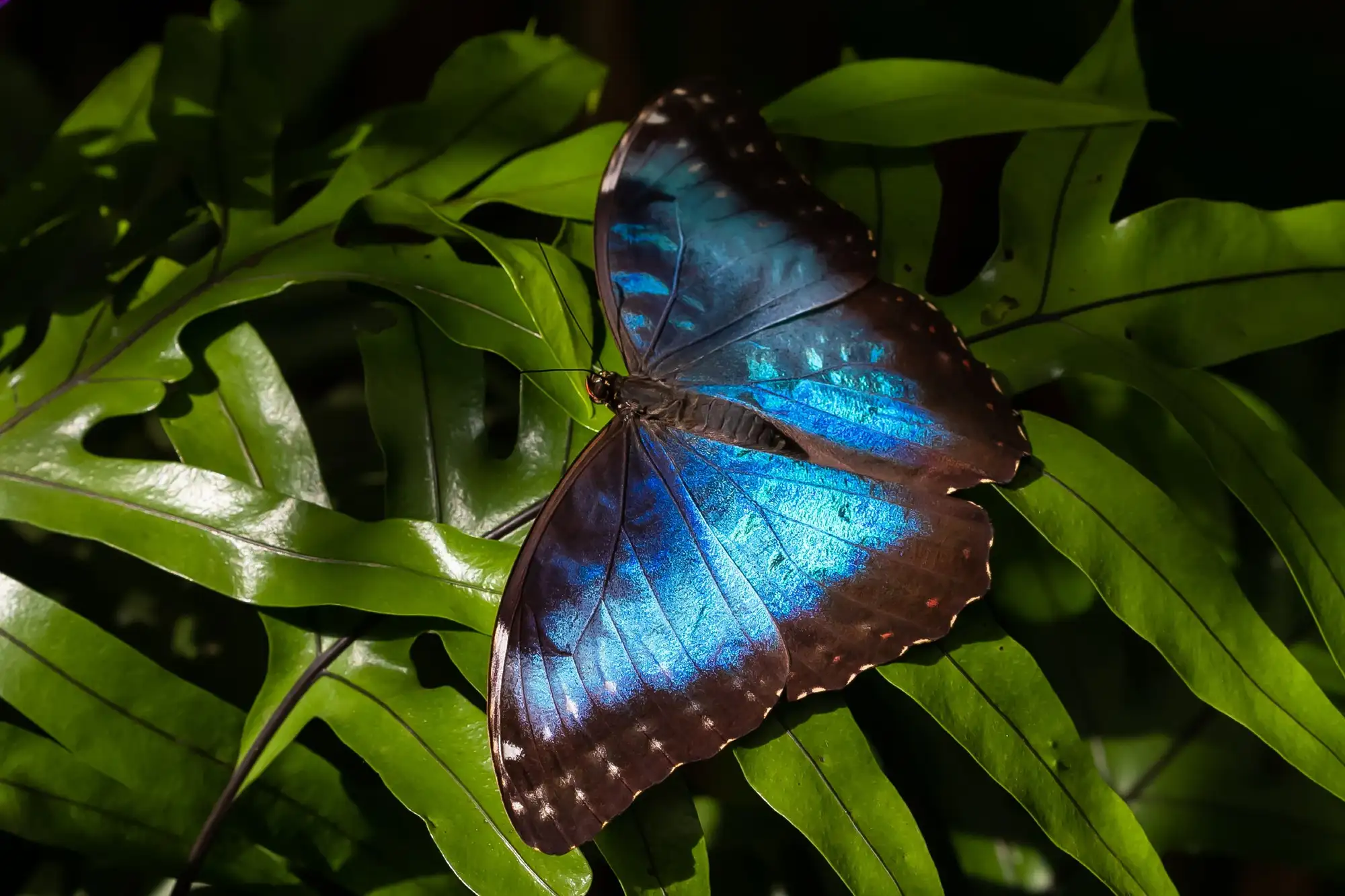
The blue morpho butterfly is celebrated for its shimmering wings that appear to glow in the sunlight. Tiny reflective scales create its brilliant colour, making it one of the most spectacular rare blue animals in tropical rainforests. Interestingly, when it closes its wings, the bright blue disappears, revealing a brown underside that provides excellent camouflage from predators.3. Poison Dart Frog
The poison dart frog is small in size but impossible to ignore. Some species display vivid cobalt blue skin that serves as a warning to predators. Native to the forests of Suriname, these tiny amphibians produce toxins through their natural diet, making their bright colours a powerful defence mechanism and an excellent example of animal adaptations .4. Hyacinth Macaw
The hyacinth macaw is the world's largest flying parrot and one of the most spectacular blue birds on Earth. Its deep royal blue feathers contrast beautifully with the bright yellow skin around its eyes and beak. Found mainly in Brazil's Pantanal region, these intelligent parrots form lifelong pair bonds and have benefited from ongoing conservation efforts.Also Read: 9 Incredible Animals That Can Detach Their Own Body Parts
5. Blue Sea Dragon
The blue sea dragon is one of the most extraordinary marine animals found in the ocean. This tiny sea slug floats upside down on the water's surface, where its electric-blue colouring helps it blend with the light above. Even more impressive, it feeds on venomous jellyfish and stores their stinging cells, using them as its own defence against predators.6. Blue Tang
The blue tang is instantly recognisable thanks to its vibrant blue body and bright yellow tail. Found among Indo-Pacific coral reefs, this colourful fish spends much of its time feeding on algae. Scientists believe its brilliant colouring helps individuals recognise members of their own species while navigating busy reef ecosystems.7. Common Kingfisher
The common kingfisher is a dazzling freshwater bird found across Europe and Asia. Its shimmering turquoise-blue upper feathers and rich orange underside make it one of the most attractive birds near rivers and lakes. The bird's incredible diving skills allow it to catch fish with remarkable speed and accuracy.8. Blue Iguana
The blue iguana is one of the most striking reptiles in the world. Native to the Cayman Islands, its body ranges from powder blue to vivid turquoise and steel blue. During the breeding season, males become even brighter, creating an unforgettable display. Once critically endangered, successful conservation programmes have helped restore populations of this magnificent reptile.Why Are Blue Animals So Rare?
The stunning colours of these nature wonders demonstrate the incredible creativity of evolution. Since true blue pigments are uncommon, many species rely on specialised body structures to create their brilliant appearance. Whether living in forests, oceans or wetlands, these blue animals continue to amaze scientists and wildlife enthusiasts alike with their beauty and remarkable survival strategies.Next Story