
Following Their Life, Forgetting Your Own: The Parasocial Living Problem

Most people have a favorite celebrity, creator, or public figure. There's nothing unusual about that.Parasocial relationships, the one sided emotional bonds people form with public personalities have existed for decades. Fans have always admired actors, musicians, athletes, and television hosts.What has changed is access.Today's influencers don't appear for thirty minutes on television once a week. They appear every day. They show us what they eat, where they travel, who they date, how they decorate their homes, and even how they spend a random Tuesday afternoon.The result is an illusion of intimacy. We feel like we know them, even though they don't know we exist.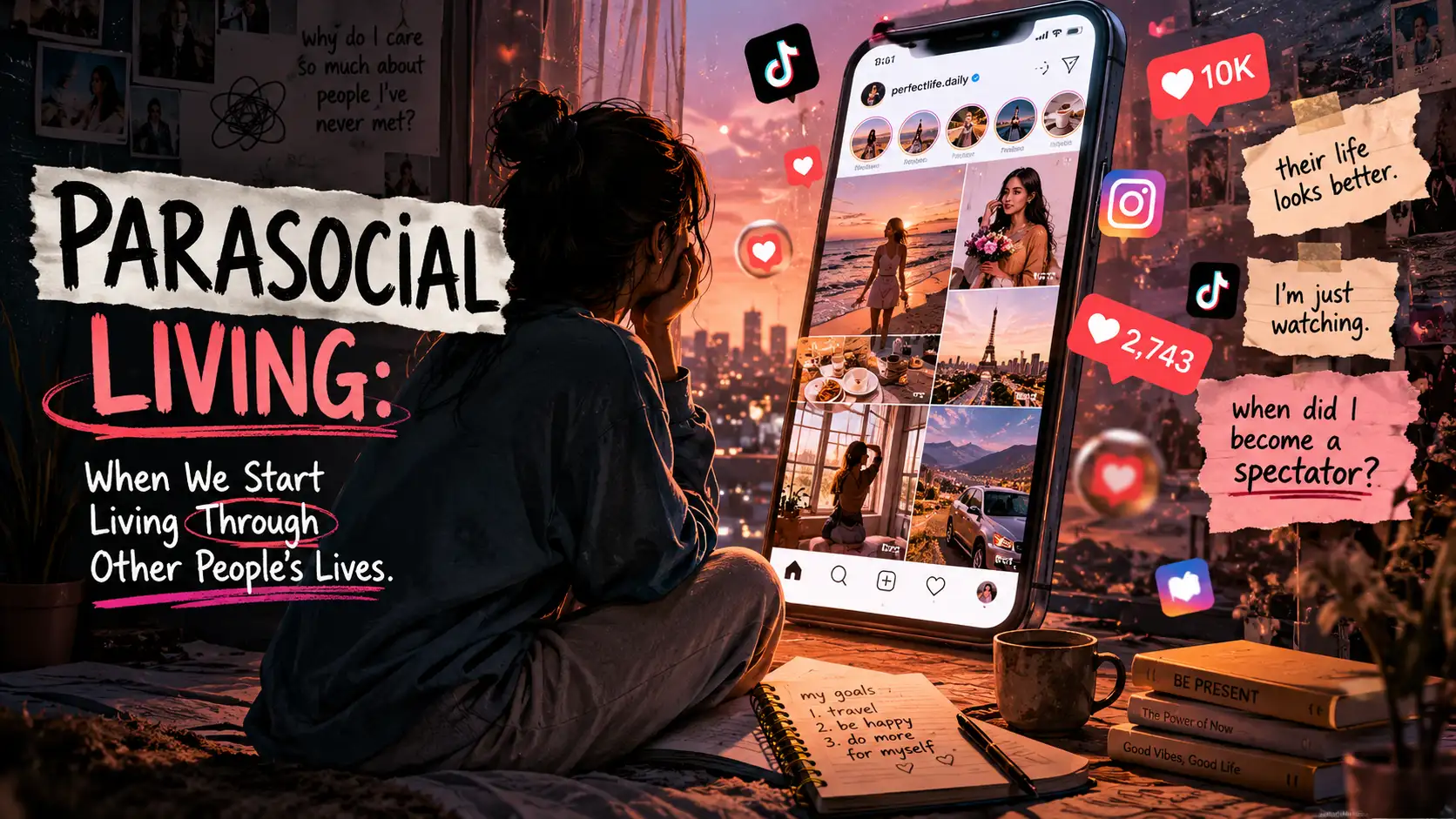
When Watching Becomes Living
Have you ever found yourself more excited about an influencer's vacation than planning your own? Have you ever waited for updates about someone's relationship as if it were happening within your friend group?Have you ever spent hours consuming content only to realize your own day passed by without much happening? This is where parasocial living begins.Instead of drawing inspiration from other people's experiences, we start using them as substitutes for our own. We watch travel videos instead of exploring. We watch other people transform their lives while telling ourselves we'll start tomorrow. We cheer for milestones we've only seen through a screen, all while putting our own dreams on hold. Without realizing it, we become spectators.Why Does It Happen?
The answer is surprisingly human. People want connection. They want to feel seen, understood, and part of something. Social media gives them that feeling. Creators invite viewers into their lives through videos like "Come with me," "Spend the day with me," or "Get ready with me." It feels personal, almost like spending time with a friend. For many people, especially when they're feeling lonely or going through a difficult time, these creators can become a source of comfort. The problem isn't caring about creators, it's when their lives start taking up more space than our own.The Cost of Living Through Someone Else
Parasocial living rarely feels harmful at the moment. In fact, it often feels enjoyable.But over time, it can create a subtle dissatisfaction with reality. Someone else's life starts looking more exciting than your own. Their achievements seem bigger. Their relationships seem healthier. Their routine appears more productive. What we forget is that we're comparing our entire reality to carefully selected highlights.The more time we spend observing curated lives, the easier it becomes to feel like our own lives are lacking. Not because they are. But because we're constantly measuring them against edited versions of someone else's.Is Parasocial Living Always Bad?
Not at all. Many creators genuinely inspire positive change. They teach skills, build supportive communities, spread awareness, and help people feel less alone. The internet has created opportunities for connection that previous generations never had. The goal isn't to stop following creators or caring about public figures. The goal is balance. Admire people without outsourcing your identity to them. Enjoy their stories without forgetting to create your own. Learn from them without allowing their lives to become a replacement for yours.The Difference Between Watching and Participating
The most meaningful moments in life rarely happen through a screen. They happen in conversations, experiences, mistakes, friendships, hobbies, adventures, and personal milestones. Social media gives us a front-row seat to countless lives. But having a front row seat isn't the same as being on the stage. The danger of parasocial living isn't that we care too much about other people. It's that we can become so invested in their stories that we neglect our own and while there's nothing wrong with following someone's journey, it's worth asking a simple question:When was the last time you were as invested in your own life as you were in theirs?Next Story