
Rosemary vs Lavender For Hair: Which Oil Should You Use In Monsoon?

The monsoon season can be particularly challenging for maintaining healthy hair. High humidity, frequent sweating and exposure to rainwater can leave the scalp oily and uncomfortable. For some people, the damp conditions may also contribute to dandruff and scalp irritation.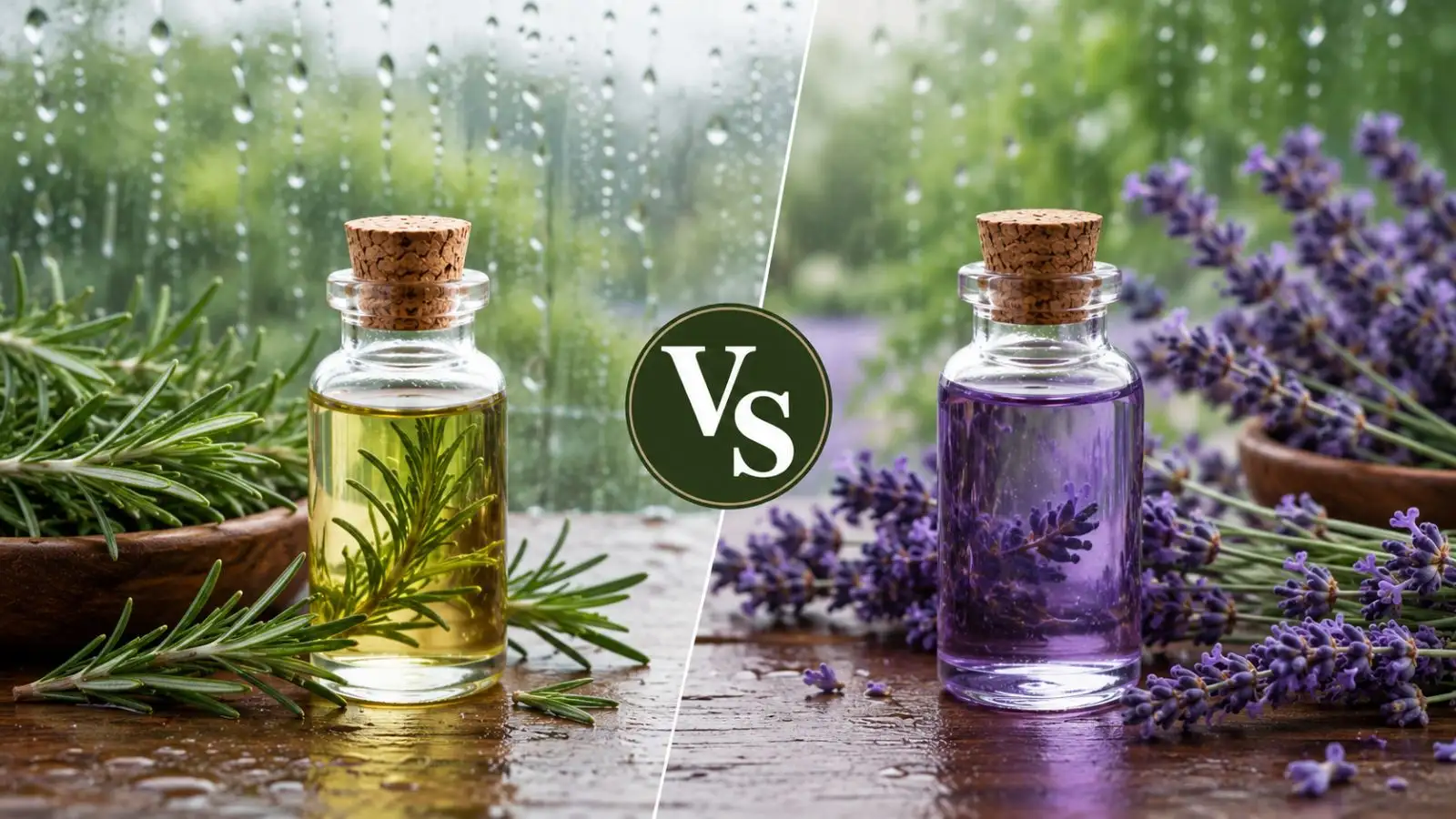
As interest in natural hair care continues to grow, rosemary oil and lavender oil have become popular additions to hair routines. But when it comes to rosemary vs lavender oil , which one is better for monsoon hair care ?
Both essential oils have potential benefits, but they are not equally supported by scientific evidence, particularly when it comes to hair growth.
The rainy season can also create conditions that encourage dandruff and other scalp concerns. As a result, keeping the scalp clean and avoiding excessive oil build-up becomes an important part of a monsoon hair care routine.
One clinical trial comparing rosemary oil with 2% minoxidil found improvements in hair growth in people with androgenetic alopecia after several months of use. However, the evidence base remains limited, and more large-scale, well-designed research is needed before rosemary oil can be considered a proven treatment for hair loss.
Rosemary may also have antioxidant and anti-inflammatory properties that could support overall scalp health.
Use a small amount and massage it gently into the scalp rather than applying excessive oil. A patch test is also advisable before using rosemary oil more widely.
Also Read: Rosemary Oil vs Castor Oil: Which Works Best for Summer Hair Growth?
When it comes to lavender oil for hair growth, however, the available evidence is considerably more limited than the research surrounding rosemary. Much of the research has been conducted in animals, meaning its effects on human hair growth cannot yet be established with the same confidence.
Lavender oil may still be included in a scalp care routine when properly diluted, particularly for people who enjoy its calming fragrance.
If your priority is a soothing scalp experience and aromatic benefits, lavender oil may be a suitable option. However, neither oil should be considered a guaranteed cure for hair loss.
Some research has also explored combinations of rosemary and lavender with other plant oils, with promising findings for hair growth and thickness. However, more research is required to establish their effectiveness and long-term benefits.
Perform a patch test before using either oil on the scalp and discontinue use if irritation occurs. People experiencing persistent hair fall, significant thinning, bald patches or scalp inflammation should seek professional advice rather than relying solely on hair oils.
As interest in natural hair care continues to grow, rosemary oil and lavender oil have become popular additions to hair routines. But when it comes to rosemary vs lavender oil , which one is better for monsoon hair care ?
Both essential oils have potential benefits, but they are not equally supported by scientific evidence, particularly when it comes to hair growth.
Why Does Monsoon Affect Hair Health?
High humidity during the monsoon can increase moisture and sweat around the scalp. Combined with pollution and dirt, this can leave the scalp feeling greasy and may contribute to build-up.The rainy season can also create conditions that encourage dandruff and other scalp concerns. As a result, keeping the scalp clean and avoiding excessive oil build-up becomes an important part of a monsoon hair care routine.
Rosemary Oil For Hair Growth
Rosemary oil is widely used in natural hair care, particularly by people looking for options to support hair growth and reduce hair fall. Among the two oils, rosemary currently has relatively stronger evidence supporting its potential role in hair health.One clinical trial comparing rosemary oil with 2% minoxidil found improvements in hair growth in people with androgenetic alopecia after several months of use. However, the evidence base remains limited, and more large-scale, well-designed research is needed before rosemary oil can be considered a proven treatment for hair loss.
Rosemary may also have antioxidant and anti-inflammatory properties that could support overall scalp health.
How To Use Rosemary Oil For Hair
Rosemary essential oil should not be applied directly to the scalp in its concentrated form. It should be diluted with a suitable carrier oil, such as coconut oil, before topical application.You may also like
- Have you purchased a property in Delhi on GPA? If you now want to become the legal owner, take these steps immediately..
- Mini Nandini Yojana: An opportunity to boost income through cow rearing; the government is offering a subsidy of up to 50%..
- Change Your Kadha Recipe Based on Health Issues: Tailor Ayurvedic Brews for Sore Throat, Cough, and Nasal Congestion
- Good news for Rajasthan government employees and pensioners: a special package will be available for cancer treatment..
- Investment Tips: How to invest in Gold ETFs? Discover the safest and easiest way to invest in paper gold..
Use a small amount and massage it gently into the scalp rather than applying excessive oil. A patch test is also advisable before using rosemary oil more widely.
Also Read: Rosemary Oil vs Castor Oil: Which Works Best for Summer Hair Growth?
Lavender Oil For Hair And Scalp
Lavender oil is better known for its pleasant fragrance and soothing qualities. It is also used in aromatherapy and traditional personal care routines.When it comes to lavender oil for hair growth, however, the available evidence is considerably more limited than the research surrounding rosemary. Much of the research has been conducted in animals, meaning its effects on human hair growth cannot yet be established with the same confidence.
Lavender oil may still be included in a scalp care routine when properly diluted, particularly for people who enjoy its calming fragrance.
Rosemary vs Lavender Oil: Which Should You Choose?
If your primary concern is hair growth or hair fall, rosemary oil has a slight edge because there is comparatively more research exploring its potential effects on hair growth.If your priority is a soothing scalp experience and aromatic benefits, lavender oil may be a suitable option. However, neither oil should be considered a guaranteed cure for hair loss.
Some research has also explored combinations of rosemary and lavender with other plant oils, with promising findings for hair growth and thickness. However, more research is required to establish their effectiveness and long-term benefits.
Side Effects And Precautions
Essential oils are highly concentrated and can cause skin irritation or allergic reactions if used incorrectly. Both rosemary and lavender oil should therefore be diluted before application.Perform a patch test before using either oil on the scalp and discontinue use if irritation occurs. People experiencing persistent hair fall, significant thinning, bald patches or scalp inflammation should seek professional advice rather than relying solely on hair oils.






Loving Newspoint? Download the app now
