
Soaked vs Raw Almonds: Are Soaked Almonds Really Better for Your Health?

Almonds are a popular snack that is rich in many nutrients, including fiber and healthy fats. They’re also an excellent source of vitamin E, which helps protect your cells from damage.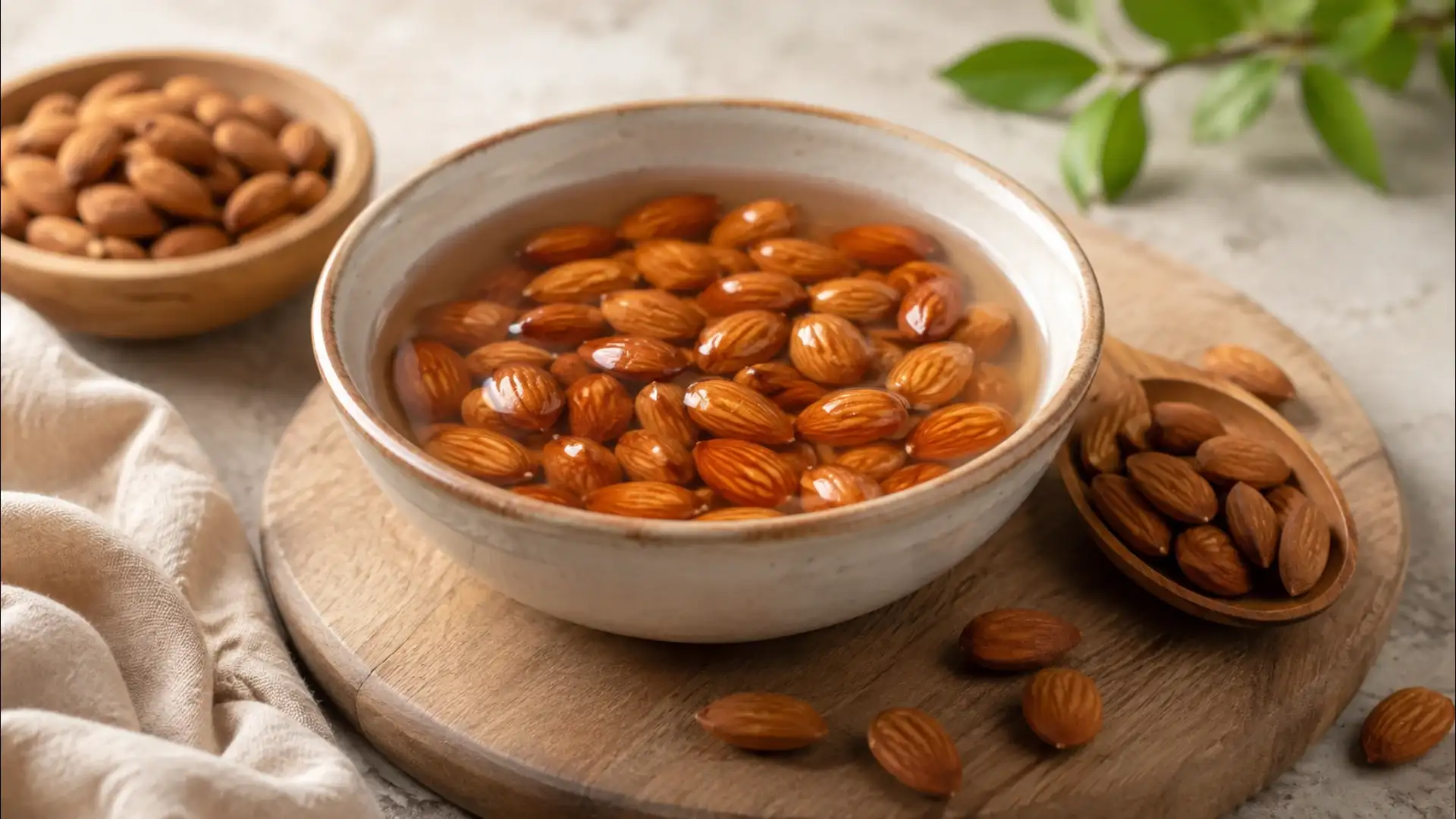
While many people enjoy them raw or roasted, you may wonder why others prefer to soak them before eating. Here, we explore the science behind soaking almonds and why it may be better than eating them raw.
Potential benefits of soaking almonds
Research suggests that soaked almonds may offer some health benefits:
May ease digestion
Almonds have a tough, hard texture that can make them difficult to digest. However, soaking softens them, potentially making them easier for your body to break down. Almonds also contain antinutrients, which can impair the digestion and absorption of certain nutrients, such as calcium, iron, zinc, and magnesium.
May increase the absorption of certain nutrients
Soaking may make almonds easier to chew, increasing nutrient availability. Research shows that breaking almonds into smaller pieces through chewing or cutting allows more nutrients to be released and absorbed, especially fats. Additionally, digestive enzymes may be able to break down and absorb nutrients more efficiently.
Some people may prefer the taste and texture
Soaking also affects the texture and taste of almonds. Raw almonds are hard and crunchy, with a slightly bitter flavor due to their tannins. When soaked, they become softer, less bitter, and more buttery-tasting, which may be more appealing to some individuals.
Here’s a simple way to soak them overnight:
While many people enjoy them raw or roasted, you may wonder why others prefer to soak them before eating. Here, we explore the science behind soaking almonds and why it may be better than eating them raw.
Potential benefits of soaking almonds
Research suggests that soaked almonds may offer some health benefits:
May ease digestion
You may also like
- Major Change in US Visa Rules: Application Will Be Rejected If Even One Document Is Missing
- EPFO: A major gift in August—access stuck funds in a jiffy via the e-Praapti Portal
- Solar Eclipse : When will this year's second solar eclipse occur, August 11 or 12? Will the Sutak period be observed in India?
- Can a D&C Cause a Thin Endometrium? Signs, Recovery and Pregnancy Chances
- Simple ways prevent waterborne diseases in monsoons
Almonds have a tough, hard texture that can make them difficult to digest. However, soaking softens them, potentially making them easier for your body to break down. Almonds also contain antinutrients, which can impair the digestion and absorption of certain nutrients, such as calcium, iron, zinc, and magnesium.
May increase the absorption of certain nutrients
Soaking may make almonds easier to chew, increasing nutrient availability. Research shows that breaking almonds into smaller pieces through chewing or cutting allows more nutrients to be released and absorbed, especially fats. Additionally, digestive enzymes may be able to break down and absorb nutrients more efficiently.
Some people may prefer the taste and texture
Soaking also affects the texture and taste of almonds. Raw almonds are hard and crunchy, with a slightly bitter flavor due to their tannins. When soaked, they become softer, less bitter, and more buttery-tasting, which may be more appealing to some individuals.
How to soak almonds
Soaking almonds is simple and much cheaper than buying pre-soaked ones from a store.Here’s a simple way to soak them overnight:
- Place almonds in a bowl, add enough warm tap water to fully cover them, and sprinkle about 1 teaspoon of salt for every 1 cup (140 grams) of nuts.
- Cover the bowl and let it sit on your countertop overnight, or for 8-12 hours.
- Drain and rinse the almonds. If you choose, you can remove the skins for a smoother texture.
- Pat the almonds dry using a clean paper towel.






Loving Newspoint? Download the app now
