
Why South Indian Meals Are Served on a Banana Leaf

The first thing a banana leaf does is cool the rice placed on it. Steam escapes from the underside instead of pooling, so the food arrives at the right temperature rather than sitting in its own heat. That is a practical fact before it is a tradition, and it explains why the practice travelled from Tamil Nadu to Kerala to Karnataka and held across all of them.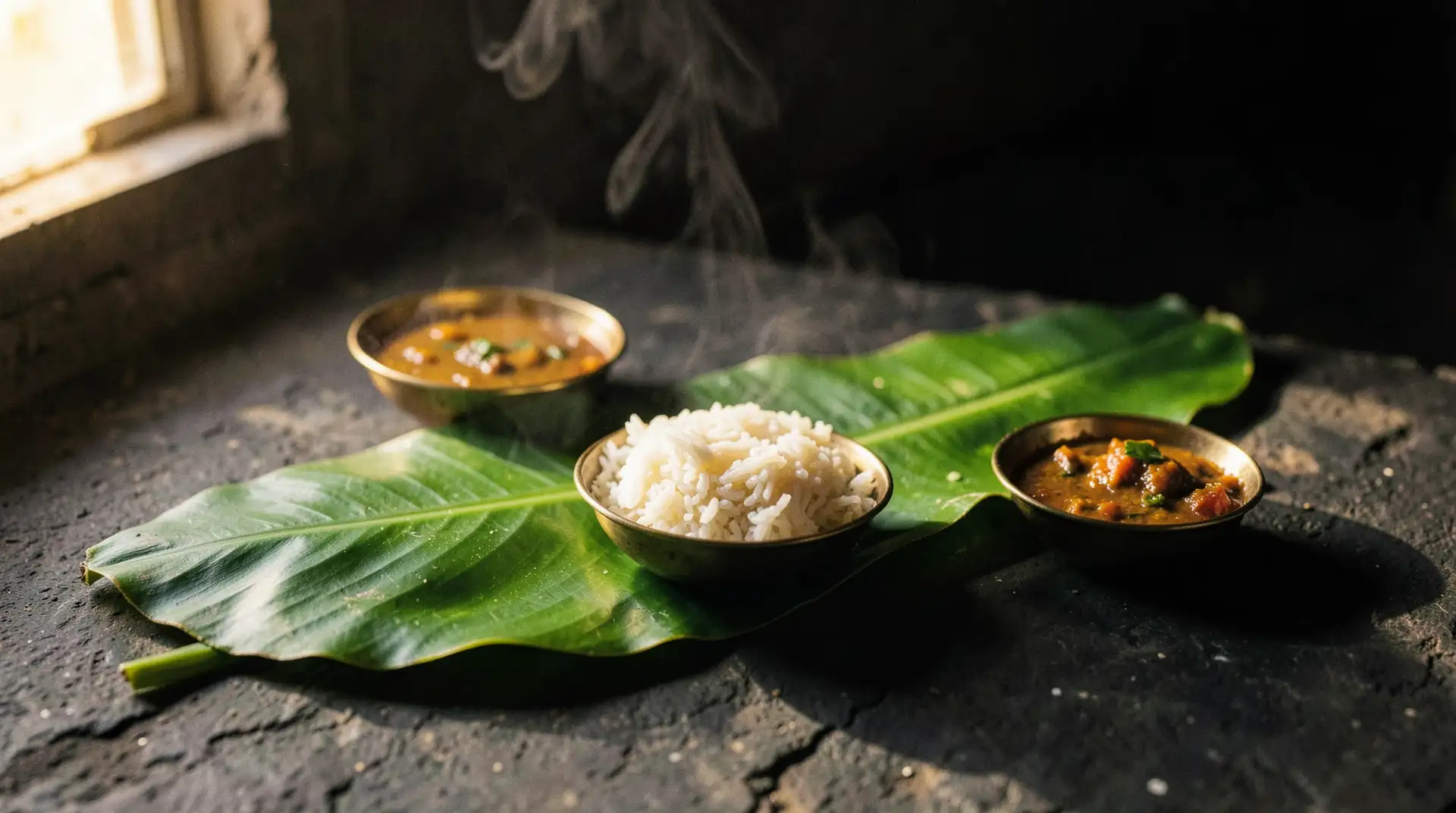
What the Leaf Actually Does to the Food
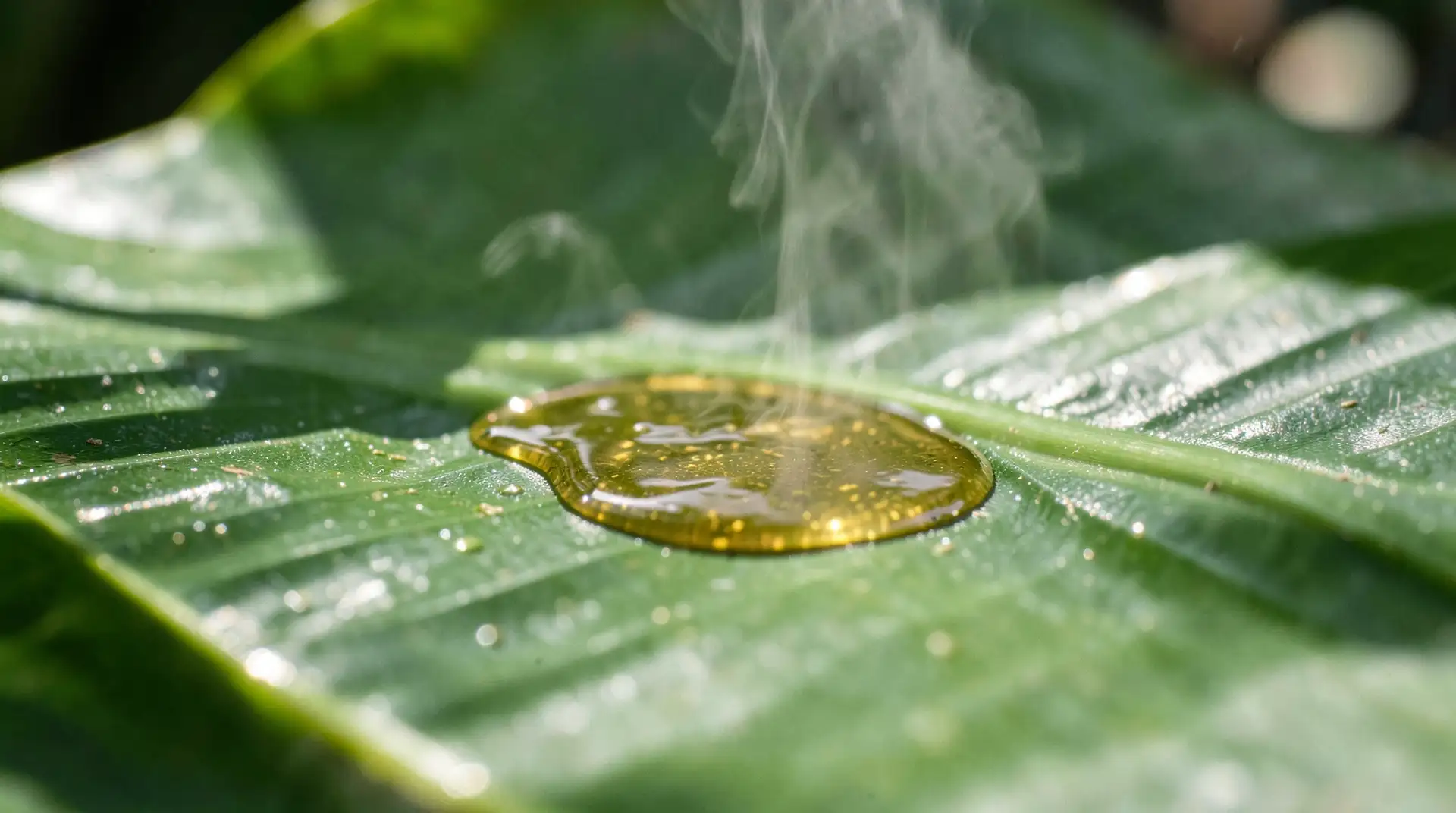
Banana leaves carry a thin layer of natural wax on their surface. When hot food lands on that wax, a small amount of it transfers to the food. The compounds involved, polyphenols and other plant-based substances, are the same family found in green tea and certain herbs. The leaf also imparts a faint green, grassy note to rice and curries, which is why food served on a banana leaf tastes different from the same food on a steel plate. This is not imagination. The wax melts slightly with heat, and the contact matters.The leaf is also naturally antimicrobial. Bacteria that thrive on porous ceramic or scratched steel find less purchase on a fresh, waxy surface. In a climate where heat and humidity accelerate spoilage, this was not a small consideration for households cooking in bulk for festivals or harvests.The Logic of the Layout
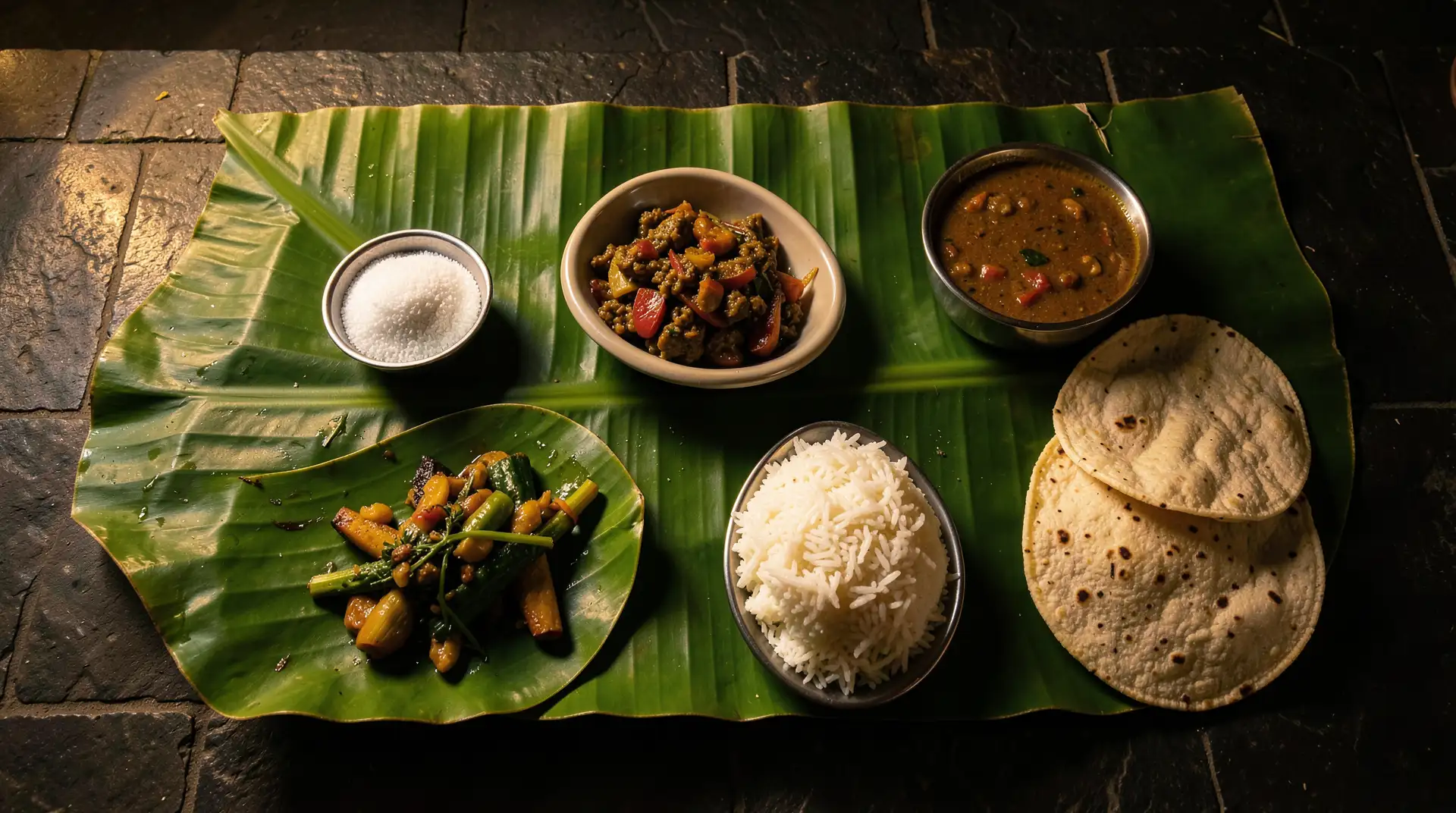
A South Indian banana leaf meal has a fixed geography. Salt goes at the top left corner. Pickles and chutneys sit beside it. Dry vegetables come next, then wet curries, then rice at the centre. Papad lies at the top right. Payasam or a sweet arrives last, either at the top or served separately.This arrangement is not decorative. It follows the Ayurvedic principle that a meal should move from sharp and stimulating tastes at the start, salt, sour pickle, through the main body of the meal, and close with something sweet to signal completion to the digestive system. The leaf's length makes this sequence physical. You eat left to right, top to bottom, in an order the cook has already decided for you.The size of the leaf also determines portions without anyone measuring. A standard serving of sambar fills a certain area. A cook who has served a thousand meals on a leaf knows exactly how much to ladle by where the liquid reaches.You may also like
- Karwa Chauth: What to do if you experience dizziness, weakness, or anxiety during the *nirjala* (waterless) fast? Find out..
- Karwa Chauth 2026: Avoid this one mistake when breaking your *nirjala* fast—it could negatively affect your health..
- Karwa Chauth 2026: Take your wife out after she breaks her fast—romantic spots in 5 cities, including Delhi and Mumbai.
- Shah Rukh Khan's 'King' Reportedly Plans a Special Song Inspired by 'Deewangi Deewangi'
- Nearly 300 young men from rural Karnataka joined a month-long free military recruitment camp at a village mutt, where lodging, meals and training from retired service personnel were provided at no cost
Practicality at Scale
For a wedding feeding five hundred people or a temple annadanam serving pilgrims, banana leaves solve problems that crockery cannot. They require no washing. They generate no breakage. They stack flat, weigh almost nothing, and decompose within days. A village that grew banana plants in its backyard had an inexhaustible supply of plates.The leaf is also wide enough to hold an entire meal without anything touching anything else until the diner chooses to mix it. That separation matters in a cuisine where the contrast between a dry thoran and a wet avial is part of the point.The Ritual Dimension
In Tamil and Malayali tradition, the banana plant is considered auspicious. It appears at temple entrances, at the threshold of homes during festivals, and at the gate of a house where a wedding is being held. Serving food on its leaf extends that association to the meal itself, the act of eating becomes part of a larger, welcoming gesture rather than a transaction.The leaf is always placed with the tip pointing to the left of the diner. Turning it the other way signals a funeral meal. This is one of those conventions so old that most people who follow it cannot say exactly when it began, only that reversing it would feel wrong in a way that goes beyond etiquette.Why It Persists
Steel plates arrived. Melamine arrived. Disposable thermocol arrived and became a problem. The banana leaf kept its place at weddings, at temple meals, at family gatherings on festival days, and increasingly at restaurants that have understood that the leaf is not nostalgia, it is a genuine advantage.The meal tastes different on it. The cleanup is instant. The portions are intuitive. The layout teaches the diner how to eat before anyone says a word. A tradition that keeps all of its original reasons intact across centuries is not sentiment. It is design that was right the first time.





Loving Newspoint? Download the app now
