
Why Khichdi Is the First Food Cooked for Someone Unwell in Indian Homes

Illness in an Indian home follows a pattern so consistent it barely registers as a choice. The unwell person is moved to bed, a family member heads to the kitchen, and within the hour a bowl of khichdi appears. No one announces the decision. It is simply what happens.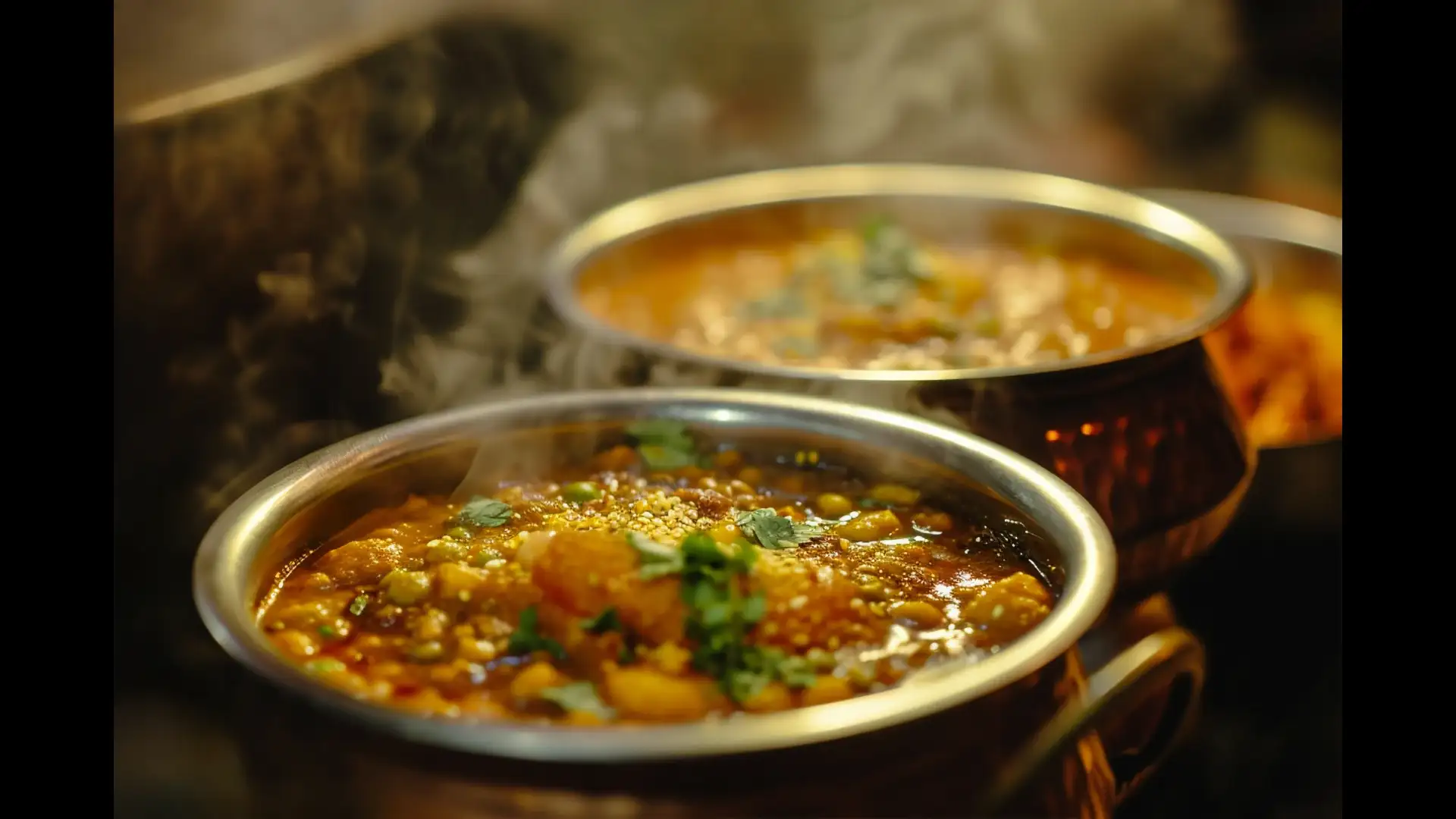
The dish earns this role not through tradition alone but through a combination of properties that happen to match exactly what a body under stress needs from food.
Food eaten during this window needs to do as little work as possible. Complex proteins and raw fibres demand enzymatic effort that a compromised gut cannot spare. Fat slows gastric emptying further. What the digestive tract can handle with least friction is simple starch, soft protein, and warm liquid.
Khichdi, at its most basic, rice, split moong dal, water, a little salt, and a ghost of ghee, is almost exactly that description.
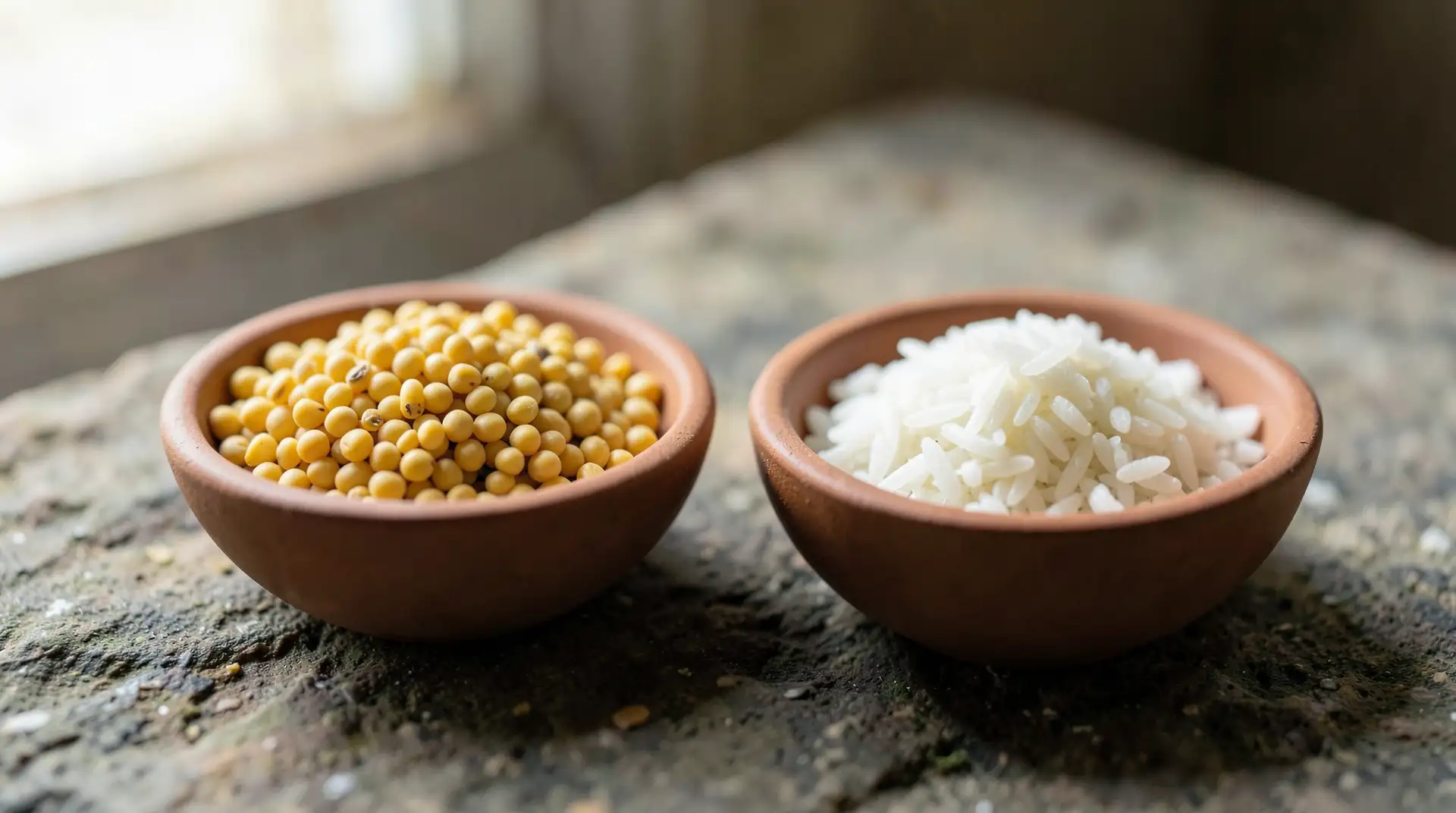
Moong dal, the yellow split variety used in most khichdi, is the mildest legume in common Indian use. Whole legumes carry oligosaccharides that the gut bacteria ferment, producing gas. Splitting and husking the dal removes most of this. Cooking it soft breaks down the remaining cell walls. The protein that arrives in the intestine is already partially prepared, and the amino acid profile of rice and lentil together, each covering what the other lacks, is more complete than either alone.
The combination is not accidental. Across cultures that developed rice-and-legume dishes independently, congee with tofu, rice and beans in the Caribbean, the Japanese okayu, the pairing keeps appearing wherever people needed food that would not fight back.
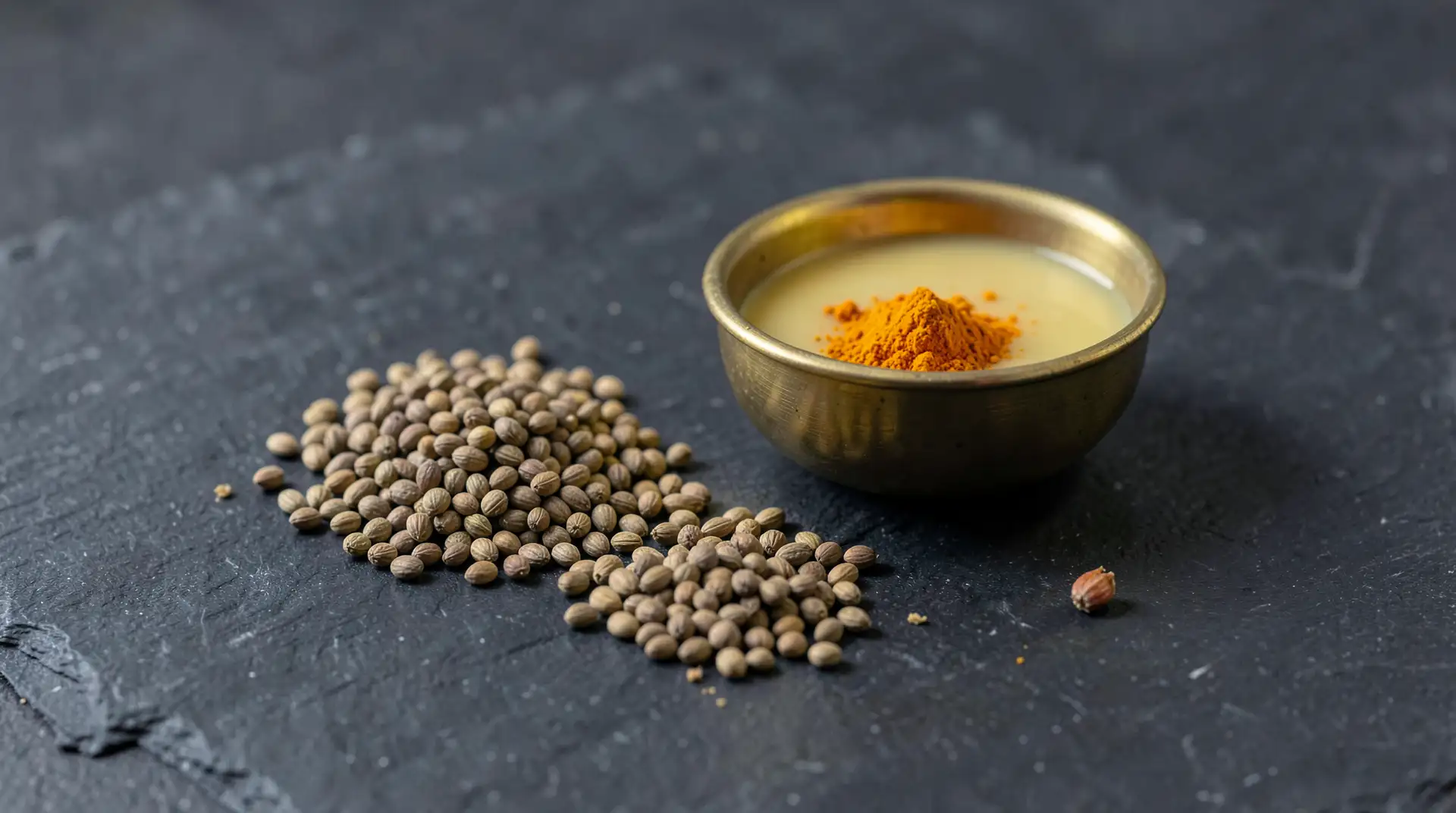
The spices in a sickroom khichdi are kept to a minimum for a reason. Cumin, turmeric, and a little asafoetida are the common core. Cumin has a long history in Indian domestic medicine as a carminative, something that reduces gas and eases the gut. Turmeric carries curcumin, a compound with well-documented anti-inflammatory properties in laboratory settings; the body's absorption of it increases in the presence of fat, which is another reason the ghee earns its place. Asafoetida, used in a pinch, is a traditional remedy for bloating and cramps.
None of this is medicine in the clinical sense. But none of it is superstition either. These are ingredients that have a plausible mechanism behind the habit.
The texts were codifying something that home cooks had already arrived at through observation. A sick person who ate heavily felt worse. A sick person who ate khichdi felt neither worse nor hungry. Over generations, the dish became the default not because anyone decreed it but because it kept working.
The word khichdi itself comes from the Sanskrit khicca, meaning a dish of rice and legumes cooked together. It appears in records going back over a thousand years, described by travellers and chroniclers as the food of ordinary Indian life. Its association with illness is simply the most visible edge of a much wider presence.
It is also warm. Warm food reaches the stomach without the body needing to spend energy raising its temperature, a small but real saving when resources are already stretched. It is bland enough that nausea does not spike at the smell or the first spoonful. And it is familiar, which matters more than it sounds. Appetite during illness is fragile, and familiar food is more likely to be eaten than something that requires effort to want.
The khichdi that arrives at the bedside is not a compromise or a placeholder until real food is possible. It is, for the purpose it serves, the most precisely suited food an Indian kitchen can produce. The grandmother who made it without explaining herself knew something that holds up entirely when examined.
The dish earns this role not through tradition alone but through a combination of properties that happen to match exactly what a body under stress needs from food.
What Happens to Digestion When You Are Sick
When the body fights an infection or recovers from a fever, it redirects energy toward immune function and away from digestion. Stomach acid production slows. Gut motility, the rhythmic contractions that move food along, becomes sluggish. Appetite drops, partly as a signal that the body would rather not divide its resources.Food eaten during this window needs to do as little work as possible. Complex proteins and raw fibres demand enzymatic effort that a compromised gut cannot spare. Fat slows gastric emptying further. What the digestive tract can handle with least friction is simple starch, soft protein, and warm liquid.
Khichdi, at its most basic, rice, split moong dal, water, a little salt, and a ghost of ghee, is almost exactly that description.
Why Rice and Moong Dal Together
Rice, cooked to softness, breaks down quickly in the mouth and stomach. Its starch is mostly amylopectin, which digests faster than the amylose in harder grains. It is also low in fibre in this form, which means less fermentation in the gut and less gas, both welcome when the stomach is already unsettled.Moong dal, the yellow split variety used in most khichdi, is the mildest legume in common Indian use. Whole legumes carry oligosaccharides that the gut bacteria ferment, producing gas. Splitting and husking the dal removes most of this. Cooking it soft breaks down the remaining cell walls. The protein that arrives in the intestine is already partially prepared, and the amino acid profile of rice and lentil together, each covering what the other lacks, is more complete than either alone.
The combination is not accidental. Across cultures that developed rice-and-legume dishes independently, congee with tofu, rice and beans in the Caribbean, the Japanese okayu, the pairing keeps appearing wherever people needed food that would not fight back.
The Role of Ghee and Simple Spicing
A small amount of ghee serves a purpose beyond flavour. It carries fat-soluble compounds from the spices into the body and coats the gut lining lightly, which can ease irritation. The quantity matters: a teaspoon, not a tablespoon. Enough to do its work, not enough to slow digestion.You may also like
- Cholesterol Shot: Oxford Trial Shows Twice-Yearly Reduces Heart Risks
- Psychology says children who are praised for being intelligent rather than hardworking may develop a surprising fear of failure
- What is the global trend of Red Light therapy? Does it actually remove fine lines and blemishes?
- Alcohol and Tobacco: Why the Mouth Bears the Highest Combined Risk
- After Hours: How tech leaders are redefining luxury evening dressing
The spices in a sickroom khichdi are kept to a minimum for a reason. Cumin, turmeric, and a little asafoetida are the common core. Cumin has a long history in Indian domestic medicine as a carminative, something that reduces gas and eases the gut. Turmeric carries curcumin, a compound with well-documented anti-inflammatory properties in laboratory settings; the body's absorption of it increases in the presence of fat, which is another reason the ghee earns its place. Asafoetida, used in a pinch, is a traditional remedy for bloating and cramps.
None of this is medicine in the clinical sense. But none of it is superstition either. These are ingredients that have a plausible mechanism behind the habit.
Why Ayurveda Formalised What Kitchens Already Knew
Ayurvedic texts describe a preparation called krisara or yavagu, a thin rice-and-lentil gruel, as a therapeutic food for fever, digestive weakness, and recovery from illness. The Charaka Samhita, one of the foundational texts of Ayurveda, lists properties for this class of food that map closely onto what modern nutritional thinking would describe: easy to digest, hydrating, not taxing on agni, the digestive fire.The texts were codifying something that home cooks had already arrived at through observation. A sick person who ate heavily felt worse. A sick person who ate khichdi felt neither worse nor hungry. Over generations, the dish became the default not because anyone decreed it but because it kept working.
The word khichdi itself comes from the Sanskrit khicca, meaning a dish of rice and legumes cooked together. It appears in records going back over a thousand years, described by travellers and chroniclers as the food of ordinary Indian life. Its association with illness is simply the most visible edge of a much wider presence.
What Makes It the Right Choice for Recovery
A body recovering from illness needs protein to repair tissue, carbohydrates to restore energy, and fluids to replace what fever and reduced intake have taken. Khichdi, made with enough water to be almost porridge-like, delivers all three in a form that asks almost nothing of the gut in return.It is also warm. Warm food reaches the stomach without the body needing to spend energy raising its temperature, a small but real saving when resources are already stretched. It is bland enough that nausea does not spike at the smell or the first spoonful. And it is familiar, which matters more than it sounds. Appetite during illness is fragile, and familiar food is more likely to be eaten than something that requires effort to want.
The khichdi that arrives at the bedside is not a compromise or a placeholder until real food is possible. It is, for the purpose it serves, the most precisely suited food an Indian kitchen can produce. The grandmother who made it without explaining herself knew something that holds up entirely when examined.






Loving Newspoint? Download the app now
