
Why Village Walls Were Coated with Lime Wash

The whitewashed wall is one of the most familiar sights in rural India, on a grandmother's courtyard, a temple boundary, a roadside boundary wall baked pale in the afternoon sun. Most people who grew up around it never questioned it. It was simply what walls looked like.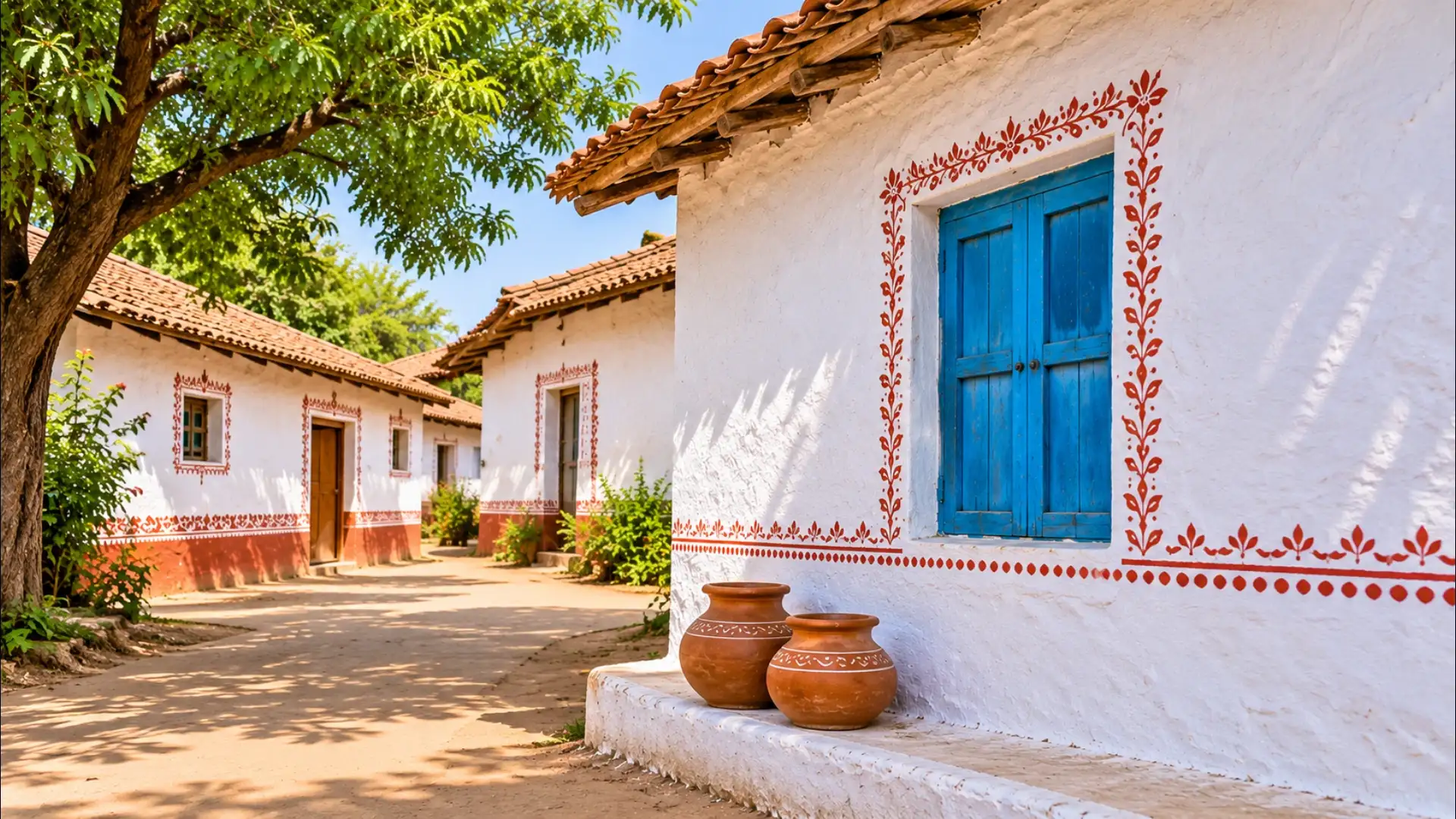
The reason behind it, though, is a small lesson in how older generations solved several problems at once with a single material.
Villages did not use it because it was fashionable. They used it because it was the cheapest material that worked.
Lime wash soaks into the surface and reacts with carbon dioxide in the air, slowly hardening into calcium carbonate, a thin shell of stone, essentially, that sheds water rather than absorbing it. Apply it every year or two and the wall beneath lasts decades longer than it would bare.
This is why lime washing was a seasonal ritual in many households, typically before the monsoon or before a major festival, not an aesthetic choice but a maintenance one.
The same property made lime wash useful on the walls of cattle sheds and grain stores, where fungal growth and insect infestation were genuine threats to food and livestock. The disinfecting effect fades as the lime fully carbonates, which is part of why the practice was repeated rather than done once.
Inside, the room stays cooler. This is not folklore, it is straightforward physics, the same principle behind white rooftop coatings used on buildings today. In a home with no mechanical cooling, every degree of difference mattered.
The choice of white was not arbitrary; it was the colour that reflected the most light, and lime happened to produce exactly that.
Synthetic paint holds colour and requires less skill to apply evenly. So lime wash retreated, first from the wealthier homes, then from most. What was once the standard became the mark of a house that had not been renovated.
The irony is that the material it replaced, cement plaster, traps moisture rather than breathing, cracks more dramatically, and does none of the biological work lime did.
Lime wash solved a cluster of problems, structural, biological, thermal, with one inexpensive material applied once a season. The whitewashed village wall was not a tradition in the sentimental sense. It was a working answer, arrived at practically, that happened to last long enough to look like one.
The reason behind it, though, is a small lesson in how older generations solved several problems at once with a single material.
What Lime Wash Actually Is
Lime wash is made from calcium hydroxide, slaked lime, the powder left after burning limestone and mixing it with water. The resulting liquid is thin, slightly caustic, and bright white when dry. It costs almost nothing to make, and the raw material, limestone, is found across most of India.Villages did not use it because it was fashionable. They used it because it was the cheapest material that worked.
The Wall Beneath Needed Protection
Most village construction, for centuries, used mud brick, fired brick, or rubble stone. None of these handles sustained rain well without a protective layer.Lime wash soaks into the surface and reacts with carbon dioxide in the air, slowly hardening into calcium carbonate, a thin shell of stone, essentially, that sheds water rather than absorbing it. Apply it every year or two and the wall beneath lasts decades longer than it would bare.
This is why lime washing was a seasonal ritual in many households, typically before the monsoon or before a major festival, not an aesthetic choice but a maintenance one.
It Killed What Lived in the Wall
Freshly mixed lime is strongly alkaline. That alkalinity is hostile to bacteria, fungi, and the mites and insects that nest in cracks in mud and brick walls. Bedbugs, in particular, were a persistent problem in older homes, and a fresh coat of lime wash on the interior wall was one of the few practical ways to reduce them without any commercial product.The same property made lime wash useful on the walls of cattle sheds and grain stores, where fungal growth and insect infestation were genuine threats to food and livestock. The disinfecting effect fades as the lime fully carbonates, which is part of why the practice was repeated rather than done once.
You may also like
- Whoever knew office small talk was good for our mental health?
- Winter Foot Care: Cracked heels in winter are not just due to dryness, but can also be caused by these reasons, know
- Afterlife, Soul, Rebirth: What Lies Beyond Death
- Bromate in Bottled Water: How is bromate formed in bottled water, and how dangerous is it?
- The Science of Peace: Silence the Mind, Discover Eternal Happpiness
The Cooling Effect Was Real
White reflects sunlight rather than absorbing it. A lime-washed wall on the exterior of a home, particularly one facing west or south, takes in less heat through the afternoon than an unpainted or dark-surfaced wall.Inside, the room stays cooler. This is not folklore, it is straightforward physics, the same principle behind white rooftop coatings used on buildings today. In a home with no mechanical cooling, every degree of difference mattered.
The choice of white was not arbitrary; it was the colour that reflected the most light, and lime happened to produce exactly that.
Why the Practice Faded
Cement plaster and synthetic paint arrived in rural India through the mid-twentieth century. Cement is harder, requires less frequent reapplication, and carries none of the social association with poverty that lime wash gradually acquired as incomes rose.Synthetic paint holds colour and requires less skill to apply evenly. So lime wash retreated, first from the wealthier homes, then from most. What was once the standard became the mark of a house that had not been renovated.
The irony is that the material it replaced, cement plaster, traps moisture rather than breathing, cracks more dramatically, and does none of the biological work lime did.
Lime wash solved a cluster of problems, structural, biological, thermal, with one inexpensive material applied once a season. The whitewashed village wall was not a tradition in the sentimental sense. It was a working answer, arrived at practically, that happened to last long enough to look like one.






Loving Newspoint? Download the app now
