
Top 10 Fastest Trains in the World: Where India Stands in the Global Bullet Train Race

Fastest trains in the world continue to redefine modern travel with incredible speeds, cutting-edge engineering and energy-efficient technology. As India accelerates its high-speed rail ambitions with the proposed Delhi-Varanasi Bullet Train corridor and several new projects, the country's railway future is entering an exciting phase. While nations like China, Japan and France have already set global benchmarks in high-speed rail, India is steadily building its own network through bullet trains and the rapidly expanding Vande Bharat services.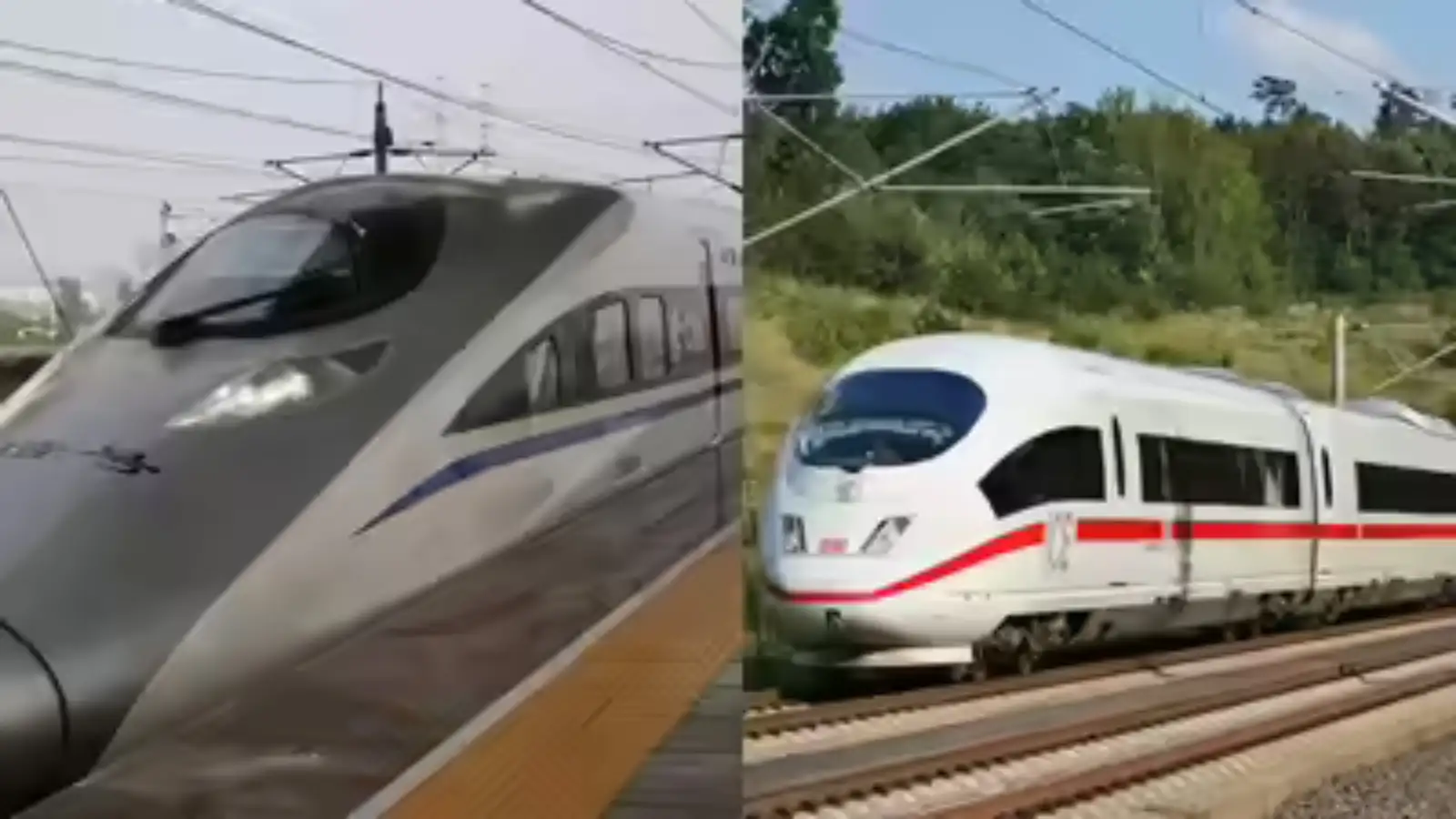
India's Bullet Train Vision Gets a Major Boost
India's plans to transform rail travel have gathered fresh pace following the announcement of the proposed Delhi-Varanasi High-Speed Rail Corridor. The ambitious project, stretching nearly 813 km, is expected to drastically reduce travel times across northern India.
Once operational, the corridor is expected to cut the journey between Delhi and Lucknow to around 2 hours and 10 minutes, while passengers travelling between Jewar Airport and Lucknow could complete the trip in nearly 1 hour and 40 minutes.
The high-speed line is expected to improve connectivity between the national capital and several important religious, commercial and industrial cities.
Proposed Stations on the Delhi-Varanasi Corridor
The planned route is expected to include:
India Plans Six More Bullet Train Corridors
The Delhi-Varanasi route is only one part of India's larger high-speed rail roadmap. The government has also proposed six additional bullet train corridors:
These projects are expected to significantly improve long-distance connectivity while encouraging faster, greener and more efficient transportation across the country.
Top 10 Fastest Trains in the World
Countries across the globe continue to push railway technology to new limits. While conventional high-speed trains dominate many networks, magnetic levitation (maglev) technology has taken train speeds to extraordinary levels.
1. LO Maglev (China) – 603 km/h
China's experimental LO Maglev currently holds the highest recorded speed among modern trains, demonstrating the future potential of magnetic levitation technology.
2. TGV POS (France) – 574 km/h
France's famous TGV POS achieved an impressive speed record during testing, making it one of the fastest conventional trains ever built.
3. Shanghai Maglev (China) – 460 km/h
The Shanghai Maglev remains the world's fastest commercially operating train, connecting Shanghai Pudong International Airport with the city at breathtaking speeds.
4. CR450 (China) – Up to 450 km/h (Planned)
China's next-generation CR450 is currently under development and is expected to operate at speeds approaching 450 km/h, setting new benchmarks for commercial rail travel.
5. Frecciarossa 1000 (Italy) – 360 km/h
Italy's flagship high-speed train combines speed, passenger comfort and energy efficiency while operating across major European routes.
6. AGV Italo (Italy) – 360 km/h
Another Italian engineering success, AGV Italo offers ultra-fast intercity travel with modern design and advanced technology.
7. Fuxing Hao (China) – 350 km/h
China's Fuxing Hao is among the country's most advanced bullet trains and serves multiple high-speed corridors across the nation.
8. ICE 3 (Germany) – 330 km/h
Germany's ICE 3 is known for combining high speed with excellent passenger comfort across Europe's extensive rail network.
9. Eurostar e320 (Europe) – 320 km/h
Connecting major European cities through the Channel Tunnel, the Eurostar e320 offers fast international rail travel between several countries.
10. Shinkansen N700S (Japan) – 300 km/h
Japan's iconic Shinkansen continues to set global standards for punctuality, safety and operational efficiency while running at speeds of up to 300 km/h.
Vande Bharat Continues to Win Passenger Trust
While India's first bullet train project between Mumbai and Ahmedabad is still under construction, the country's semi-high-speed Vande Bharat Express network is witnessing remarkable success.
Among Southern Railway's Vande Bharat services, the Thiruvananthapuram–Mangaluru Vande Bharat Express emerged as the highest-earning route during a recent three-month period. The train generated nearly ₹73.35 lakh in revenue while recording the highest passenger bookings among the region's 24 Vande Bharat services.
Several other routes, including:
have also witnessed consistently high demand, with occupancy levels frequently touching or even exceeding full capacity.
Railways Introduce Passenger-Friendly Booking Changes
To accommodate growing demand, Southern Railway has relaxed ticket booking rules for Vande Bharat trains.
Passengers can now book vacant seats up to 15 minutes before departure, whether boarding from the originating station or intermediate stops. The initiative has improved convenience for travellers while helping Railways maximise seat occupancy and revenue.
India's High-Speed Rail Journey Is Just Beginning
India's railway network is undergoing one of its biggest transformations in decades. While the Mumbai-Ahmedabad Bullet Train project remains the country's first dedicated high-speed rail line under construction, the announcement of multiple new bullet train corridors highlights the government's long-term commitment to modernising rail infrastructure.
Combined with the rising popularity of Vande Bharat trains, these developments indicate that India is steadily moving towards a future where faster, safer and more sustainable rail travel becomes the norm. As global leaders continue to push the boundaries of railway technology, India is laying the foundation to become a major player in the world's next generation of high-speed transportation.
India's Bullet Train Vision Gets a Major Boost
India's plans to transform rail travel have gathered fresh pace following the announcement of the proposed Delhi-Varanasi High-Speed Rail Corridor. The ambitious project, stretching nearly 813 km, is expected to drastically reduce travel times across northern India.
Once operational, the corridor is expected to cut the journey between Delhi and Lucknow to around 2 hours and 10 minutes, while passengers travelling between Jewar Airport and Lucknow could complete the trip in nearly 1 hour and 40 minutes.
The high-speed line is expected to improve connectivity between the national capital and several important religious, commercial and industrial cities.
Proposed Stations on the Delhi-Varanasi Corridor
The planned route is expected to include:
- Delhi
- Noida
- Jewar Airport
- Mathura
- Agra
- Firozabad
- Etawah
- Kannauj
- Lucknow
- Raebareli
- Prayagraj
- New Bhadohi
- Varanasi
India Plans Six More Bullet Train Corridors
The Delhi-Varanasi route is only one part of India's larger high-speed rail roadmap. The government has also proposed six additional bullet train corridors:
- Mumbai–Pune
- Pune–Hyderabad
- Hyderabad–Bengaluru
- Hyderabad–Chennai
- Chennai–Bengaluru
- Varanasi–Siliguri
These projects are expected to significantly improve long-distance connectivity while encouraging faster, greener and more efficient transportation across the country.
Top 10 Fastest Trains in the World
Countries across the globe continue to push railway technology to new limits. While conventional high-speed trains dominate many networks, magnetic levitation (maglev) technology has taken train speeds to extraordinary levels.
1. LO Maglev (China) – 603 km/h
China's experimental LO Maglev currently holds the highest recorded speed among modern trains, demonstrating the future potential of magnetic levitation technology.
2. TGV POS (France) – 574 km/h
France's famous TGV POS achieved an impressive speed record during testing, making it one of the fastest conventional trains ever built.
3. Shanghai Maglev (China) – 460 km/h
The Shanghai Maglev remains the world's fastest commercially operating train, connecting Shanghai Pudong International Airport with the city at breathtaking speeds.
4. CR450 (China) – Up to 450 km/h (Planned)
China's next-generation CR450 is currently under development and is expected to operate at speeds approaching 450 km/h, setting new benchmarks for commercial rail travel.
5. Frecciarossa 1000 (Italy) – 360 km/h
Italy's flagship high-speed train combines speed, passenger comfort and energy efficiency while operating across major European routes.
6. AGV Italo (Italy) – 360 km/h
Another Italian engineering success, AGV Italo offers ultra-fast intercity travel with modern design and advanced technology.
7. Fuxing Hao (China) – 350 km/h
China's Fuxing Hao is among the country's most advanced bullet trains and serves multiple high-speed corridors across the nation.
8. ICE 3 (Germany) – 330 km/h
Germany's ICE 3 is known for combining high speed with excellent passenger comfort across Europe's extensive rail network.
9. Eurostar e320 (Europe) – 320 km/h
Connecting major European cities through the Channel Tunnel, the Eurostar e320 offers fast international rail travel between several countries.
10. Shinkansen N700S (Japan) – 300 km/h
Japan's iconic Shinkansen continues to set global standards for punctuality, safety and operational efficiency while running at speeds of up to 300 km/h.
Vande Bharat Continues to Win Passenger Trust
While India's first bullet train project between Mumbai and Ahmedabad is still under construction, the country's semi-high-speed Vande Bharat Express network is witnessing remarkable success.
You may also like
- Acute Pancreatitis: When Stomach Pain Becomes a Medical Emergency
- Disha Patani Surprises Fans With Emotional New Role in Awarapan 2 First Look
- Psychology says people who love jungle safaris are often high in 'Openness to Experience'; here's why they keep returning to the wild
- Jasmin Bhasin's Birthday Celebration Takes a Surprising Turn in Dubai
- A Major Scam Involving H-1B Visas! From Fake Jobs to Fabricated Resumes—How the Fraud Unfolds
Among Southern Railway's Vande Bharat services, the Thiruvananthapuram–Mangaluru Vande Bharat Express emerged as the highest-earning route during a recent three-month period. The train generated nearly ₹73.35 lakh in revenue while recording the highest passenger bookings among the region's 24 Vande Bharat services.
Several other routes, including:
- Mangaluru–Thiruvananthapuram
- Chennai Egmore–Nagercoil
- Kasaragod–Thiruvananthapuram
have also witnessed consistently high demand, with occupancy levels frequently touching or even exceeding full capacity.
Railways Introduce Passenger-Friendly Booking Changes
To accommodate growing demand, Southern Railway has relaxed ticket booking rules for Vande Bharat trains.
Passengers can now book vacant seats up to 15 minutes before departure, whether boarding from the originating station or intermediate stops. The initiative has improved convenience for travellers while helping Railways maximise seat occupancy and revenue.
India's High-Speed Rail Journey Is Just Beginning
India's railway network is undergoing one of its biggest transformations in decades. While the Mumbai-Ahmedabad Bullet Train project remains the country's first dedicated high-speed rail line under construction, the announcement of multiple new bullet train corridors highlights the government's long-term commitment to modernising rail infrastructure.
Combined with the rising popularity of Vande Bharat trains, these developments indicate that India is steadily moving towards a future where faster, safer and more sustainable rail travel becomes the norm. As global leaders continue to push the boundaries of railway technology, India is laying the foundation to become a major player in the world's next generation of high-speed transportation.






More from our partners


Loving Newspoint? Download the app now
