
Top 5 Tallest Buildings In The World: From Burj Khalifa To Shanghai Tower

The tallest buildings in the world represent more than just architectural achievements; they showcase human ambition, engineering excellence, and the desire to redefine city skylines. From Dubai’s record-breaking Burj Khalifa to China’s futuristic Shanghai Tower , these towering structures have transformed the way we view modern architecture. While skyscrapers like New York’s Chrysler Building and Empire State Building once competed for global height records, today the race has shifted towards mega-structures built across Asia and the Middle East.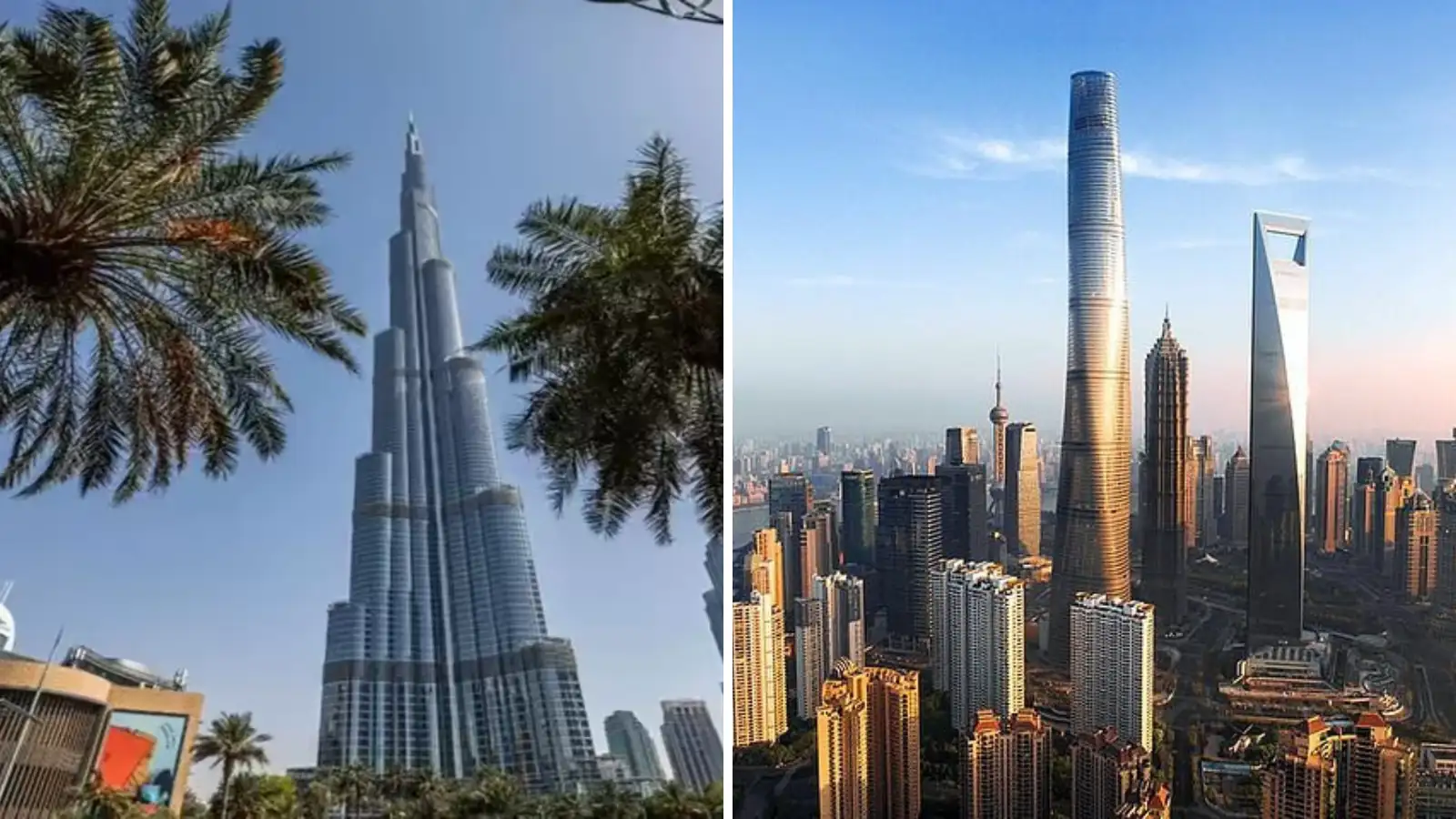
For more than a decade, the Burj Khalifa has dominated the list of the world’s tallest buildings. However, with ambitious projects like Saudi Arabia’s Jeddah Tower aiming to cross the 1,000-metre mark, the future of skyscraper records could soon change. Here are the top 5 tallest buildings in the world that currently define the global skyline.
1. Burj Khalifa – Dubai, UAE
Standing proudly above Dubai’s skyline, the Burj Khalifa remains the tallest building in the world since its official opening on January 4, 2010. This architectural masterpiece is a symbol of Dubai’s rapid growth and global influence.
The tower features a mix of luxury residences, premium offices, hotels, and observation decks that attract millions of visitors every year. Its unique Y-shaped design not only offers breathtaking views but also helps reduce wind pressure, making it one of the most advanced skyscrapers ever built.
The Burj Khalifa’s observation decks provide stunning views of the Arabian Gulf and Dubai’s modern cityscape, making it one of the world’s most recognised landmarks.
2. Merdeka 118 – Kuala Lumpur, Malaysia
Located in Malaysia’s capital city, Merdeka 118 is the second-tallest building in the world and the tallest skyscraper in Southeast Asia. The tower gets its name from Malaysia’s independence, with “Merdeka” meaning freedom.
Featuring a distinctive diamond-shaped glass façade, the skyscraper combines modern design with cultural significance. It includes luxury residences, offices, a hotel, retail spaces, and a sky bridge offering panoramic views of Kuala Lumpur.
Merdeka 118 has become a symbol of Malaysia’s economic progress and its growing presence on the global architectural map.
3. Shanghai Tower – Shanghai, China
The Shanghai Tower is China’s tallest building and one of the most innovative skyscrapers in the world. Located in Shanghai’s financial hub, Lujiazui, the tower is known for its impressive twisting design.
The curved structure helps reduce wind resistance while improving energy efficiency. The building houses offices, hotels, cultural spaces, and one of the highest observation decks in the world.
Visitors can enjoy breathtaking views of Shanghai’s skyline from above, while the tower’s sustainable features highlight China’s focus on environmentally friendly urban development.
4. Makkah Royal Clock Tower – Mecca, Saudi Arabia
Part of the Abraj Al-Bait complex, the Makkah Royal Clock Tower is one of Saudi Arabia’s most iconic landmarks. Located near the Grand Mosque in Mecca, the tower plays an important role for millions of pilgrims visiting the holy city every year.
The skyscraper is famous for having one of the world’s largest clock faces and features a luxury hotel, prayer spaces, observation areas, and commercial facilities.
Combining modern engineering with Islamic architectural influences, the tower stands as a remarkable example of how traditional heritage and contemporary design can come together.
5. Ping An Finance Center – Shenzhen, China
The Ping An Finance Center dominates Shenzhen’s financial district and is among the tallest office buildings in the world. Its sleek, tapered design was created to withstand strong winds while maintaining structural stability.
The skyscraper mainly serves as a premium commercial hub, offering modern office spaces, conference facilities, and a high-altitude observation deck.
With its futuristic appearance and advanced engineering, the Ping An Finance Center reflects Shenzhen’s transformation into one of China’s leading financial and technology centres.
Future Of The World’s Tallest Buildings
The competition to build the world’s tallest skyscraper continues as countries look to create iconic landmarks that represent innovation and economic growth. Saudi Arabia’s upcoming Jeddah Tower, expected to reach around 1,008 metres, could become the first building to cross the one-kilometre height mark if completed as planned.
While the title of the tallest building may eventually change hands, these skyscrapers will continue to stand as symbols of human creativity, engineering brilliance, and the endless pursuit of reaching new heights.
For more than a decade, the Burj Khalifa has dominated the list of the world’s tallest buildings. However, with ambitious projects like Saudi Arabia’s Jeddah Tower aiming to cross the 1,000-metre mark, the future of skyscraper records could soon change. Here are the top 5 tallest buildings in the world that currently define the global skyline.
1. Burj Khalifa – Dubai, UAE
- Height: 828 metres (2,717 feet)
- Floors: 163
- Completed: 2010
Standing proudly above Dubai’s skyline, the Burj Khalifa remains the tallest building in the world since its official opening on January 4, 2010. This architectural masterpiece is a symbol of Dubai’s rapid growth and global influence.
The tower features a mix of luxury residences, premium offices, hotels, and observation decks that attract millions of visitors every year. Its unique Y-shaped design not only offers breathtaking views but also helps reduce wind pressure, making it one of the most advanced skyscrapers ever built.
The Burj Khalifa’s observation decks provide stunning views of the Arabian Gulf and Dubai’s modern cityscape, making it one of the world’s most recognised landmarks.
2. Merdeka 118 – Kuala Lumpur, Malaysia
- Height: 679 metres (2,227 feet)
- Floors: 118
- Completed: 2023
Located in Malaysia’s capital city, Merdeka 118 is the second-tallest building in the world and the tallest skyscraper in Southeast Asia. The tower gets its name from Malaysia’s independence, with “Merdeka” meaning freedom.
Featuring a distinctive diamond-shaped glass façade, the skyscraper combines modern design with cultural significance. It includes luxury residences, offices, a hotel, retail spaces, and a sky bridge offering panoramic views of Kuala Lumpur.
Merdeka 118 has become a symbol of Malaysia’s economic progress and its growing presence on the global architectural map.
3. Shanghai Tower – Shanghai, China
- Height: 632 metres (2,073 feet)
- Floors: 128
- Completed: 2015
The Shanghai Tower is China’s tallest building and one of the most innovative skyscrapers in the world. Located in Shanghai’s financial hub, Lujiazui, the tower is known for its impressive twisting design.
You may also like
- Delhi lawyer living in London says why she will never return to Indian corporate culture: 'I don't get any emails after work; I actually have time to pursue my hobbies'
- Kangana Ranaut Celebrates Friendship Day with Gen-Z Message Amid Controversy
- Why Pashupatinath Is One of Shiva's Most Powerful Forms
- On July 24, a passenger packed a power bank in an overhead bin; minutes later it caught fire on a China Eastern flight, prompting airlines to tighten battery rules
- Mind Game, an Indian short brings themes of mystery, suspense and social issues to the festival circuit
The curved structure helps reduce wind resistance while improving energy efficiency. The building houses offices, hotels, cultural spaces, and one of the highest observation decks in the world.
Visitors can enjoy breathtaking views of Shanghai’s skyline from above, while the tower’s sustainable features highlight China’s focus on environmentally friendly urban development.
4. Makkah Royal Clock Tower – Mecca, Saudi Arabia
- Height: 601 metres (1,972 feet)
- Floors: 120
- Completed: 2012
Part of the Abraj Al-Bait complex, the Makkah Royal Clock Tower is one of Saudi Arabia’s most iconic landmarks. Located near the Grand Mosque in Mecca, the tower plays an important role for millions of pilgrims visiting the holy city every year.
The skyscraper is famous for having one of the world’s largest clock faces and features a luxury hotel, prayer spaces, observation areas, and commercial facilities.
Combining modern engineering with Islamic architectural influences, the tower stands as a remarkable example of how traditional heritage and contemporary design can come together.
5. Ping An Finance Center – Shenzhen, China
- Height: 599 metres (1,965 feet)
- Floors: 115
- Completed: 2017
The Ping An Finance Center dominates Shenzhen’s financial district and is among the tallest office buildings in the world. Its sleek, tapered design was created to withstand strong winds while maintaining structural stability.
The skyscraper mainly serves as a premium commercial hub, offering modern office spaces, conference facilities, and a high-altitude observation deck.
With its futuristic appearance and advanced engineering, the Ping An Finance Center reflects Shenzhen’s transformation into one of China’s leading financial and technology centres.
Future Of The World’s Tallest Buildings
The competition to build the world’s tallest skyscraper continues as countries look to create iconic landmarks that represent innovation and economic growth. Saudi Arabia’s upcoming Jeddah Tower, expected to reach around 1,008 metres, could become the first building to cross the one-kilometre height mark if completed as planned.
While the title of the tallest building may eventually change hands, these skyscrapers will continue to stand as symbols of human creativity, engineering brilliance, and the endless pursuit of reaching new heights.






Loving Newspoint? Download the app now
