
The Hidden Reason Old Terracotta Pots Can Be Better for Certain Plants

There is something strangely satisfying about an old terracotta pot. Its colour may have faded, the surface may be covered with pale mineral marks and tiny imperfections, and the edges may show years of exposure to sun and rain. Yet experienced gardeners often continue using these pots long after newer containers have been bought.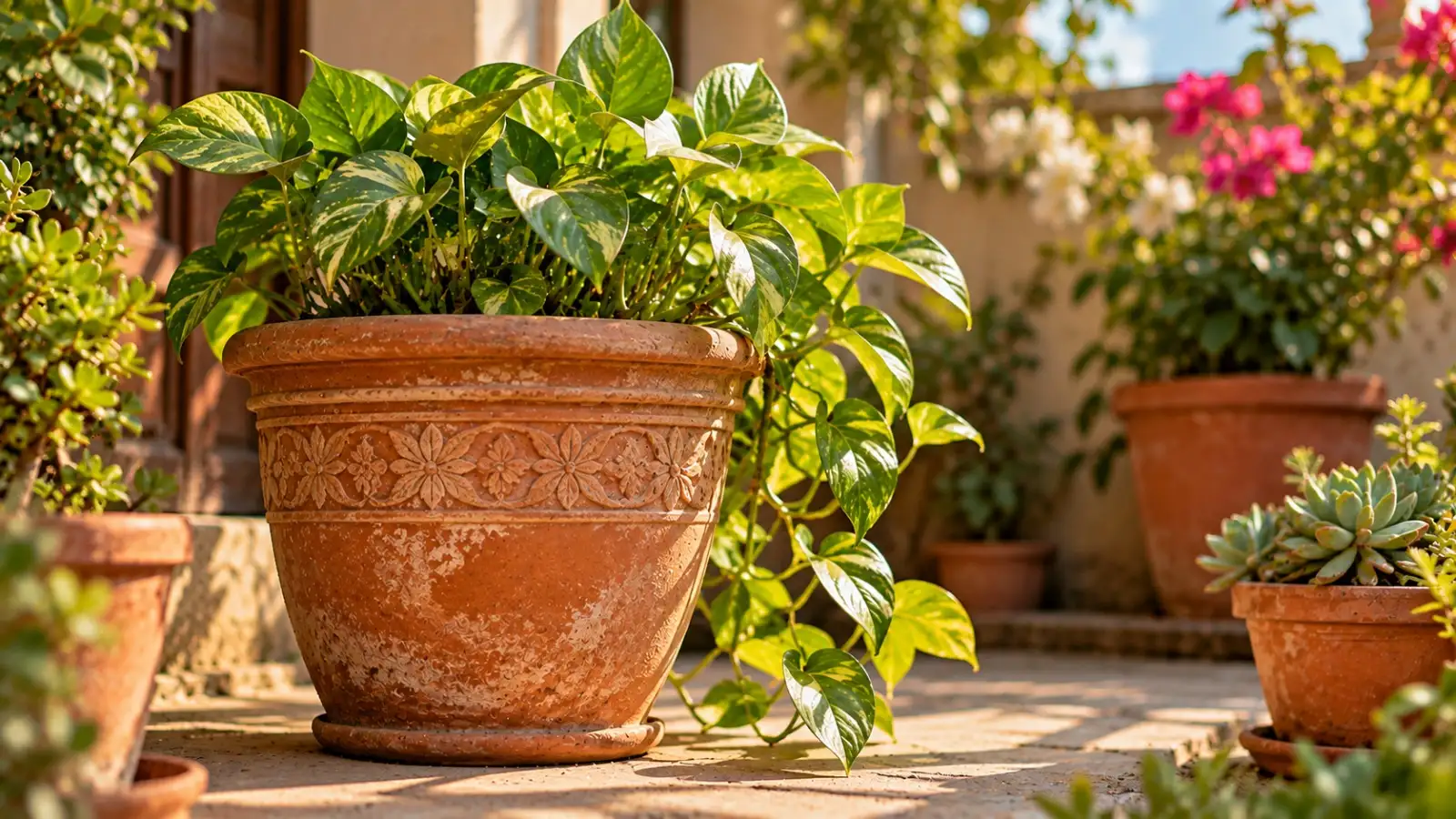
Sometimes, plants growing in an old clay pot appear to settle in particularly well. The soil dries at a manageable rate, roots seem less affected by excess moisture and plants that dislike constantly wet compost can look healthier. This has led to a common gardening belief that old terracotta pots somehow become better with age.
The reality is more interesting.
An old terracotta pot does not automatically become healthier for plants simply because it has been used for years. Its biggest advantage comes from the properties of terracotta itself. Unglazed clay is porous, allowing moisture to move through the sides of the container and evaporate into the surrounding air. This can create a noticeably different root environment compared with plastic or glazed pots.
For certain plants, especially those that dislike waterlogged soil, that difference can be extremely useful.
Unlike plastic, unglazed terracotta contains tiny pores. When the potting mix is wet, some moisture can move towards the sides of the container and evaporate. University of Illinois Extension notes that clay and terracotta containers lose water faster than non-porous materials such as plastic and glazed ceramic.
This creates a useful form of moisture control. Water does not remain confined to the soil until it eventually escapes through the drainage hole. Some moisture can also leave through the pot walls.
For plants that prefer their growing medium to dry between waterings, this can make a significant difference.
Succulents, cacti and several Mediterranean-style plants generally perform better when their roots are not sitting in persistently wet compost. Overwatering can reduce the amount of air available around roots and create conditions that encourage root problems.
Terracotta can help in this situation because the porous container encourages faster drying. Illinois Extension specifically recommends clay and terracotta pots for succulents because their porous nature allows the soil to dry more quickly.
This does not mean terracotta is automatically the best container for every succulent. The soil mix, drainage holes, sunlight, humidity and watering routine still matter. But when all other conditions are appropriate, the pot material can make moisture management easier.
Many gardeners consider this a sign that the pot has become "seasoned". In reality, the deposits are usually associated with minerals and salts left behind as water moves through the pot and evaporates.
The appearance can make an old container look completely different from a new one. Instead of the bright orange colour of fresh terracotta, the surface may develop muted shades of brown, grey and white.
These deposits are not proof that the pot has become biologically superior. They are evidence that the container has been exposed to water and growing conditions over time.
The important point is that the underlying terracotta remains porous, provided the pores have not become heavily blocked.
A gardener who has used the same terracotta container for several years knows how it behaves.
They know how quickly it dries in summer.
They know how heavy it becomes after watering.
They know which plants have grown well in it.
They may also know where the pot performs best, whether that is a sunny balcony, a shaded windowsill or a sheltered garden corner.
This accumulated experience can create the impression that the old pot itself is responsible for better growth.
In reality, the gardener may simply have become better at managing the plant.
The outside of a terracotta pot can change appearance when the interior is wet. The pot may look darker after watering and gradually become lighter as moisture leaves the container.
The container can also become noticeably lighter as it dries.
For new gardeners, these changes can provide useful information about when watering may actually be necessary. Illinois Extension recommends checking the moisture of container plants rather than following a rigid watering schedule because factors such as plant type, temperature, humidity, light and pot size all influence how quickly soil dries.
This can make an old terracotta pot surprisingly helpful as a visual and physical watering indicator.
They also need access to oxygen.
When soil remains saturated for long periods, the air spaces within the growing medium become filled with water. That can create conditions in which roots struggle to obtain enough oxygen.
This is one reason proper drainage matters so much in container gardening. University of Minnesota Extension notes that most container plants prefer moist rather than persistently soggy soil, while University of Illinois Extension also stresses that excess water must be able to escape.
Because terracotta can lose moisture through its sides, it can help prevent the growing medium from remaining excessively wet.
That does not mean terracotta directly supplies oxygen to roots. Rather, its drying behaviour can contribute to a root environment where excessive moisture is less likely to persist.
There is no general rule that says an old terracotta pot will grow plants better than a new one.
The important property is the material.
A new unglazed clay pot is already porous. It does not need several years of use before it begins allowing moisture to move through its walls.
An old pot may look more attractive, feel more established and have accumulated mineral staining, but those characteristics should not automatically be interpreted as improved plant-growing performance.
In many cases, a new terracotta pot can provide essentially the same basic moisture-management advantage.
Used containers can carry remnants of previous growing problems.
Old soil particles, plant debris, fungal material, insect pests and mineral deposits can remain inside a container. If a previous plant suffered from a disease, reusing the pot without cleaning it can potentially transfer problems to a new plant.
That is why cleaning reused containers is important, particularly when a previous plant was unhealthy. Illinois Extension recommends disinfecting reused containers before planting.
So the best old terracotta pot is not necessarily the dirtiest one.
A well-maintained, cleaned and structurally sound old pot can be much more useful.
In a warm, humid environment, the growing medium may remain wet for longer than expected, especially when a plant is kept indoors or receives limited air movement.
A porous terracotta container can encourage additional moisture loss.
However, this benefit can become a disadvantage during extremely hot or dry weather. Because water escapes more readily, plants in terracotta can require more frequent watering than the same plants in plastic containers.
This is why there is no universally perfect pot material.
The right choice depends on the plant and the growing conditions.
The growing medium needs a reliable way for excess water to leave the container. University of Illinois Extension recommends containers with drainage holes and notes that multiple holes can provide better drainage than a single opening.
Before reusing an old pot, check the hole carefully.
Remove compacted soil and debris. Look for cracks that could cause the container to fail. Make sure water can move freely through the opening.
A porous pot with poor drainage is still a poorly draining pot.
It looks natural.
Fresh terracotta has a clean, uniform appearance. Older pots develop stains, scratches, faded surfaces and subtle colour changes. When placed among foliage, these imperfections can make a garden look more established.
The container begins to look as though it belongs to the garden rather than having been recently purchased for it.
That visual effect may have nothing to do with plant growth, but it explains why old terracotta remains popular even when modern containers offer greater convenience.
Succulents and cacti are obvious examples because their growing media generally need to dry between waterings. Some herbs and plants adapted to drier Mediterranean conditions can also perform well when moisture is not retained excessively.
However, plants that require consistently moist conditions may struggle in unglazed terracotta because the container can increase water loss.
Illinois Extension specifically warns that certain moisture-loving plants, including some carnivorous plants, can dry out too quickly in porous terracotta and may perform better in plastic or glazed containers.
This is an important lesson for gardeners.
A pot should be chosen according to the plant, not simply because the container looks attractive.
The pot itself does not magically become better with age. Instead, terracotta has a natural physical property that can be useful for particular plants. Its porous walls allow moisture to escape, helping some growing media dry faster than they would in non-porous containers.
Years of use can then add other factors. The gardener becomes familiar with the container, mineral deposits change its appearance and the pot may have already proved successful with certain plants.
What looks like an old gardening secret may therefore be a combination of material science, plant requirements and years of practical experience.
A few stains and faded patches are harmless from an aesthetic point of view. What matters more is whether the pot remains structurally sound, whether its drainage hole works and whether it has been cleaned properly before being reused.
If those conditions are met, an old clay container can continue serving a plant for years.
And perhaps that is the real appeal of terracotta. It does not need to remain pristine to remain useful. Unlike many modern containers designed to look new for as long as possible, an old clay pot can become more visually interesting as it ages.
For the right plant, in the right environment, that combination of porous clay, reliable drainage and gradual weathering can create a remarkably practical home for roots.
Sometimes, plants growing in an old clay pot appear to settle in particularly well. The soil dries at a manageable rate, roots seem less affected by excess moisture and plants that dislike constantly wet compost can look healthier. This has led to a common gardening belief that old terracotta pots somehow become better with age.
The reality is more interesting.
An old terracotta pot does not automatically become healthier for plants simply because it has been used for years. Its biggest advantage comes from the properties of terracotta itself. Unglazed clay is porous, allowing moisture to move through the sides of the container and evaporate into the surrounding air. This can create a noticeably different root environment compared with plastic or glazed pots.
For certain plants, especially those that dislike waterlogged soil, that difference can be extremely useful.
1. Terracotta allows moisture to escape through the sides
The biggest reason plants can perform differently in terracotta is the material itself.Unlike plastic, unglazed terracotta contains tiny pores. When the potting mix is wet, some moisture can move towards the sides of the container and evaporate. University of Illinois Extension notes that clay and terracotta containers lose water faster than non-porous materials such as plastic and glazed ceramic.
This creates a useful form of moisture control. Water does not remain confined to the soil until it eventually escapes through the drainage hole. Some moisture can also leave through the pot walls.
For plants that prefer their growing medium to dry between waterings, this can make a significant difference.
2. Old pots can become particularly useful for plants that hate soggy roots
Not every plant wants the same amount of moisture.Succulents, cacti and several Mediterranean-style plants generally perform better when their roots are not sitting in persistently wet compost. Overwatering can reduce the amount of air available around roots and create conditions that encourage root problems.
Terracotta can help in this situation because the porous container encourages faster drying. Illinois Extension specifically recommends clay and terracotta pots for succulents because their porous nature allows the soil to dry more quickly.
This does not mean terracotta is automatically the best container for every succulent. The soil mix, drainage holes, sunlight, humidity and watering routine still matter. But when all other conditions are appropriate, the pot material can make moisture management easier.
3. The pot can become covered with mineral deposits over time
Look closely at an old terracotta pot and you may notice a white or pale crust spreading across its surface.Many gardeners consider this a sign that the pot has become "seasoned". In reality, the deposits are usually associated with minerals and salts left behind as water moves through the pot and evaporates.
The appearance can make an old container look completely different from a new one. Instead of the bright orange colour of fresh terracotta, the surface may develop muted shades of brown, grey and white.
These deposits are not proof that the pot has become biologically superior. They are evidence that the container has been exposed to water and growing conditions over time.
The important point is that the underlying terracotta remains porous, provided the pores have not become heavily blocked.
4. Years of use can make a pot more familiar to the gardener
There is another advantage to old pots that has little to do with chemistry.A gardener who has used the same terracotta container for several years knows how it behaves.
They know how quickly it dries in summer.
They know how heavy it becomes after watering.
They know which plants have grown well in it.
They may also know where the pot performs best, whether that is a sunny balcony, a shaded windowsill or a sheltered garden corner.
This accumulated experience can create the impression that the old pot itself is responsible for better growth.
In reality, the gardener may simply have become better at managing the plant.
5. Terracotta can make overwatering easier to spot
One overlooked advantage of porous pots is that they provide physical clues about moisture.The outside of a terracotta pot can change appearance when the interior is wet. The pot may look darker after watering and gradually become lighter as moisture leaves the container.
The container can also become noticeably lighter as it dries.
For new gardeners, these changes can provide useful information about when watering may actually be necessary. Illinois Extension recommends checking the moisture of container plants rather than following a rigid watering schedule because factors such as plant type, temperature, humidity, light and pot size all influence how quickly soil dries.
This can make an old terracotta pot surprisingly helpful as a visual and physical watering indicator.
6. Some roots benefit from a drier, more aerated environment
Healthy roots need more than water.They also need access to oxygen.
When soil remains saturated for long periods, the air spaces within the growing medium become filled with water. That can create conditions in which roots struggle to obtain enough oxygen.
This is one reason proper drainage matters so much in container gardening. University of Minnesota Extension notes that most container plants prefer moist rather than persistently soggy soil, while University of Illinois Extension also stresses that excess water must be able to escape.
Because terracotta can lose moisture through its sides, it can help prevent the growing medium from remaining excessively wet.
That does not mean terracotta directly supplies oxygen to roots. Rather, its drying behaviour can contribute to a root environment where excessive moisture is less likely to persist.
7. Old terracotta is not necessarily better than new terracotta
This is where gardening folklore needs to be separated from horticultural fact.There is no general rule that says an old terracotta pot will grow plants better than a new one.
The important property is the material.
A new unglazed clay pot is already porous. It does not need several years of use before it begins allowing moisture to move through its walls.
An old pot may look more attractive, feel more established and have accumulated mineral staining, but those characteristics should not automatically be interpreted as improved plant-growing performance.
In many cases, a new terracotta pot can provide essentially the same basic moisture-management advantage.
8. Old pots can have one major disadvantage
There is a reason gardeners should not simply take an old pot, add fresh compost and immediately plant something new.Used containers can carry remnants of previous growing problems.
Old soil particles, plant debris, fungal material, insect pests and mineral deposits can remain inside a container. If a previous plant suffered from a disease, reusing the pot without cleaning it can potentially transfer problems to a new plant.
That is why cleaning reused containers is important, particularly when a previous plant was unhealthy. Illinois Extension recommends disinfecting reused containers before planting.
So the best old terracotta pot is not necessarily the dirtiest one.
A well-maintained, cleaned and structurally sound old pot can be much more useful.
9. Terracotta can be particularly helpful in humid conditions
Climate also changes how useful a terracotta pot can be.In a warm, humid environment, the growing medium may remain wet for longer than expected, especially when a plant is kept indoors or receives limited air movement.
A porous terracotta container can encourage additional moisture loss.
However, this benefit can become a disadvantage during extremely hot or dry weather. Because water escapes more readily, plants in terracotta can require more frequent watering than the same plants in plastic containers.
This is why there is no universally perfect pot material.
The right choice depends on the plant and the growing conditions.
10. The pot's drainage hole still matters more than its age
An old terracotta pot can have all the characteristics gardeners love, but if its drainage hole is blocked, the plant can still suffer.The growing medium needs a reliable way for excess water to leave the container. University of Illinois Extension recommends containers with drainage holes and notes that multiple holes can provide better drainage than a single opening.
Before reusing an old pot, check the hole carefully.
Remove compacted soil and debris. Look for cracks that could cause the container to fail. Make sure water can move freely through the opening.
A porous pot with poor drainage is still a poorly draining pot.
11. The weathered appearance has a benefit that has nothing to do with plant health
There is also a reason gardeners continue to love old terracotta even when a newer container could perform just as well.It looks natural.
Fresh terracotta has a clean, uniform appearance. Older pots develop stains, scratches, faded surfaces and subtle colour changes. When placed among foliage, these imperfections can make a garden look more established.
The container begins to look as though it belongs to the garden rather than having been recently purchased for it.
That visual effect may have nothing to do with plant growth, but it explains why old terracotta remains popular even when modern containers offer greater convenience.
12. Which plants can benefit most from terracotta?
Terracotta is particularly useful for plants that prefer good drainage and dislike constantly wet soil.Succulents and cacti are obvious examples because their growing media generally need to dry between waterings. Some herbs and plants adapted to drier Mediterranean conditions can also perform well when moisture is not retained excessively.
However, plants that require consistently moist conditions may struggle in unglazed terracotta because the container can increase water loss.
Illinois Extension specifically warns that certain moisture-loving plants, including some carnivorous plants, can dry out too quickly in porous terracotta and may perform better in plastic or glazed containers.
This is an important lesson for gardeners.
A pot should be chosen according to the plant, not simply because the container looks attractive.
Why old terracotta pots sometimes seem to work better
The mystery surrounding old terracotta pots becomes much easier to understand when the different factors are put together.The pot itself does not magically become better with age. Instead, terracotta has a natural physical property that can be useful for particular plants. Its porous walls allow moisture to escape, helping some growing media dry faster than they would in non-porous containers.
Years of use can then add other factors. The gardener becomes familiar with the container, mineral deposits change its appearance and the pot may have already proved successful with certain plants.
You may also like
- "We know the risk..", she traced 76 missing children across 4 states: Meet Seema Dhaka, the Delhi head constable who earned a historic Delhi Police promotion
- No more worrying about confirmed tickets for Diwali and Chhath; 9 special trains to run starting October 1st
- "Pay ₹1 crore in taxes yet still stand in line": Businessman calls Indian passport 'useless'
- Why Is Lord Rama Called Maryada Purushottam?
- Bengaluru CEO says company will not hire men from UP, Bihar, Rajasthan and MP, sparks debate over workplace safety and bias
What looks like an old gardening secret may therefore be a combination of material science, plant requirements and years of practical experience.
The best old pot is one that still works
An old terracotta pot does not need to look perfect to be useful.A few stains and faded patches are harmless from an aesthetic point of view. What matters more is whether the pot remains structurally sound, whether its drainage hole works and whether it has been cleaned properly before being reused.
If those conditions are met, an old clay container can continue serving a plant for years.
And perhaps that is the real appeal of terracotta. It does not need to remain pristine to remain useful. Unlike many modern containers designed to look new for as long as possible, an old clay pot can become more visually interesting as it ages.
For the right plant, in the right environment, that combination of porous clay, reliable drainage and gradual weathering can create a remarkably practical home for roots.






Loving Newspoint? Download the app now
