
Why We Crave Snacks at Night: The Science Behind Midnight Hunger

It is a scenario familiar to millions: the house is quiet, the day’s work is complete, and you are winding down for bed. Yet, despite having eaten a satisfying dinner just a few hours earlier, a sudden, powerful urge strikes. You find yourself wandering into the kitchen, opening the fridge door, and searching for a late-night snack, usually something sweet, salty, or rich in carbohydrates.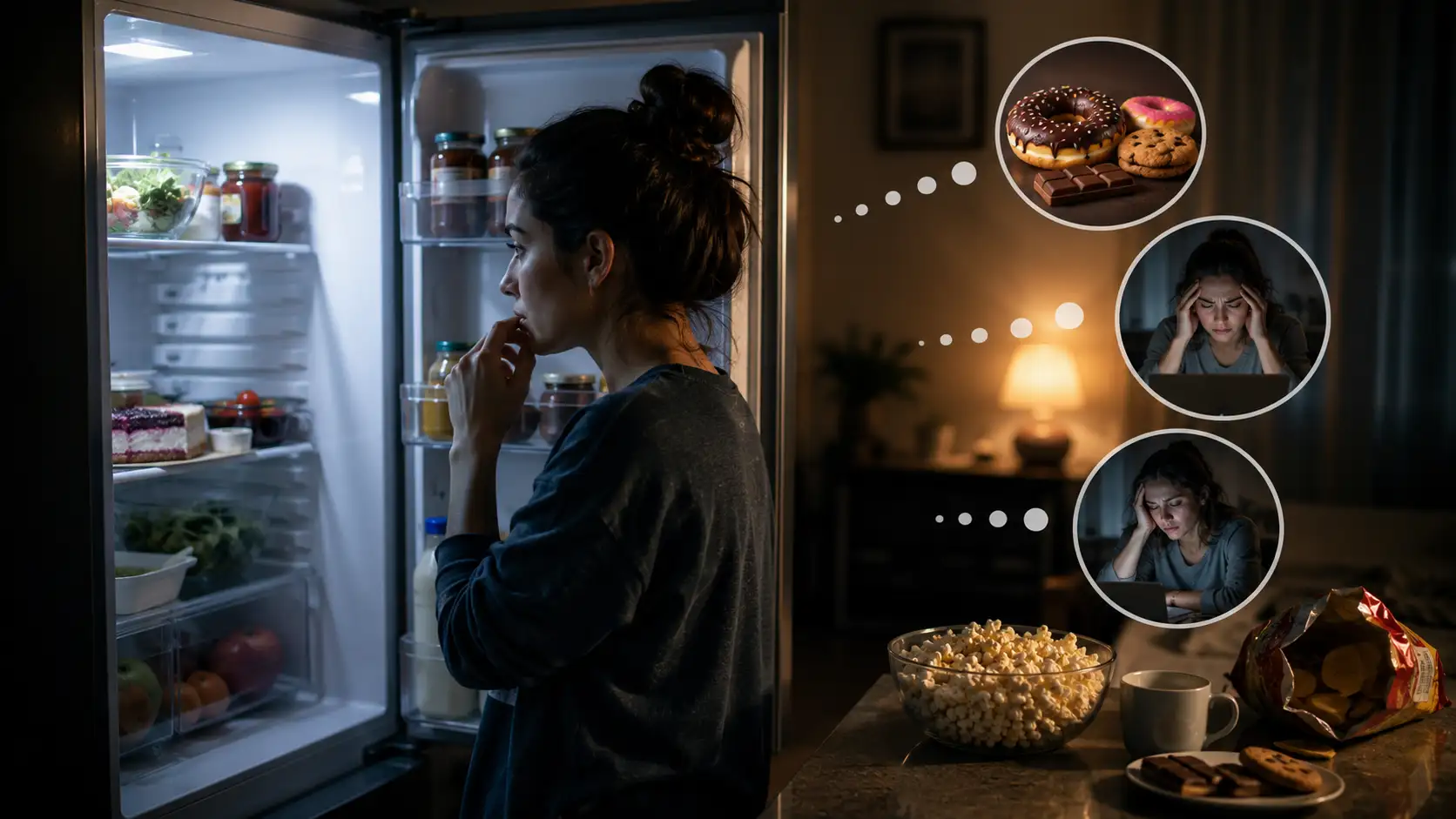
While midnight cravings are often dismissed as a simple lack of willpower, psychological and biological research reveals a far more complex story. Late-night hunger is not just about physical appetite; it is deeply tied to our internal biological clocks, stress levels, and emotional state.
Human biological clocks are naturally programmed to increase appetite and cravings for sweet and savoury foods in the late evening. Historically, this mechanism helped our ancient ancestors store energy in the form of fat to survive long nights without food. Although modern humans have continuous access to food around the clock, this ancient biological drive remains hardwired into our systems, subtly prompting us to seek out high-calorie snacks before sleep.
Throughout a busy day, the body releases cortisol, a hormone associated with stress. Elevated cortisol levels stimulate appetite and specifically trigger cravings for comfort foods packed with sugar and fats. When we eat these foods, our brain releases dopamine, a neurochemical responsible for feelings of pleasure and reward. Consequently, midnight snacking often serves as a form of self-soothing, using food to unwind and temporarily relieve mental tension.
By the end of the evening, your brain’s prefrontal cortex, the area responsible for self-control, logical thinking, and impulse management becomes exhausted. With your mental energy depleted, your ability to resist instant gratification plummets. A healthy option that feels easy to choose at breakfast becomes much harder to opt for when your willpower is drained at midnight.
By recognizing that midnight cravings are a natural response to biology, stress, and mental fatigue, you can approach your late-night eating habits with understanding rather than frustration, leading to healthier choices overall.
While midnight cravings are often dismissed as a simple lack of willpower, psychological and biological research reveals a far more complex story. Late-night hunger is not just about physical appetite; it is deeply tied to our internal biological clocks, stress levels, and emotional state.
The Influence of the Circadian Rhythm
Our bodies operate on a natural twenty-four-hour internal clock known as the circadian rhythm. This system regulates sleep cycles, hormone production, body temperature, and appetite. Evolutionary biology plays a surprising role here.Human biological clocks are naturally programmed to increase appetite and cravings for sweet and savoury foods in the late evening. Historically, this mechanism helped our ancient ancestors store energy in the form of fat to survive long nights without food. Although modern humans have continuous access to food around the clock, this ancient biological drive remains hardwired into our systems, subtly prompting us to seek out high-calorie snacks before sleep.
Stress, Cortisol, and Emotional Eating
For many people, the late evening is the first moment of the day when work responsibilities, digital notifications, and family demands finally quieten down. When you finally slow down, suppressed stress and emotional exhaustion from the daytime can surface.You may also like
- Rain or shine, couples are saying 'I do' this monsoon
- This Kerala girl climbed North Africa's highest peak at 8; her father's parenting came down to one question: "I asked her if she wanted to give up... she said a strict no"
- From lullabies to careers: Keeping screens aside
- Underarm odor: Do you often experience the smell of sweat in your armpits? This simple trick while showering will eliminate the odor problem
- A balcony filled with butterflies asks us to notice small miracles – something difficult to find in our world
Throughout a busy day, the body releases cortisol, a hormone associated with stress. Elevated cortisol levels stimulate appetite and specifically trigger cravings for comfort foods packed with sugar and fats. When we eat these foods, our brain releases dopamine, a neurochemical responsible for feelings of pleasure and reward. Consequently, midnight snacking often serves as a form of self-soothing, using food to unwind and temporarily relieve mental tension.
Decision Fatigue and Brain Power
Another critical factor behind late-night eating is a psychological phenomenon called decision fatigue. Throughout the day, you make hundreds of conscious decisions, from solving work problems to managing family schedules and maintaining self-discipline.By the end of the evening, your brain’s prefrontal cortex, the area responsible for self-control, logical thinking, and impulse management becomes exhausted. With your mental energy depleted, your ability to resist instant gratification plummets. A healthy option that feels easy to choose at breakfast becomes much harder to opt for when your willpower is drained at midnight.
How to Manage Late-Night Cravings
Understanding the psychological triggers behind midnight cravings makes managing them far easier. Rather than relying purely on willpower, try implementing a few supportive habits:- Eat balanced meals during the day: Ensure your daytime meals contain sufficient protein, healthy fats, and complex carbohydrates to prevent genuine physical hunger late at night.
- Establish an evening wind-down routine: Swap late-night television or scrolling on your phone for relaxing, non-food activities like reading, taking a warm bath, or gentle stretching.
- Prioritise quality sleep: Chronic sleep deprivation disrupts hunger hormones, significantly increasing late-night food cravings the following evening.
By recognizing that midnight cravings are a natural response to biology, stress, and mental fatigue, you can approach your late-night eating habits with understanding rather than frustration, leading to healthier choices overall.






Loving Newspoint? Download the app now
