
Vietnam’s Train Street: How a Narrow Railway Became Hanoi’s Biggest Tourist Attraction

Vietnam’s Train Street has become one of the most talked-about travel attractions in Southeast Asia, drawing curious visitors from around the world. Located in the heart of Hanoi, this unique stretch of railway is famous for trains passing just inches away from homes, cafés, and tourists. The extraordinary sight has turned a simple residential neighbourhood into a social media phenomenon, making it a must-visit destination for travellers seeking unusual experiences.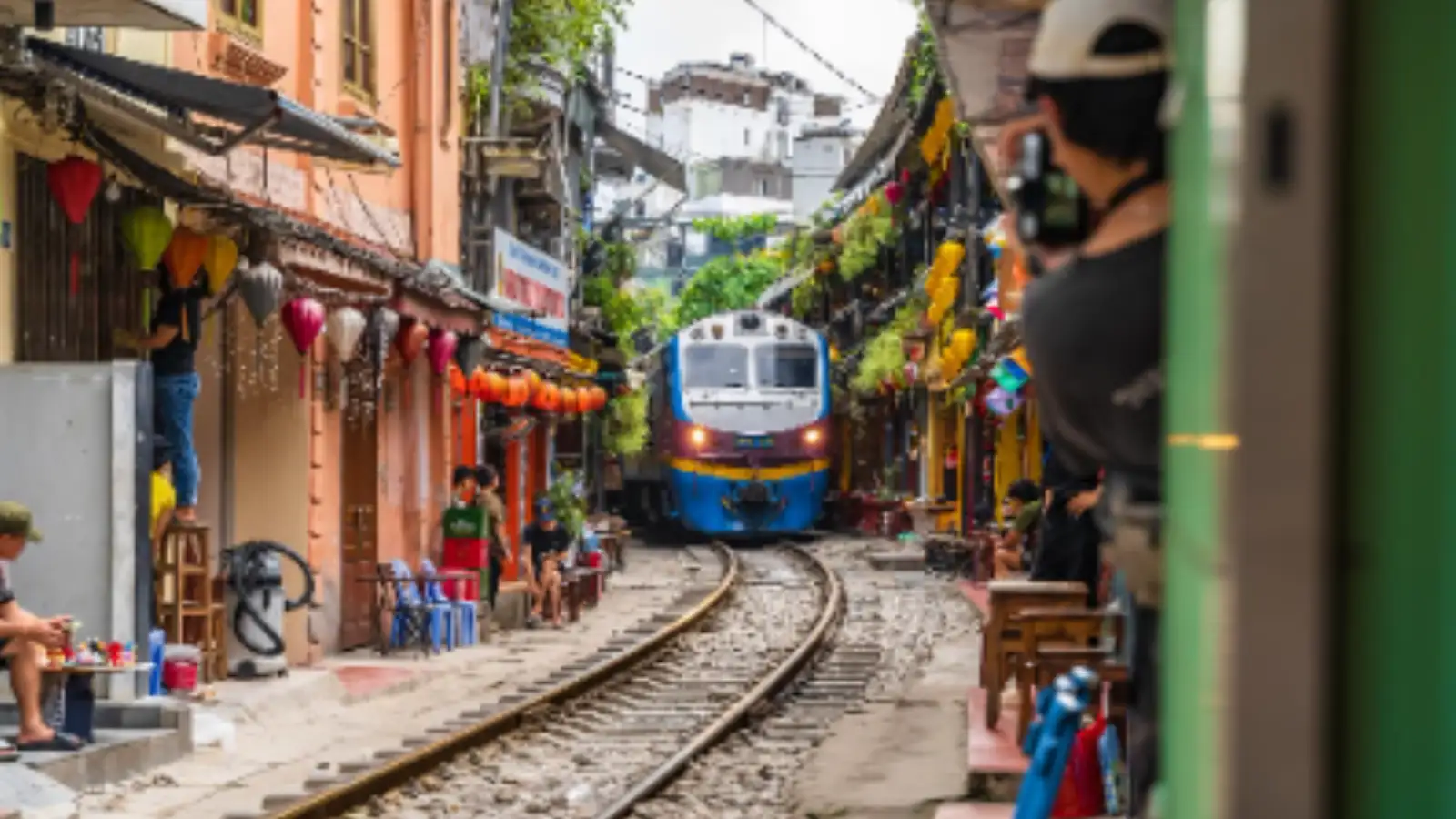
What Is Vietnam’s Train Street?
Nestled within Hanoi’s Old Quarter, Vietnam’s Train Street is a narrow railway corridor lined with tightly packed houses and small cafés. What makes the location remarkable is the incredibly close distance between the railway tracks and the surrounding buildings.
Several times a day, trains travel through the street, prompting residents and visitors to quickly move aside. Within moments of the train passing, life returns to normal as people resume sipping coffee, taking photographs, and enjoying the lively atmosphere.
Also Read: Stunning Places to Visit in Vietnam Beyond Hanoi and Ho Chi Minh City
How Did Vietnam’s Train Street Become Famous?
The street first gained international attention through travel blogs and viral social media posts. Videos showing trains squeezing through the narrow passage fascinated viewers worldwide, leading to a surge in tourism.
The dramatic contrast between everyday life and the powerful locomotives moving through the neighbourhood created the perfect recipe for online popularity. As travellers shared their experiences on platforms such as Instagram, TikTok, and YouTube, the location quickly became one of Hanoi’s most recognisable attractions.
A Unique Blend of Daily Life and Tourism
Unlike traditional tourist destinations, Vietnam’s Train Street offers visitors a glimpse into the daily routines of local residents. Families have lived alongside the railway for decades, adapting their lifestyles around the train schedule.
Today, many homes have transformed portions of their properties into cafés and small businesses, welcoming tourists who come to witness the famous train pass by. The result is a fascinating mix of local culture, community life, and modern tourism.
Safety Concerns and Government Restrictions
As visitor numbers increased, safety concerns also grew. Crowded tracks and tourists attempting to capture close-up photos raised the risk of accidents.
To improve safety, local authorities introduced restrictions and periodically limited access to parts of the railway corridor. Visitors are often advised to enter only through authorised cafés or designated areas where safety measures are in place.
These regulations aim to balance tourism with the safety of residents, visitors, and railway operations.
Also Read: Vietnam’s Lantern Festivals: The Magical Story Behind Floating Lights and Ancient Traditions
Best Time to Visit Vietnam’s Train Street
Many travellers plan their visit around scheduled train arrivals to experience the street at its most exciting. Arriving early allows visitors to explore the cafés, observe local life, and secure a good viewing spot before the train passes.
Since train schedules can change, travellers are encouraged to check the latest timings with local businesses or guides before making plans.
Why Vietnam’s Train Street Continues to Captivate Travellers
The enduring appeal of Vietnam’s Train Street lies in its uniqueness. Few places in the world offer such a close interaction between urban life and an active railway. The combination of history, culture, excitement, and photogenic scenery continues to attract travellers looking for experiences beyond the ordinary.
Whether you're a railway enthusiast, a photography lover, or simply an adventurous traveller, Vietnam’s Train Street remains one of Hanoi’s most unforgettable attractions.
Vietnam’s Train Street is more than just a viral travel hotspot - it is a living example of how communities adapt to unusual surroundings. Its blend of local character, thrilling train crossings, and global popularity has secured its place among Vietnam’s most iconic travel experiences. For visitors exploring Hanoi, it offers a memorable glimpse into a side of the city that cannot be found anywhere else.
What Is Vietnam’s Train Street?
Nestled within Hanoi’s Old Quarter, Vietnam’s Train Street is a narrow railway corridor lined with tightly packed houses and small cafés. What makes the location remarkable is the incredibly close distance between the railway tracks and the surrounding buildings.
Several times a day, trains travel through the street, prompting residents and visitors to quickly move aside. Within moments of the train passing, life returns to normal as people resume sipping coffee, taking photographs, and enjoying the lively atmosphere.
Also Read: Stunning Places to Visit in Vietnam Beyond Hanoi and Ho Chi Minh City
How Did Vietnam’s Train Street Become Famous?
The street first gained international attention through travel blogs and viral social media posts. Videos showing trains squeezing through the narrow passage fascinated viewers worldwide, leading to a surge in tourism.
The dramatic contrast between everyday life and the powerful locomotives moving through the neighbourhood created the perfect recipe for online popularity. As travellers shared their experiences on platforms such as Instagram, TikTok, and YouTube, the location quickly became one of Hanoi’s most recognisable attractions.
A Unique Blend of Daily Life and Tourism
Unlike traditional tourist destinations, Vietnam’s Train Street offers visitors a glimpse into the daily routines of local residents. Families have lived alongside the railway for decades, adapting their lifestyles around the train schedule.
Today, many homes have transformed portions of their properties into cafés and small businesses, welcoming tourists who come to witness the famous train pass by. The result is a fascinating mix of local culture, community life, and modern tourism.
Safety Concerns and Government Restrictions
As visitor numbers increased, safety concerns also grew. Crowded tracks and tourists attempting to capture close-up photos raised the risk of accidents.
You may also like
- Which famous city is made up of 118 small islands in Italy and attracts millions of visitors each year
- “They told me not to come to Bihar”: American traveller busts myths as his Darbhanga journey wins hearts online
- At 59, Salma Hayek just made leather Bermuda shorts the coolest trend of summer 2026
- Recurrent Miscarriage: What Investigations Should You Ask For
- Gold-Silver Price Today: What are the rates this morning? Check the prices for 18K, 22K, and 24K gold, as well as silver, in your city.
To improve safety, local authorities introduced restrictions and periodically limited access to parts of the railway corridor. Visitors are often advised to enter only through authorised cafés or designated areas where safety measures are in place.
These regulations aim to balance tourism with the safety of residents, visitors, and railway operations.
Also Read: Vietnam’s Lantern Festivals: The Magical Story Behind Floating Lights and Ancient Traditions
Best Time to Visit Vietnam’s Train Street
Many travellers plan their visit around scheduled train arrivals to experience the street at its most exciting. Arriving early allows visitors to explore the cafés, observe local life, and secure a good viewing spot before the train passes.
Since train schedules can change, travellers are encouraged to check the latest timings with local businesses or guides before making plans.
Why Vietnam’s Train Street Continues to Captivate Travellers
The enduring appeal of Vietnam’s Train Street lies in its uniqueness. Few places in the world offer such a close interaction between urban life and an active railway. The combination of history, culture, excitement, and photogenic scenery continues to attract travellers looking for experiences beyond the ordinary.
Whether you're a railway enthusiast, a photography lover, or simply an adventurous traveller, Vietnam’s Train Street remains one of Hanoi’s most unforgettable attractions.
Vietnam’s Train Street is more than just a viral travel hotspot - it is a living example of how communities adapt to unusual surroundings. Its blend of local character, thrilling train crossings, and global popularity has secured its place among Vietnam’s most iconic travel experiences. For visitors exploring Hanoi, it offers a memorable glimpse into a side of the city that cannot be found anywhere else.






More from our partners


Loving Newspoint? Download the app now
