
What Happens to a Plant When You Keep Moving It Around

Many houseplant owners love to redecorate their homes on a regular basis. You might decide that a potted fern looks better on a coffee table on Monday, shift it to a sunny windowsill on Wednesday, and then carry it into the hallway by Friday. While changing your furniture layout can give your living area a fresh look, your botanical companions may not share your enthusiasm for constant change. Plants are stationery organisms designed by nature to grow in one fixed position for their entire lives. Shifting them constantly disrupts their natural biological processes. Understanding what happens to a plant when you keep moving it around will help you keep your greenery happy, healthy, and thriving.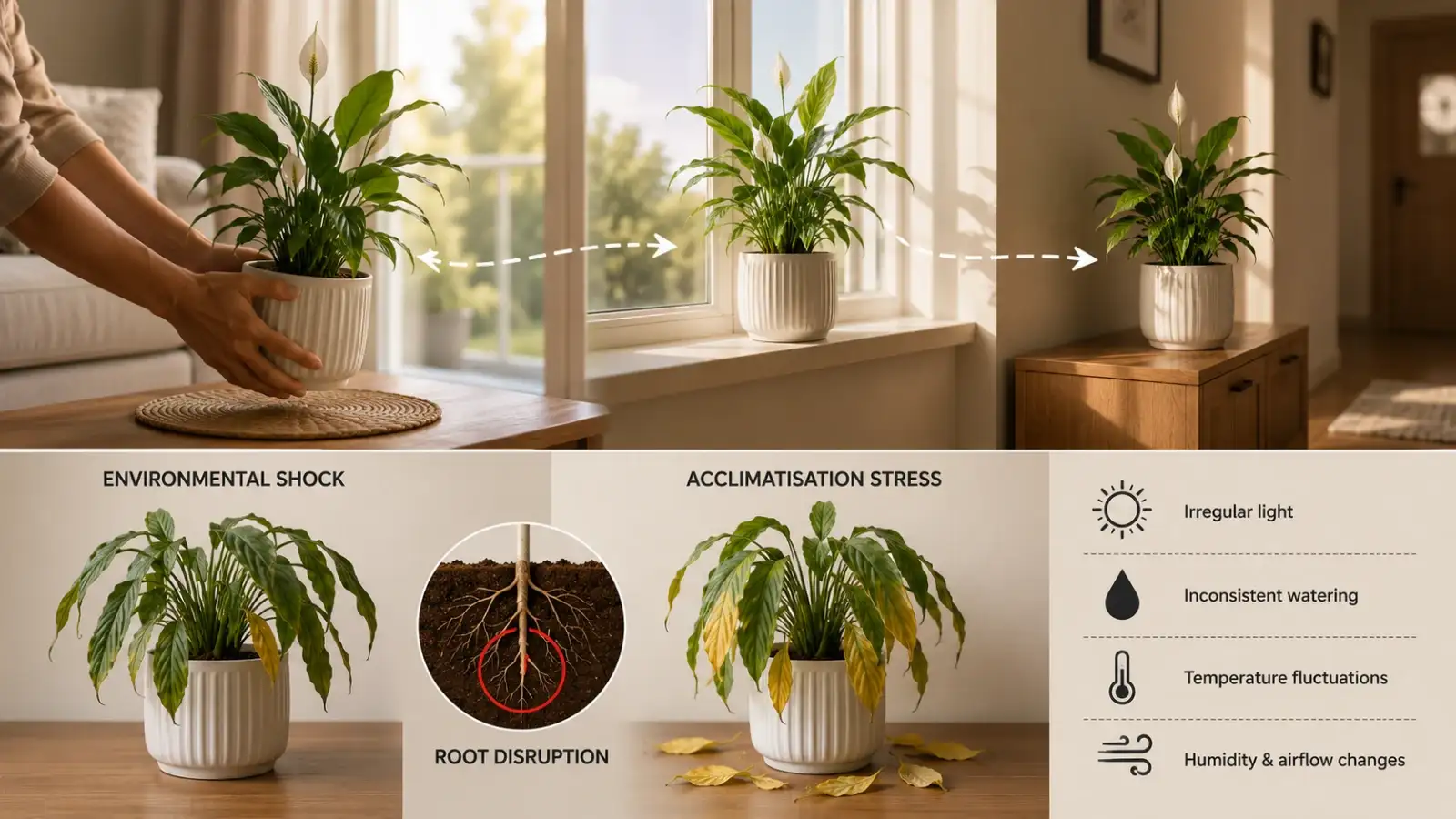
Plants adapt to light exposure by turning their leaves toward the sun, a process known as phototropism . When you constantly change the direction or intensity of light, the stems spend valuable energy bending back and forth to find the light source. This constant readjustment drains essential energy reserves that would otherwise go into producing fresh leaves, strong roots, and healthy flowers.
Furthermore, changing locations affects the moisture levels inside the pot. A plant positioned near a warm radiator or a breezy door will dry out much faster than one sitting in a quiet, humid bathroom. Shifting the pot between these different zones makes establishing a consistent watering schedule nearly impossible. The soil may end up constantly sodden or bone dry, leading to yellowing foliage, drooping stems, and root rot.
You might notice perfectly green leaves turning yellow and dropping onto the floor. This happens because the plant is trying to reduce its overall size so it needs less energy and water to survive in its unpredictable new environment. Instead of growing lush new stems, the plant spends all its metabolic energy attempting to adjust to its shifting conditions. To help your indoor greenery flourish, select a suitable spot with appropriate natural light and leave your plant to settle into its permanent home.
Environmental Shock and Light Adjustment Stress
The most immediate problem a houseplant faces during a move is a sudden change in microclimate. Light levels, humidity, temperature, and airflow vary dramatically from one spot in a room to another. When you shift a pot from a bright south facing window to a dim corner, the foliage suddenly loses access to the solar energy it relies on for photosynthesis.Plants adapt to light exposure by turning their leaves toward the sun, a process known as phototropism . When you constantly change the direction or intensity of light, the stems spend valuable energy bending back and forth to find the light source. This constant readjustment drains essential energy reserves that would otherwise go into producing fresh leaves, strong roots, and healthy flowers.
You may also like
- Natarajan Chandrasekaran - The outsider who steadied Tata Sons before a boardroom break with the Trusts
- Delhi traffic advisory: Red Fort full-dress rehearsal on August 13 to close key roads; check routes, bus and commercial vehicle restrictions
- How to Manage Anger: Understanding the Shadow Within
- Sadhguru Jaggi Vasudev's 'Disappearing Faces' captures faces and lives of the Himalayas
- Postpartum dry skin is real: Why new mothers may develop painfully dry hands and how to care for them
Root Disruption and Hidden Transplants Stress
Moving a pot around also causes physical disturbance beneath the soil line. Every time a plant is lifted, tilted, or carried, delicate fine root hairs can snap inside the potting mix. These tiny root hairs are responsible for absorbing water and vital soil nutrients. When they suffer damage, the root system struggles to keep up with the water demands of the upper leaves.Furthermore, changing locations affects the moisture levels inside the pot. A plant positioned near a warm radiator or a breezy door will dry out much faster than one sitting in a quiet, humid bathroom. Shifting the pot between these different zones makes establishing a consistent watering schedule nearly impossible. The soil may end up constantly sodden or bone dry, leading to yellowing foliage, drooping stems, and root rot.
Acclimatisation Energy Loss and Leaf Drop
When a plant experiences frequent environmental changes, it enters a state of chronic stress. In nature, plants adapt slowly to changing seasons, but they cannot handle rapid daily or weekly shifts in their surroundings. To protect itself from sudden environmental stress, a plant might trigger a self preservation mechanism known as leaf shedding.You might notice perfectly green leaves turning yellow and dropping onto the floor. This happens because the plant is trying to reduce its overall size so it needs less energy and water to survive in its unpredictable new environment. Instead of growing lush new stems, the plant spends all its metabolic energy attempting to adjust to its shifting conditions. To help your indoor greenery flourish, select a suitable spot with appropriate natural light and leave your plant to settle into its permanent home.






Loving Newspoint? Download the app now
