
Why Do Mountains Look Blue From a Distance? The Science Behind Nature's Beautiful Illusion

Mountains often appear deep blue or bluish-purple when viewed from far away, creating some of the most breathtaking landscapes on Earth. While it may seem like the rocks themselves are blue, the effect is actually a fascinating combination of light, atmosphere, and human vision. Here's why distant mountains take on their signature blue hue.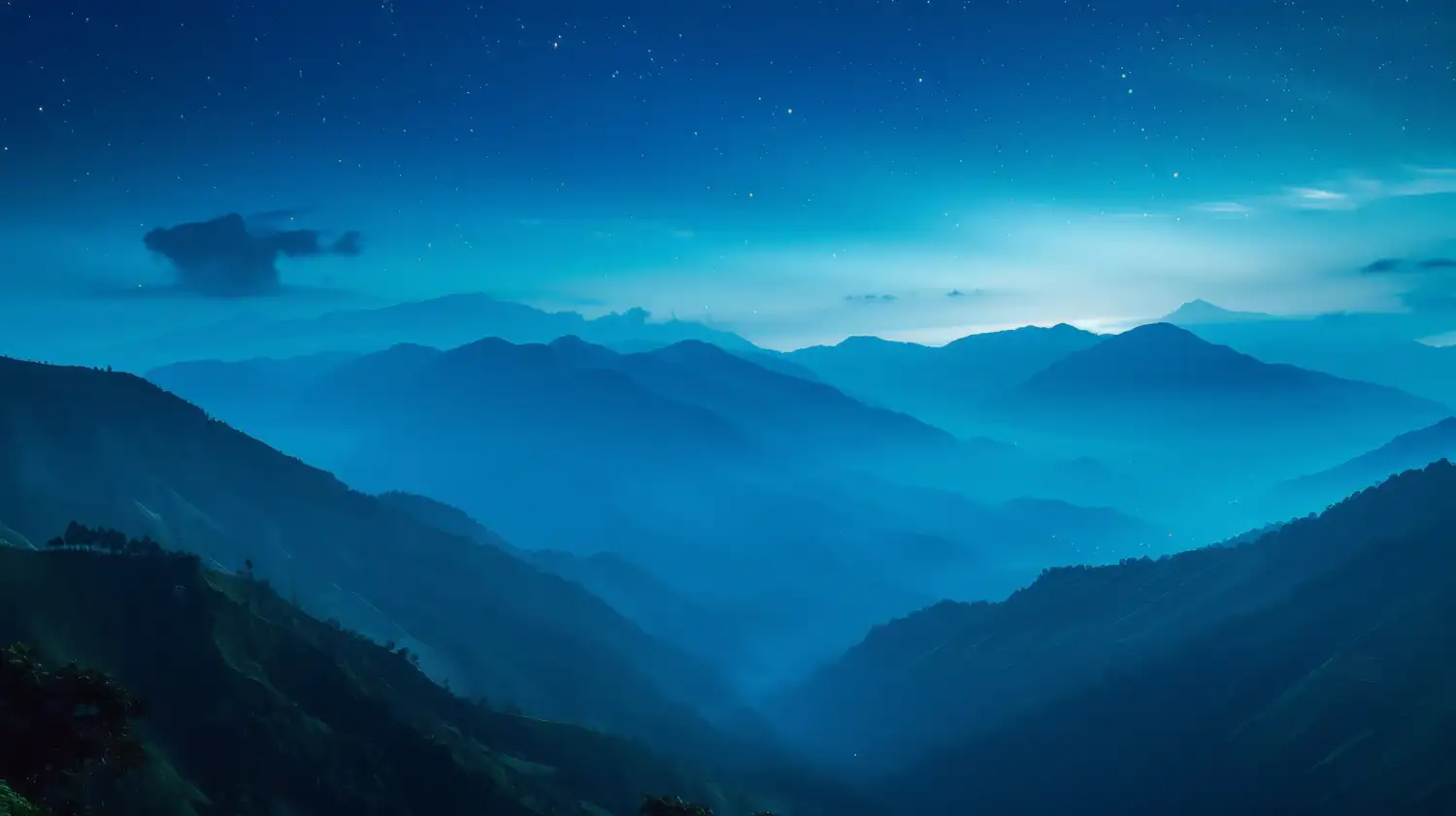
Atmospheric Haze Plays the Biggest Role
The farther away a mountain is, the more air lies between it and your eyes. Tiny particles of dust, water droplets, and other molecules suspended in the atmosphere scatter light, creating a hazy appearance that softens the mountain's true colors and gives it a bluish tint.
Blue Light Scatters More Easily
Sunlight contains all the colors of the visible spectrum. Shorter wavelengths, such as blue light, are scattered more efficiently by molecules in the atmosphere than longer wavelengths like red. As more scattered blue light reaches your eyes, distant mountains appear increasingly blue.
Distance Reduces Color Contrast
Objects that are far away lose contrast and fine detail because the atmosphere acts like a thin veil. The greens, browns, and grays of forests and rocks become muted, allowing the scattered blue light to dominate what we perceive.
Moisture in the Air Enhances the Effect
Humid weather often makes mountains appear even bluer. Water vapor and tiny droplets increase the amount of light scattering, strengthening the atmospheric haze and making distant peaks look softer and more vividly blue.
Forests Can Add to the Blue Appearance
Dense forests covering mountain slopes may contribute slightly to the effect. Some trees release tiny organic compounds into the air, which can form microscopic particles that enhance atmospheric haze. However, the blue appearance is still primarily caused by the scattering of light in the atmosphere rather than the trees themselves.
The Time of Day Makes a Difference
Mountains often appear bluest during the daytime when sunlight is bright and atmospheric scattering is strongest. Around sunrise and sunset, the light becomes warmer and richer in reds and oranges, so mountains may instead look purple, pink, or even golden depending on the conditions.
Weather Influences What You See
On exceptionally clear days with very little dust or humidity, distant mountains may appear sharper and closer to their natural colors. In hazy, humid, or slightly polluted conditions, the blue effect becomes much more noticeable because more light is scattered before reaching your eyes.
It's Similar to Why the Sky Is Blue
The same physical principle explains both phenomena. Earth's atmosphere scatters shorter blue wavelengths of sunlight more effectively than longer wavelengths. While the sky appears blue because of scattered sunlight in every direction, distant mountains look blue because that scattered light mixes with the mountain's reflected light before it reaches your eyes.
Artists Have Used This Effect for Centuries
Landscape painters often use a technique known as atmospheric perspective, depicting distant mountains in cooler blue tones while keeping nearby objects warmer and more detailed. This artistic approach mirrors how our eyes naturally perceive depth in real landscapes.
A Beautiful Blend of Science and Nature
The blue color of distant mountains isn't a property of the mountains themselves but a visual effect created by Earth's atmosphere. The combination of light scattering, atmospheric haze, distance, and weather produces one of nature's most iconic and beautiful optical illusions, reminding us that the air around us shapes how we see the world.
Disclaimer: The information in this article is based on publicly available online sources. NewsPoint does not independently verify every claim or detail presented.
Atmospheric Haze Plays the Biggest Role
The farther away a mountain is, the more air lies between it and your eyes. Tiny particles of dust, water droplets, and other molecules suspended in the atmosphere scatter light, creating a hazy appearance that softens the mountain's true colors and gives it a bluish tint. Blue Light Scatters More Easily
Sunlight contains all the colors of the visible spectrum. Shorter wavelengths, such as blue light, are scattered more efficiently by molecules in the atmosphere than longer wavelengths like red. As more scattered blue light reaches your eyes, distant mountains appear increasingly blue.Distance Reduces Color Contrast
Objects that are far away lose contrast and fine detail because the atmosphere acts like a thin veil. The greens, browns, and grays of forests and rocks become muted, allowing the scattered blue light to dominate what we perceive. Moisture in the Air Enhances the Effect
Humid weather often makes mountains appear even bluer. Water vapor and tiny droplets increase the amount of light scattering, strengthening the atmospheric haze and making distant peaks look softer and more vividly blue.You may also like
- The Dalai Lama at 91: What Compassion Now Requires
- Is a baby King Cobra (cobra hatchling) venomous? Here's what to do if one turns up in your home and garden
- Gyan Mudra Yoga: When the Hand Becomes a Teacher
- Taylor Swift and Travis Kelce's Wedding Festivities Set for Madison Square Garden
- Enrolments open for TOI's AI master class designed to prepare children for an AI-driven future
Forests Can Add to the Blue Appearance
Dense forests covering mountain slopes may contribute slightly to the effect. Some trees release tiny organic compounds into the air, which can form microscopic particles that enhance atmospheric haze. However, the blue appearance is still primarily caused by the scattering of light in the atmosphere rather than the trees themselves. The Time of Day Makes a Difference
Mountains often appear bluest during the daytime when sunlight is bright and atmospheric scattering is strongest. Around sunrise and sunset, the light becomes warmer and richer in reds and oranges, so mountains may instead look purple, pink, or even golden depending on the conditions. Weather Influences What You See
On exceptionally clear days with very little dust or humidity, distant mountains may appear sharper and closer to their natural colors. In hazy, humid, or slightly polluted conditions, the blue effect becomes much more noticeable because more light is scattered before reaching your eyes. It's Similar to Why the Sky Is Blue
The same physical principle explains both phenomena. Earth's atmosphere scatters shorter blue wavelengths of sunlight more effectively than longer wavelengths. While the sky appears blue because of scattered sunlight in every direction, distant mountains look blue because that scattered light mixes with the mountain's reflected light before it reaches your eyes.Artists Have Used This Effect for Centuries
Landscape painters often use a technique known as atmospheric perspective, depicting distant mountains in cooler blue tones while keeping nearby objects warmer and more detailed. This artistic approach mirrors how our eyes naturally perceive depth in real landscapes. A Beautiful Blend of Science and Nature
The blue color of distant mountains isn't a property of the mountains themselves but a visual effect created by Earth's atmosphere. The combination of light scattering, atmospheric haze, distance, and weather produces one of nature's most iconic and beautiful optical illusions, reminding us that the air around us shapes how we see the world. Disclaimer: The information in this article is based on publicly available online sources. NewsPoint does not independently verify every claim or detail presented.






More from our partners


Loving Newspoint? Download the app now
