
Why Do Birds Behave Differently Before a Storm? The Science Explained

Have you ever noticed birds suddenly becoming unusually quiet, disappearing from the sky or changing their feeding habits before heavy rain arrives? For centuries, people have watched animals closely for clues about approaching weather. While some old beliefs about birds predicting storms are exaggerated, science suggests that many birds really can detect environmental changes that humans barely notice. Changes in air pressure, wind, temperature and even very low-frequency sounds may provide important clues. Some species can respond hours before a storm reaches an area, making their behaviour look almost like a natural weather forecast.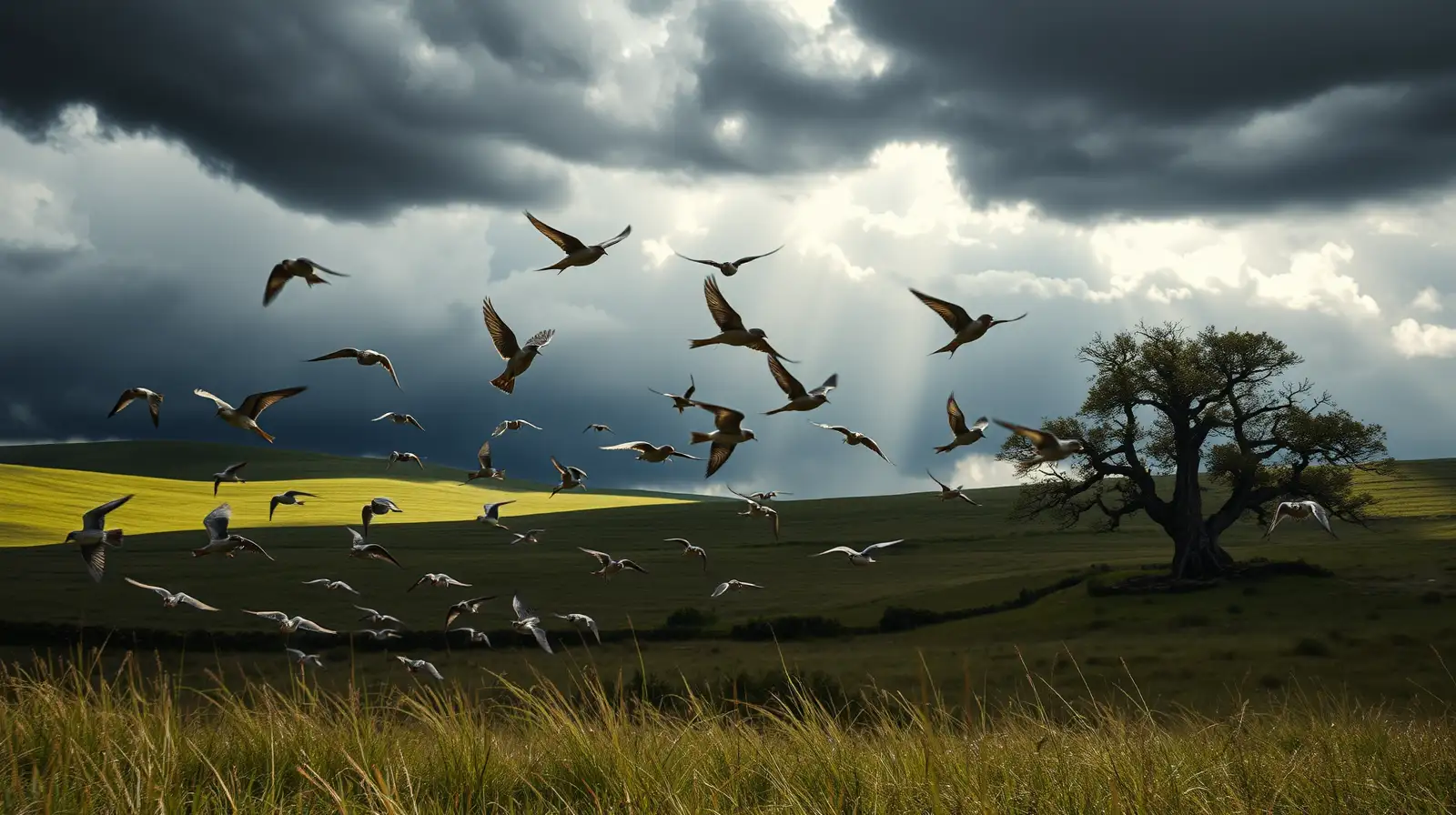
Birds also have highly developed sensory systems that help them navigate and survive. Their ability to detect changes in air movement and atmospheric conditions can be particularly useful when severe weather is approaching.
However, birds are not simply predicting rain in the way a meteorologist predicts a storm. They are responding to physical signals in their environment.
Birds, however, may be able to detect some of these environmental signals. Research has suggested that certain migrating birds can respond to atmospheric conditions and distant storm systems, potentially helping them avoid dangerous weather.
This ability could be especially important during migration, when birds may travel thousands of kilometres and cannot afford to fly directly into severe storms.
One particularly striking example comes from studies of golden-winged warblers. Researchers found evidence that some of these birds abandoned their breeding areas ahead of an approaching storm system and later returned after it had passed.
Such behaviour suggests that birds can sometimes respond to distant weather conditions rather than simply reacting when rain begins.
Still, their remarkable sensitivity offers a fascinating reminder that animals experience the atmosphere differently from us.
Humans rely on satellites, radar and weather apps to understand approaching storms. Birds have something much older: finely tuned biological senses shaped by evolution.
Their behaviour is not a magical forecast. It is nature's response to subtle signals in the environment, some of which humans may simply be unable to detect.
Birds Can Detect Changes We Cannot
One major clue is atmospheric pressure. Before some storms, pressure can fall noticeably. Birds are sensitive to environmental changes, and researchers believe this may influence their behaviour.Birds also have highly developed sensory systems that help them navigate and survive. Their ability to detect changes in air movement and atmospheric conditions can be particularly useful when severe weather is approaching.
However, birds are not simply predicting rain in the way a meteorologist predicts a storm. They are responding to physical signals in their environment.
Infrasound May Give Birds An Early Warning
Some storms produce very low-frequency sound waves known as infrasound. Humans generally cannot hear these sounds because their frequencies fall below the range of normal human hearing.Birds, however, may be able to detect some of these environmental signals. Research has suggested that certain migrating birds can respond to atmospheric conditions and distant storm systems, potentially helping them avoid dangerous weather.
This ability could be especially important during migration, when birds may travel thousands of kilometres and cannot afford to fly directly into severe storms.
Some Birds Change Their Routine
Bird behaviour before storms is not always dramatic. Some birds may reduce activity, seek shelter or change their feeding patterns. Others may leave an area before severe weather arrives.One particularly striking example comes from studies of golden-winged warblers. Researchers found evidence that some of these birds abandoned their breeding areas ahead of an approaching storm system and later returned after it had passed.
Such behaviour suggests that birds can sometimes respond to distant weather conditions rather than simply reacting when rain begins.
Not Every Strange Behaviour Means A Storm
It is important not to treat every change in bird behaviour as a reliable weather prediction. Birds respond to many factors, including food availability, predators, temperature, daylight and human activity.Still, their remarkable sensitivity offers a fascinating reminder that animals experience the atmosphere differently from us.
Humans rely on satellites, radar and weather apps to understand approaching storms. Birds have something much older: finely tuned biological senses shaped by evolution.
Their behaviour is not a magical forecast. It is nature's response to subtle signals in the environment, some of which humans may simply be unable to detect.






Loving Newspoint? Download the app now
