
Why Night Is the Perfect Time for Owls to Hunt

Owls are among the most fascinating birds in the world. Their silent flight, sharp eyesight, and mysterious nighttime calls have made them symbols of wisdom and mystery in many cultures. But one question people often ask is: why do owls hunt at night ?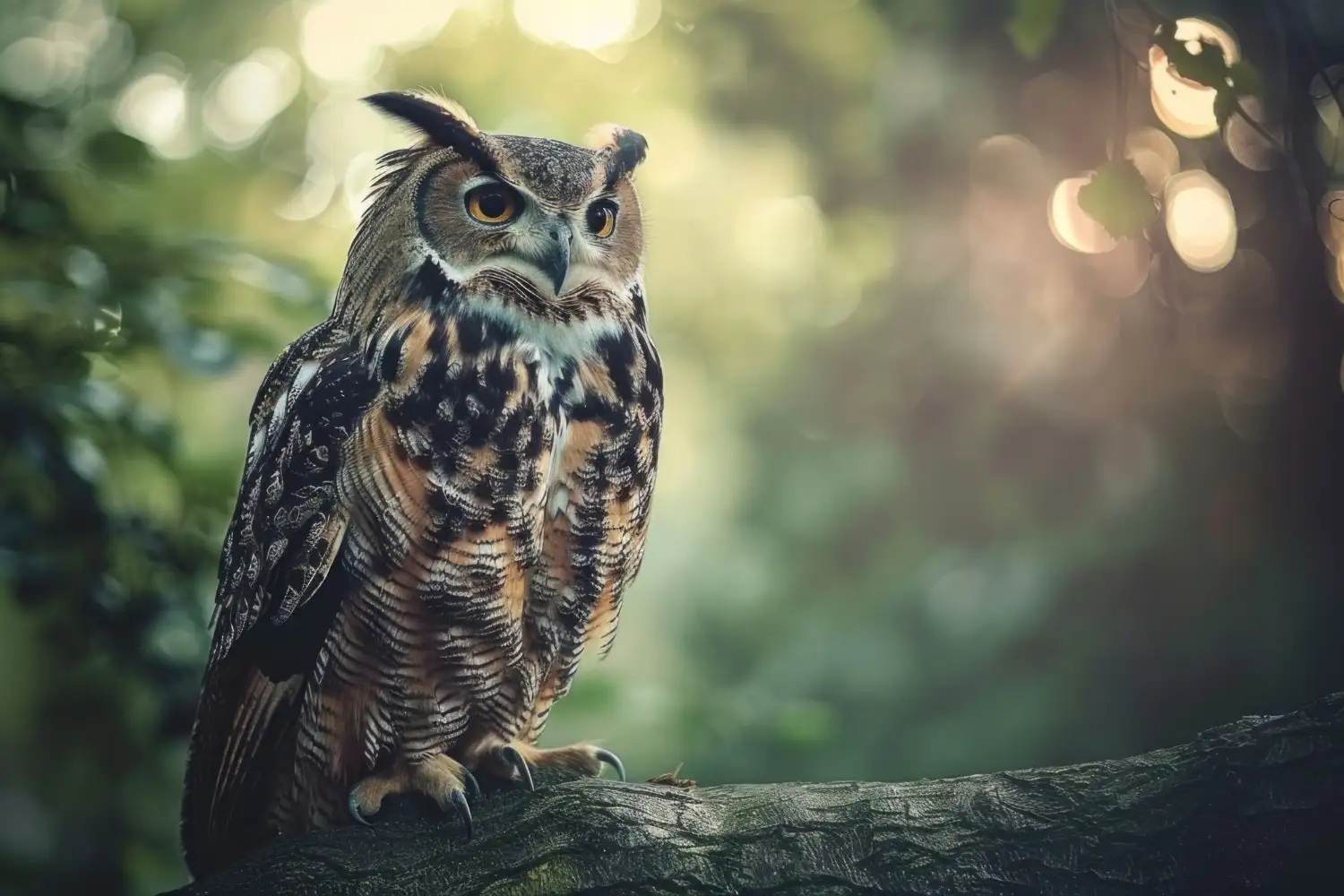
The answer lies in millions of years of evolution. Owls have developed special features that allow them to find and catch prey in the dark, giving them an advantage over many other predators.
Owls Are Mostly Nocturnal Birds
Most owl species are nocturnal, meaning they are active during the night and rest during the day. Hunting after sunset helps them avoid competition with many daytime birds of prey, such as hawks and eagles, which search for food in daylight.
However, not all owls follow the same schedule. Some species are crepuscular, meaning they are most active around dawn and dusk, while a few species regularly hunt during the day. Their activity depends on the species, habitat, season, and food availability.
Excellent Night Vision
Owls have large eyes compared to the size of their heads, allowing them to gather much more light than human eyes. This helps them see extremely well in dim conditions.
Contrary to a common myth, owls cannot see in complete darkness because some light is still needed for vision. Even so, moonlight, starlight, or faint ambient light is usually enough for them to spot movement on the ground.
Because their eyes are fixed in their sockets, owls cannot move them around like humans can. Instead, they rotate their heads to change their field of view. Some owl species can turn their heads up to about 270 degrees, thanks to specialized bones and blood vessels that safely support this movement.
Remarkable Hearing Helps Find Hidden Prey
An owl's hearing is just as important as its eyesight. Many species have asymmetrical ear openings, with one ear positioned slightly higher than the other. This allows them to detect tiny differences in the time and direction that sounds reach each ear.
As a result, an owl can accurately locate a mouse moving beneath leaves, snow, or grass, even when the prey is hidden from view.
The facial feathers around an owl's face also help funnel sound toward its ears, improving its ability to pinpoint prey.
Silent Flight Gives Owls an Advantage
One of the owl's greatest hunting adaptations is its nearly silent flight.
The edges of an owl's wing feathers have soft, comb-like structures that reduce the noise created as air passes over the wings. Their feathers are also unusually soft, helping to muffle sound even further.
Flying quietly allows owls to approach prey without being detected and also helps them hear faint sounds while in flight.
Night Hunting Reduces Competition
By hunting mainly at night, owls avoid competing directly with many daytime predators. This means they often have better access to small mammals, insects, reptiles, amphibians, and other prey that become active after sunset.
Many nocturnal animals also rely on darkness for protection, but owls are specially adapted to hunt under these conditions.
Powerful Talons and Beaks
Once an owl locates its target, it uses strong talons to grab and hold the prey firmly. Its hooked beak is designed for tearing food into manageable pieces.
Depending on the species, an owl's diet may include mice, rats, voles, insects, frogs, snakes, fish, small birds, and even other small animals.
Every Owl Has Its Own Hunting Style
There are more than 250 owl species around the world, and their hunting habits vary.
Forest-dwelling owls often wait quietly on a branch before swooping down on prey. Owls that live in open grasslands may fly low over fields searching for movement below. Species living near water may hunt fish or aquatic animals.
Their hunting strategies are shaped by their environment and the prey available in their habitat.
Why Are Owls So Successful at Night?
Owls combine several remarkable adaptations that work together:
Owls hunt at night because they are specially adapted for life after sunset. Their exceptional hearing, excellent low-light vision, silent flight, and powerful hunting tools give them a clear advantage in darkness. While not every owl is strictly nocturnal, most have evolved to thrive when many other predators are inactive, making the night the perfect time to search for food.
Disclaimer: This article is based on information available from publicly accessible online sources and is intended for general informational purposes only. NewsPoint has not independently verified all the information presented and does not guarantee its completeness or accuracy. Readers are encouraged to refer to authoritative wildlife and scientific sources for further information.
The answer lies in millions of years of evolution. Owls have developed special features that allow them to find and catch prey in the dark, giving them an advantage over many other predators.
Owls Are Mostly Nocturnal Birds
Most owl species are nocturnal, meaning they are active during the night and rest during the day. Hunting after sunset helps them avoid competition with many daytime birds of prey, such as hawks and eagles, which search for food in daylight.However, not all owls follow the same schedule. Some species are crepuscular, meaning they are most active around dawn and dusk, while a few species regularly hunt during the day. Their activity depends on the species, habitat, season, and food availability.
Excellent Night Vision
Owls have large eyes compared to the size of their heads, allowing them to gather much more light than human eyes. This helps them see extremely well in dim conditions.Contrary to a common myth, owls cannot see in complete darkness because some light is still needed for vision. Even so, moonlight, starlight, or faint ambient light is usually enough for them to spot movement on the ground.
Because their eyes are fixed in their sockets, owls cannot move them around like humans can. Instead, they rotate their heads to change their field of view. Some owl species can turn their heads up to about 270 degrees, thanks to specialized bones and blood vessels that safely support this movement.
Remarkable Hearing Helps Find Hidden Prey
An owl's hearing is just as important as its eyesight. Many species have asymmetrical ear openings, with one ear positioned slightly higher than the other. This allows them to detect tiny differences in the time and direction that sounds reach each ear. As a result, an owl can accurately locate a mouse moving beneath leaves, snow, or grass, even when the prey is hidden from view.
The facial feathers around an owl's face also help funnel sound toward its ears, improving its ability to pinpoint prey.
Silent Flight Gives Owls an Advantage
One of the owl's greatest hunting adaptations is its nearly silent flight. The edges of an owl's wing feathers have soft, comb-like structures that reduce the noise created as air passes over the wings. Their feathers are also unusually soft, helping to muffle sound even further.
Flying quietly allows owls to approach prey without being detected and also helps them hear faint sounds while in flight.
Night Hunting Reduces Competition
By hunting mainly at night, owls avoid competing directly with many daytime predators. This means they often have better access to small mammals, insects, reptiles, amphibians, and other prey that become active after sunset.You may also like
- Rangkat saris: A rare Banarasi weave of colour and precision
- Your Oral Hygiene Routine Might Be Hurting Your Teeth: Common Dental Mistakes Explained
- India's richest districts in 2026: 10 wealthiest destinations every traveller should explore
- Stay Private Online: How to Set Up and Use a VPN Securely on Your Android Phone in India
- Why Your Pores Look Bigger Than Ever: 7 Skincare Habits Making Large Pores Worse
Many nocturnal animals also rely on darkness for protection, but owls are specially adapted to hunt under these conditions.
Powerful Talons and Beaks
Once an owl locates its target, it uses strong talons to grab and hold the prey firmly. Its hooked beak is designed for tearing food into manageable pieces. Depending on the species, an owl's diet may include mice, rats, voles, insects, frogs, snakes, fish, small birds, and even other small animals.
Every Owl Has Its Own Hunting Style
There are more than 250 owl species around the world, and their hunting habits vary. Forest-dwelling owls often wait quietly on a branch before swooping down on prey. Owls that live in open grasslands may fly low over fields searching for movement below. Species living near water may hunt fish or aquatic animals.
Their hunting strategies are shaped by their environment and the prey available in their habitat.
Why Are Owls So Successful at Night?
Owls combine several remarkable adaptations that work together: - Excellent low-light vision
- Highly sensitive hearing
- Nearly silent flight
- Strong talons and hooked beaks
- Flexible neck movement for a wider field of view
- Hunting behavior suited to nighttime conditions
Owls hunt at night because they are specially adapted for life after sunset. Their exceptional hearing, excellent low-light vision, silent flight, and powerful hunting tools give them a clear advantage in darkness. While not every owl is strictly nocturnal, most have evolved to thrive when many other predators are inactive, making the night the perfect time to search for food.
Disclaimer: This article is based on information available from publicly accessible online sources and is intended for general informational purposes only. NewsPoint has not independently verified all the information presented and does not guarantee its completeness or accuracy. Readers are encouraged to refer to authoritative wildlife and scientific sources for further information.






Loving Newspoint? Download the app now
