
Why the Moon Looks Bigger Near the Horizon: The Science Explained

When the Moon rises in the evening or sets before dawn, it often appears much larger than it does high in the night sky. This striking sight has fascinated people for centuries and inspired countless myths and scientific investigations. Surprisingly, the Moon itself doesn't actually change in size. The effect is a fascinating trick played by our brains, known as the Moon illusion .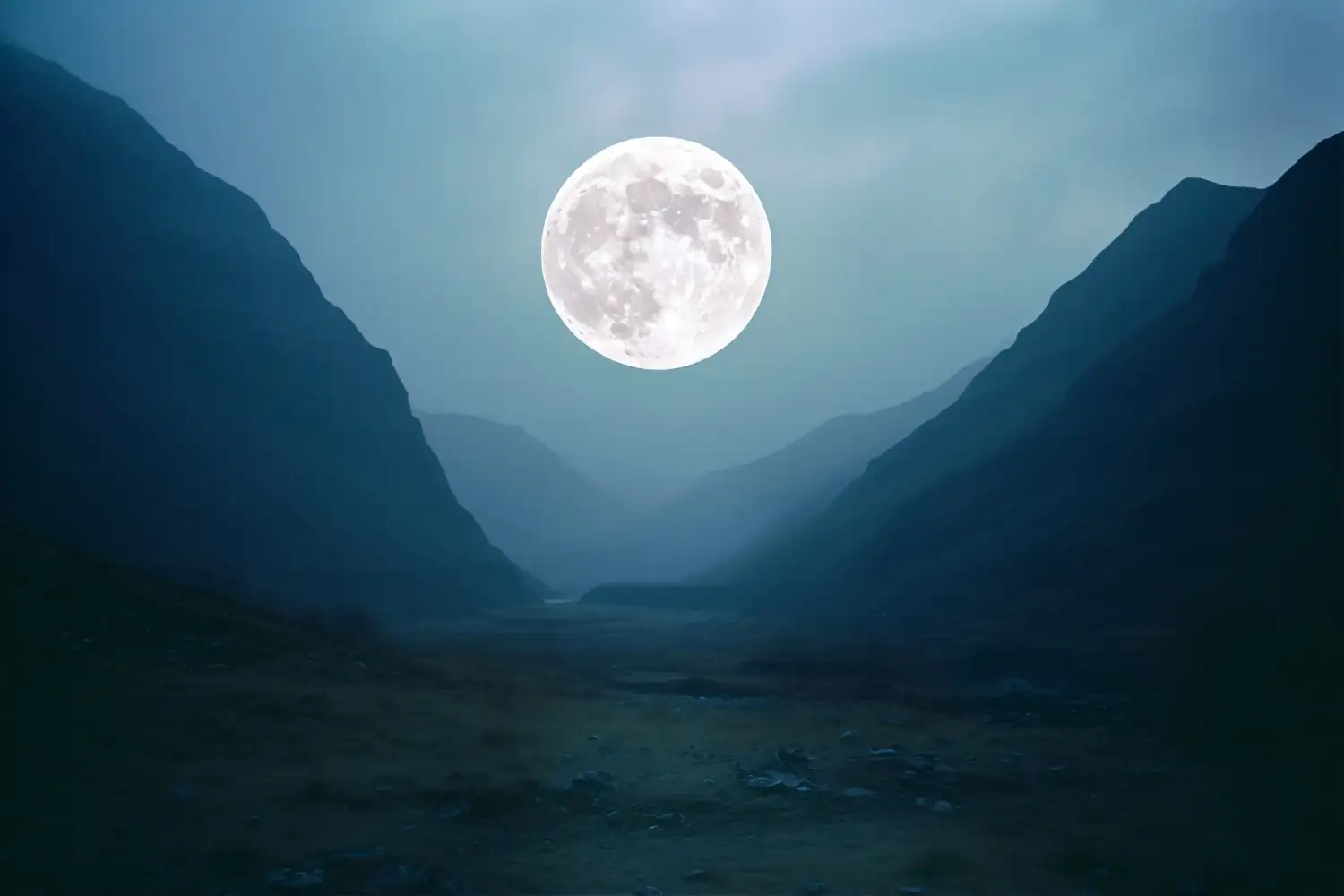
The Moon Doesn't Actually Get Bigger
Although the Moon appears enormous near the horizon, its actual size remains almost the same throughout the night. In fact, measurements show that the Moon's angular size changes very little from moonrise to moonset. Any small differences are mainly due to its slightly varying distance from Earth during its orbit, not because it is near the horizon.
Meet the Moon Illusion
The reason the Moon seems larger near the horizon is called the Moon illusion. It is one of the oldest and most well-known optical illusions. Scientists believe the illusion occurs because our brain interprets the Moon's size differently depending on where it appears in the sky.
Rather than our eyes seeing a larger Moon, our brain processes the scene in a way that makes the horizon Moon appear unusually big.
The Horizon Provides a Sense of Scale
When the Moon is close to the horizon, it is viewed alongside familiar objects such as trees, buildings, mountains, and distant landscapes. These objects provide visual references that help our brain judge distances and sizes.
High overhead, the Moon appears against a mostly empty sky with few nearby objects for comparison, making it seem smaller even though its actual size is unchanged.
Our Brain Perceives the Sky Differently
One leading explanation suggests that our brains perceive the sky as a flattened dome. We often interpret the horizon as being farther away than the point directly overhead.
If the Moon appears to have roughly the same angular size but seems farther away near the horizon, the brain interprets it as being physically larger. This creates the illusion of a giant Moon rising above the landscape.
Atmospheric Effects Don't Make It Bigger
Many people believe Earth's atmosphere magnifies the Moon near the horizon , but this is a common misconception. The atmosphere does not enlarge the Moon's apparent size.
The atmosphere can slightly distort the Moon's shape, making it appear flattened when it is very close to the horizon because light is bent by layers of air. It may also make the Moon appear red, orange, or golden by scattering shorter wavelengths of sunlight. However, these effects do not increase its apparent angular size.
Why Photos Can Be Misleading
Photographs can sometimes make the horizon Moon appear dramatically larger than expected. This is usually due to the camera lens rather than the Moon itself.
Telephoto lenses compress perspective, making the Moon appear much larger relative to foreground objects. In contrast, wide-angle lenses often make the Moon look smaller than it appears to the human eye.
A Simple Way to Test the Illusion
You can experience the Moon illusion for yourself. When the Moon is low on the horizon, hold your thumb or a small coin at arm's length to cover it. Repeat the same test later when the Moon is high overhead.
You'll find that the same object covers the Moon both times, demonstrating that its apparent angular size has barely changed even though it looked much larger near the horizon.
Scientists Are Still Studying It
Although the Moon illusion has been studied for centuries, researchers continue to explore exactly how the brain creates this perception. Several theories involving distance perception, size comparison, and visual processing have been proposed, and no single explanation fully accounts for every aspect of the illusion.
What scientists agree on is that the illusion originates in human perception rather than any significant change in the Moon itself.
Why the Illusion Captivates Us
The Moon illusion makes moonrise one of nature's most breathtaking spectacles. A glowing full Moon emerging above the horizon can appear almost magical, inspiring photographers, artists, and skywatchers around the world.
Knowing the science behind the illusion doesn't diminish its beauty—it makes the experience even more fascinating by revealing how remarkably our brains interpret the world around us.
The Moon only appears bigger near the horizon because of the way our brains process visual information. The Moon's actual angular size remains nearly constant, and Earth's atmosphere does not magnify it. Instead, nearby landmarks, our perception of distance, and the way we interpret the shape of the sky combine to create one of nature's most enduring optical illusions. The next time you watch a moonrise, you'll be witnessing not just a celestial event, but also a remarkable example of how human perception shapes what we see.
Disclaimer: The information in this article is based on publicly available online sources. NewsPoint does not independently verify every claim or detail presented.
The Moon Doesn't Actually Get Bigger
Although the Moon appears enormous near the horizon, its actual size remains almost the same throughout the night. In fact, measurements show that the Moon's angular size changes very little from moonrise to moonset. Any small differences are mainly due to its slightly varying distance from Earth during its orbit, not because it is near the horizon. Meet the Moon Illusion
The reason the Moon seems larger near the horizon is called the Moon illusion. It is one of the oldest and most well-known optical illusions. Scientists believe the illusion occurs because our brain interprets the Moon's size differently depending on where it appears in the sky.Rather than our eyes seeing a larger Moon, our brain processes the scene in a way that makes the horizon Moon appear unusually big.
The Horizon Provides a Sense of Scale
When the Moon is close to the horizon, it is viewed alongside familiar objects such as trees, buildings, mountains, and distant landscapes. These objects provide visual references that help our brain judge distances and sizes.High overhead, the Moon appears against a mostly empty sky with few nearby objects for comparison, making it seem smaller even though its actual size is unchanged.
Our Brain Perceives the Sky Differently
One leading explanation suggests that our brains perceive the sky as a flattened dome. We often interpret the horizon as being farther away than the point directly overhead. If the Moon appears to have roughly the same angular size but seems farther away near the horizon, the brain interprets it as being physically larger. This creates the illusion of a giant Moon rising above the landscape.
Atmospheric Effects Don't Make It Bigger
Many people believe Earth's atmosphere magnifies the Moon near the horizon , but this is a common misconception. The atmosphere does not enlarge the Moon's apparent size.The atmosphere can slightly distort the Moon's shape, making it appear flattened when it is very close to the horizon because light is bent by layers of air. It may also make the Moon appear red, orange, or golden by scattering shorter wavelengths of sunlight. However, these effects do not increase its apparent angular size.
Why Photos Can Be Misleading
Photographs can sometimes make the horizon Moon appear dramatically larger than expected. This is usually due to the camera lens rather than the Moon itself. Telephoto lenses compress perspective, making the Moon appear much larger relative to foreground objects. In contrast, wide-angle lenses often make the Moon look smaller than it appears to the human eye.
A Simple Way to Test the Illusion
You can experience the Moon illusion for yourself. When the Moon is low on the horizon, hold your thumb or a small coin at arm's length to cover it. Repeat the same test later when the Moon is high overhead. You'll find that the same object covers the Moon both times, demonstrating that its apparent angular size has barely changed even though it looked much larger near the horizon.
You may also like
- How Bollywood's women grew up with India
- PMGKAY Scheme: Good news for ration card holders; government takes a major decision regarding rice quality..
- Amarnath Yatra 2026 begins today; find out the full details here—which route to take and what to carry..
- Devotees heading for the Amarnath Yatra will have access to free bus and taxi services around the clock, starting at 5 AM..
- Administration issues advisory for Amarnath Yatra 2026; arriving without registration could lead to difficulties..
Scientists Are Still Studying It
Although the Moon illusion has been studied for centuries, researchers continue to explore exactly how the brain creates this perception. Several theories involving distance perception, size comparison, and visual processing have been proposed, and no single explanation fully accounts for every aspect of the illusion. What scientists agree on is that the illusion originates in human perception rather than any significant change in the Moon itself.
Why the Illusion Captivates Us
The Moon illusion makes moonrise one of nature's most breathtaking spectacles. A glowing full Moon emerging above the horizon can appear almost magical, inspiring photographers, artists, and skywatchers around the world. Knowing the science behind the illusion doesn't diminish its beauty—it makes the experience even more fascinating by revealing how remarkably our brains interpret the world around us.
The Moon only appears bigger near the horizon because of the way our brains process visual information. The Moon's actual angular size remains nearly constant, and Earth's atmosphere does not magnify it. Instead, nearby landmarks, our perception of distance, and the way we interpret the shape of the sky combine to create one of nature's most enduring optical illusions. The next time you watch a moonrise, you'll be witnessing not just a celestial event, but also a remarkable example of how human perception shapes what we see.
Disclaimer: The information in this article is based on publicly available online sources. NewsPoint does not independently verify every claim or detail presented.






More from our partners


Loving Newspoint? Download the app now
