
From Crepes to Dosa: Why Every Region Has a Different Version of the Same Pancake

If you travel across the globe, you will quickly discover that almost every culture possesses a cherished variation of batter cooked flat on a hot surface. The French enjoy paper thin crepes, Americans stack thick fluffy hotcakes covered in syrup, and the British love thin lemon splashed treats on Shrove Tuesday. In India, people enjoy crispy fermented dosa, while in Korea, savory kimchi pancakes are a popular street food favourite. It seems incredible that such distinct cultures arrived at virtually the same culinary concept. There are fascinating historical, geographical, and practical reasons why every region has a different version of the same pancake .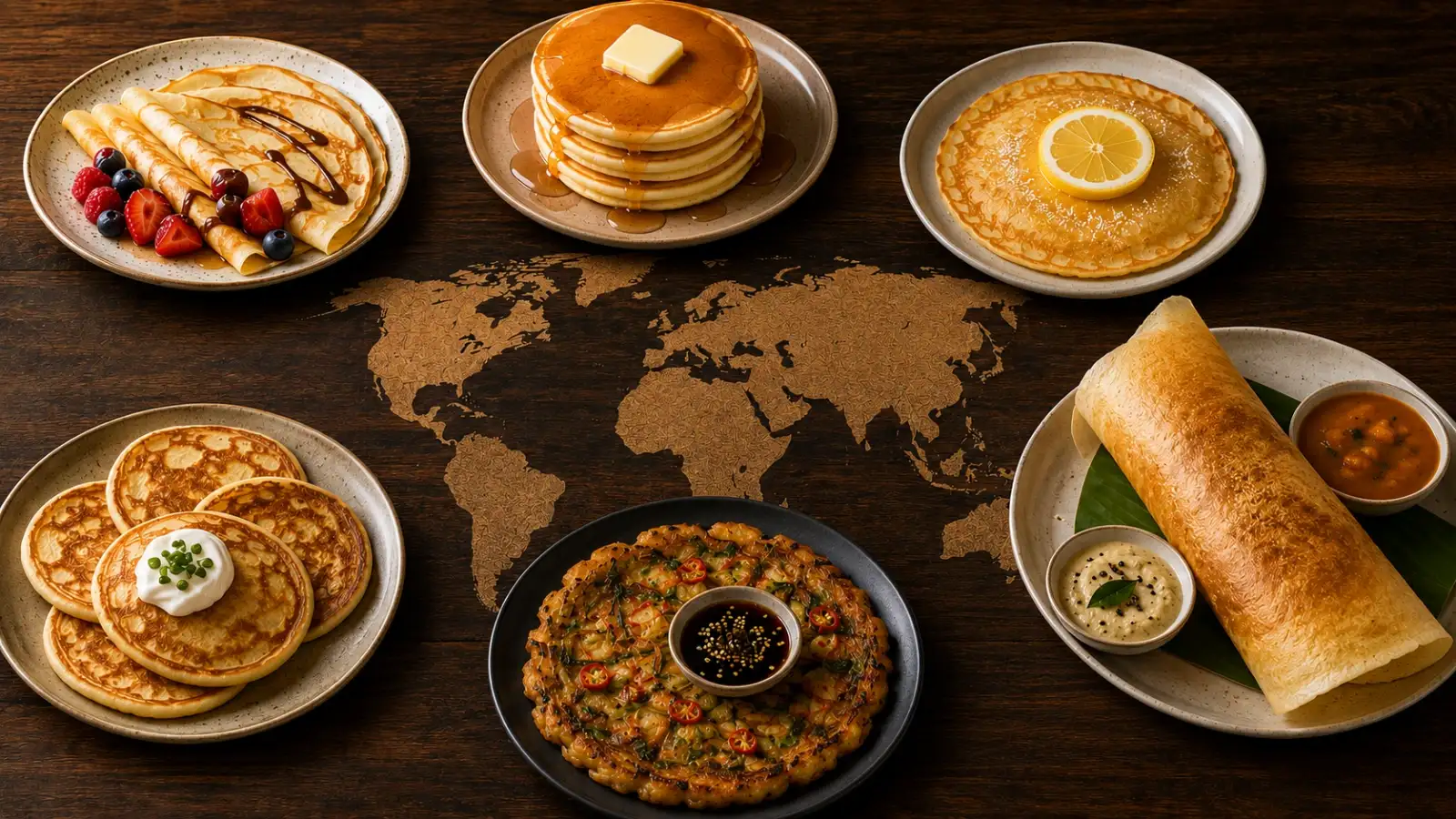
In contrast, Asian regions where rice, mung beans, or buckwheat thrived developed entirely different batters. For instance, South Indian cooks combined rice and black lentils to produce a tangy fermented batter for dosa. In Eastern Europe, where wheat was often scarce or expensive, buckwheat became the base for rich blinis. Each community adapted the fundamental concept using local farming staples, creating unique textures and distinct flavour profiles that reflected their landscape.
In traditional rural homes, cooking surfaces were often limited to simple flat stones, clay plates, or basic cast iron grates over open embers. Thin batter was ideal because it spread quickly, cooked evenly with minimal firewood, and fed hungry families without wasting precious fuel. The geometry and thickness of regional pancakes directly reflect the hearths and cookware of our ancestors.
Whether used as an edible utensil or eaten as a sweet comfort food, the humble flat cake proved endlessly versatile. This incredible adaptability allowed every continent to claim the recipe as its own cultural treasure. Ultimately, the global story of this simple dish proves that while our ingredients and traditions differ, our fundamental love for warm comforting food unites us all.
Local Ingredients and Agricultural Traditions
The main driver behind pancake variety comes down to what grains grew best in local soil throughout history. Before modern transportation, cooks had to rely strictly on crops harvested in their immediate surroundings. Regions with abundant wheat yields, such as Western Europe, naturally created batter recipes centered on wheat flour, eggs, and dairy milk.In contrast, Asian regions where rice, mung beans, or buckwheat thrived developed entirely different batters. For instance, South Indian cooks combined rice and black lentils to produce a tangy fermented batter for dosa. In Eastern Europe, where wheat was often scarce or expensive, buckwheat became the base for rich blinis. Each community adapted the fundamental concept using local farming staples, creating unique textures and distinct flavour profiles that reflected their landscape.
You may also like
- Natarajan Chandrasekaran - The outsider who steadied Tata Sons before a boardroom break with the Trusts
- Delhi traffic advisory: Red Fort full-dress rehearsal on August 13 to close key roads; check routes, bus and commercial vehicle restrictions
- How to Manage Anger: Understanding the Shadow Within
- Sadhguru Jaggi Vasudev's 'Disappearing Faces' captures faces and lives of the Himalayas
- Postpartum dry skin is real: Why new mothers may develop painfully dry hands and how to care for them
Cooking Tools and Heat Sources
The physical tools available in historical kitchens also shaped how batter was prepared and cooked. Thick fluffy pancakes require a reliable oven or a heavy flat iron skillet with a steady heat source to rise properly using baking powder or soda. Lightweight pans over quick open fires led to thin batter creations that cooked within seconds.In traditional rural homes, cooking surfaces were often limited to simple flat stones, clay plates, or basic cast iron grates over open embers. Thin batter was ideal because it spread quickly, cooked evenly with minimal firewood, and fed hungry families without wasting precious fuel. The geometry and thickness of regional pancakes directly reflect the hearths and cookware of our ancestors.
Cultural Uses and Savoury Adaptation
Beyond farming and fuel, a cultural approach to dining influenced how its version evolved over centuries. In some countries, these round batter cakes became sweet morning treats or festive desserts served with jam, fruit, or honey. In other regions, they served as a daily savoury staple meant to scoop up spicy curries, vegetables, or stewed meats.Whether used as an edible utensil or eaten as a sweet comfort food, the humble flat cake proved endlessly versatile. This incredible adaptability allowed every continent to claim the recipe as its own cultural treasure. Ultimately, the global story of this simple dish proves that while our ingredients and traditions differ, our fundamental love for warm comforting food unites us all.






Loving Newspoint? Download the app now
