
Why Flamingos Stand on One Leg: Hidden Truth Behind This Strange Behaviour

The question of why flamingos stand on one leg has fascinated scientists and nature lovers for years. When you see an Flamingo calmly balancing in shallow water, it almost looks unnatural—like a trick of nature. With their bright pink feathers, long necks, and effortless stillness, flamingos seem to defy logic.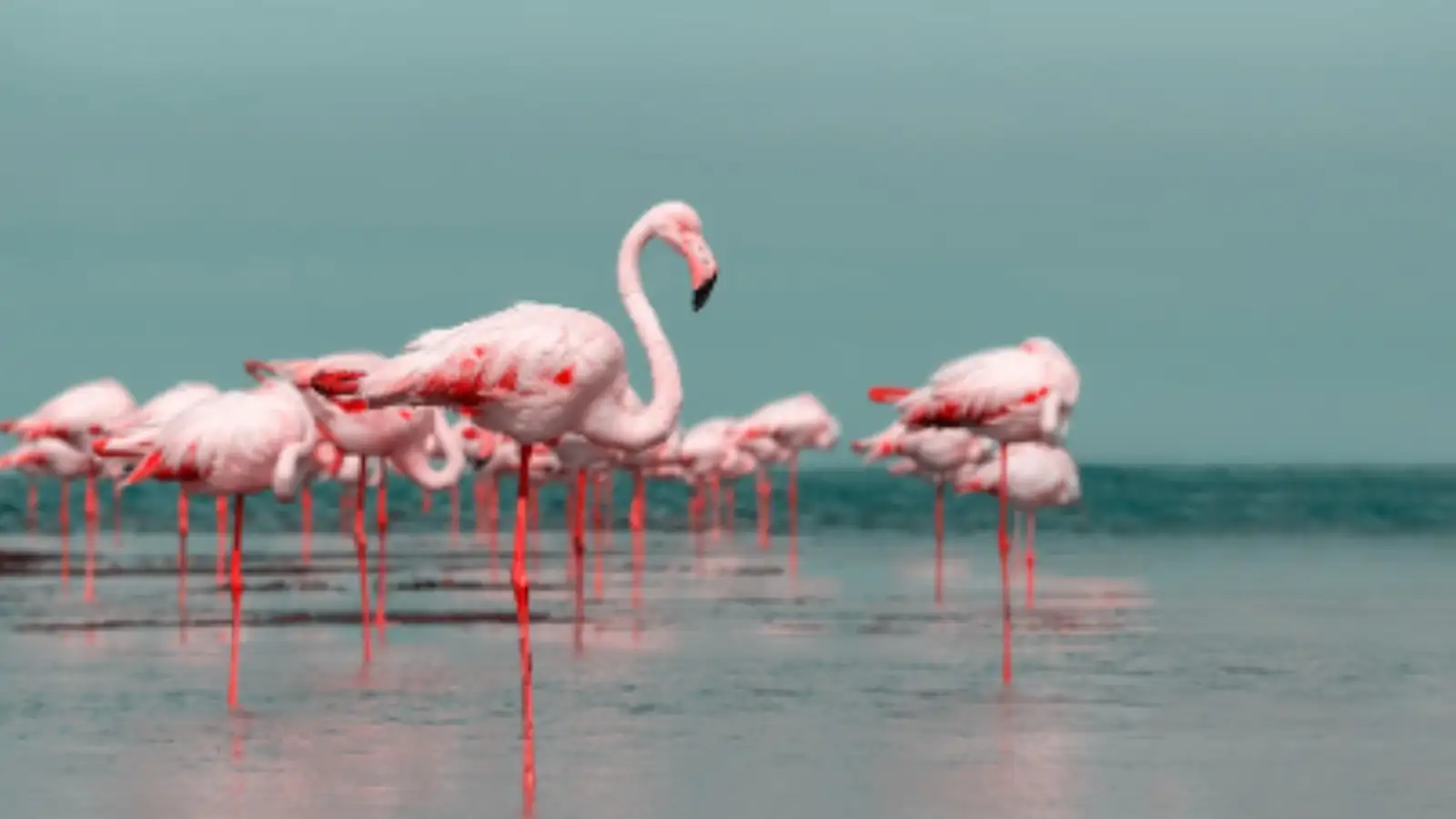
For a long time, this posture was thought to be just a resting habit or a balancing act. But research has revealed that this behaviour is deeply linked to survival, energy saving, and environmental adaptation.
Heat Conservation: Staying Warm in Cold Water
One of the key reasons behind why flamingos stand on one leg is temperature control.
Flamingos often spend hours in cold or shallow wetlands while feeding or resting. Their long legs have very little feather insulation, which makes them lose body heat quickly when exposed to cold water.
By tucking one leg close to their body, they reduce heat loss significantly. This simple posture minimises contact with cold water and helps them conserve body warmth naturally. In colder environments, this becomes an essential survival strategy rather than just a resting pose.
Energy Efficiency: A Surprisingly Effortless Balance
Another important discovery is how little effort flamingos use while standing on one leg.
Scientists have found that flamingos can “lock” their leg joints in place, allowing them to maintain balance with minimal muscle activity. Once stable, their body weight is distributed in a way that reduces strain on muscles.
In fact, standing on one leg can sometimes use less energy than standing on two. This is why flamingos can rest—and even sleep - while maintaining perfect balance without falling over. Their body essentially functions like a natural tripod designed for long periods of stillness.
Built for Stability: Nature’s Perfect Design
Flamingos may look fragile due to their thin, elongated legs, but they are actually built for remarkable stability.
Their centre of gravity is positioned in such a way that makes one-leg standing surprisingly secure. Even mild wind or water movement does not easily disturb them.
Researchers also believe this posture helps reduce vibrations caused by moving water, allowing flamingos to rest more comfortably in open wetlands where there is little shelter. What looks delicate is actually a highly efficient balancing system shaped by evolution over millions of years.
Evolutionary Advantage: A Shared Survival Trick in Birds
Flamingos are not the only birds that use this behaviour. Species like herons, storks, and ducks also stand on one leg while resting.
This suggests that the behaviour is not random - it is an evolved survival strategy. It helps birds conserve heat, save energy, and maintain comfort in watery environments.
However, flamingos use this posture far more frequently and visibly than most other birds, which is why they have become the global symbol of elegant one-leg balance.
A Simple Pose with a Powerful Purpose
The mystery of why flamingos stand on one leg is no longer a mystery at all. What appears to be a graceful pose is actually a combination of heat conservation, energy efficiency, and natural stability.
This simple behaviour shows how nature designs survival strategies that are both practical and elegant. In flamingos, beauty and biology work perfectly together - turning a quiet standing pose into a powerful example of evolution at work.
For a long time, this posture was thought to be just a resting habit or a balancing act. But research has revealed that this behaviour is deeply linked to survival, energy saving, and environmental adaptation.
Heat Conservation: Staying Warm in Cold Water
One of the key reasons behind why flamingos stand on one leg is temperature control.
Flamingos often spend hours in cold or shallow wetlands while feeding or resting. Their long legs have very little feather insulation, which makes them lose body heat quickly when exposed to cold water.
By tucking one leg close to their body, they reduce heat loss significantly. This simple posture minimises contact with cold water and helps them conserve body warmth naturally. In colder environments, this becomes an essential survival strategy rather than just a resting pose.
Energy Efficiency: A Surprisingly Effortless Balance
Another important discovery is how little effort flamingos use while standing on one leg.
Scientists have found that flamingos can “lock” their leg joints in place, allowing them to maintain balance with minimal muscle activity. Once stable, their body weight is distributed in a way that reduces strain on muscles.
In fact, standing on one leg can sometimes use less energy than standing on two. This is why flamingos can rest—and even sleep - while maintaining perfect balance without falling over. Their body essentially functions like a natural tripod designed for long periods of stillness.
Built for Stability: Nature’s Perfect Design
Flamingos may look fragile due to their thin, elongated legs, but they are actually built for remarkable stability.
You may also like
- PPF Funds: Unable to arrange money during an emergency? The funds lying in your PPF account will come to your rescue..
- How to decorate your balcony garden on a small budget
- PM Shram Mandhan Yojana: Receive ₹3,000 Every Month in Old Age with an Investment of Just ₹55..
- FD Interest 2026: Avoid the risks of the stock market, these public sector banks are offering high interest on FDs in a short period of time..
- Indigo and Air India passengers beware, flight schedules cut for the next three months..
Their centre of gravity is positioned in such a way that makes one-leg standing surprisingly secure. Even mild wind or water movement does not easily disturb them.
Researchers also believe this posture helps reduce vibrations caused by moving water, allowing flamingos to rest more comfortably in open wetlands where there is little shelter. What looks delicate is actually a highly efficient balancing system shaped by evolution over millions of years.
Evolutionary Advantage: A Shared Survival Trick in Birds
Flamingos are not the only birds that use this behaviour. Species like herons, storks, and ducks also stand on one leg while resting.
This suggests that the behaviour is not random - it is an evolved survival strategy. It helps birds conserve heat, save energy, and maintain comfort in watery environments.
However, flamingos use this posture far more frequently and visibly than most other birds, which is why they have become the global symbol of elegant one-leg balance.
A Simple Pose with a Powerful Purpose
The mystery of why flamingos stand on one leg is no longer a mystery at all. What appears to be a graceful pose is actually a combination of heat conservation, energy efficiency, and natural stability.
This simple behaviour shows how nature designs survival strategies that are both practical and elegant. In flamingos, beauty and biology work perfectly together - turning a quiet standing pose into a powerful example of evolution at work.






More from our partners


Loving Newspoint? Download the app now
